Netanyahu offers to step aside in unity deal with Eisenkot
Published in News & Features
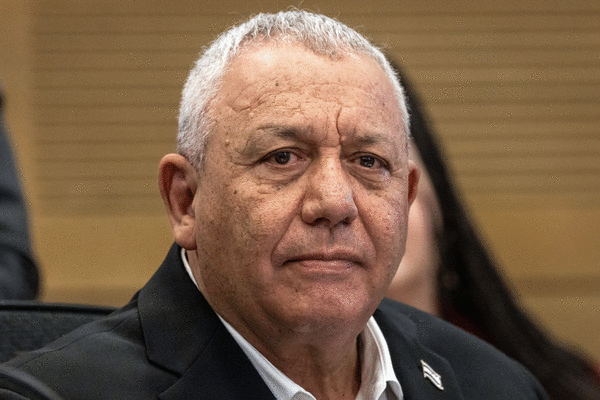
Benjamin Netanyahu said he’s willing to step down as Israeli prime minister and form a unity government under Gadi Eisenkot as he tries a last-ditch effort to avoid being left out of the next coalition.
Under the proposal, the longtime Israeli leader would share the premiership in a rotation with Eisenkot, who would take charge for the first part of the term, he said in a post on X on Saturday.
Eisenkot said he is ready to test how serious the unity proposal is and invited Netanyahu to immediately begin a fast-track negotiation.
“If Likud is truly ready for genuine unity, I am prepared to test its seriousness over the next 24 hours,” Eisenkot said in a statement. He added that Netanyahu received a detailed proposal addressing substantive issues last Sunday and that he is still waiting for a response.
Netanyahu and Eisenkot spoke to each other and agreed to meet Sunday morning at 10 a.m. local time, according to a statement from the Likud party.
Netanyahu noted that Likud, the party he leads, is the largest in the country, and had garnered a quarter of a million more votes than Eisenkot’s party, adding that the result would normally suggest he should be the one to lead the unity government, or at least be first in the rotation.
“But given the gravity of the existential danger and the possibility of a government being formed that lacks the ability to confront it, my responsibility as a leader requires me to set everything aside, including the principle of the largest party, and agree that Gadi Eisenkot will serve first as prime minister,” Netanyahu wrote in a post on X.
Netanyahu said in his post on X that he would serve instead at the beginning of the rotation term as alternate prime minister.
The proposal will face significant resistance. All opposition leaders except Naftali Bennett, leader of the Beyachad party, strongly oppose serving in a government with Netanyahu.
Either way, the move raises the prospect that Netanyahu won’t serve as Israel’s next prime minister, whether Eisenkot succeeds in forming a coalition without Likud or strikes a unity deal with the party.
The latter would still face significant hurdles, including opposition demands that Netanyahu may struggle to accept — chief among them a state commission of inquiry into the deadly Oct. 7 attacks by Hamas, which he has resisted for the past three years.
Eisenkot was given a mandate from President Isaac Herzog to form a government following the Oct. 27 election, and with just over a week to go, is within striking distance of forming a coalition that could secure him a parliamentary majority to unseat Netanyahu.
Last week, he sealed coalition pacts with two of the three other party leaders in his opposition bloc — Avigdor Liberman of Israel Beytenu and Yair Golan of The Democrats.
To avoid a unity deal with Netanyahu, Liberman has been pushing to peel an ultra-Orthodox party away from Netanyahu’s bloc, allowing the opposition to outnumber it in parliament.
Golan has advocated for a minority government comprising the opposition’s 48 lawmakers, backed from the outside by the 19 Israeli Arab legislators.
Informal progress in negotiations with the ultra-Orthodox United Torah Judaism party signaled that this would be the path to forming a new government as early as next week. It is not yet clear how Netanyahu’s statement will effect these talks and whether UTJ would proceed or step back.
Following Netanyahu’s statement, Golan said in a post on X: “Enough with the stunts and tricks. Netanyahu lost. It’s our duty to respect the will of the voters and form a government of change.”
Anticipating the latest development, Liberman warned on Thursday that as a new government takes shape, Netanyahu would try to thwart its formation at any cost, including by offering Eisenkot a rotation deal under which Netanyahu would serve as prime minister second.
“Everyone needs to be clear: This is just a ploy,” Liberman said in a post on X, adding that Netanyahu was seeking fresh elections.
Bennett has been the only leader in Eisenkot’s bloc pushing for a unity government with Netanyahu, engaging with him both directly and through back channels in recent weeks.
Bennett is now likely to step up pressure on Eisenkot to pursue a unity government, which he views as more stable than any of the alternatives.
“Netanyahu made the right decision,” he said in a statement, “so we will not be dependent on non-Zionist extremist parties,” but added that “the burden of proof is now on Netanyahu to show that this is a genuine intention rather than lip service.”
Yair Lapid, another former prime minister and a member of Bennett’s Lapid — which accounts for five of his 12 faction members — said in a statement that “this is yet another transparent scam by a serial swindler who has cheated every partner and broken every agreement.”
Eisenkot said on Friday that talks over who goes first in a premiership rotation are “merely the tip of the iceberg of Likud’s stubborn refusal to keep extremists out of the cabinet” and discuss a coalition capable of passing a universal military draft law, among other things. Bennett echoed those demands following Netanyahu’s statement and it is not clear whether Netanyahu will accept them.
©2026 Bloomberg L.P. Visit bloomberg.com. Distributed by Tribune Content Agency, LLC.




Comments