Where El Niño could deliver the best snow this winter
Published in News & Features
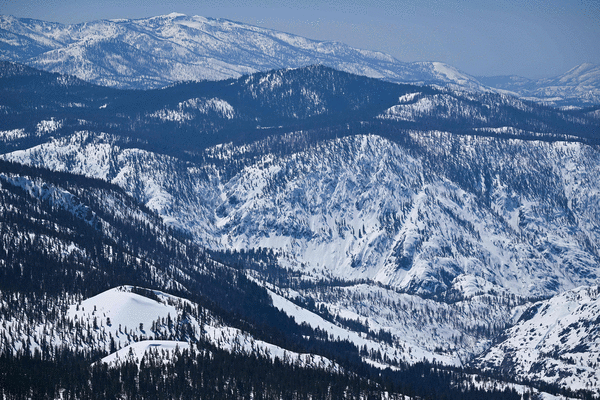
A year ago, the slopes of Palisades Tahoe were dry. By Christmas morning, only one of the mountain’s 40 or so chairlifts was running. This year, the resort, the Bay Area’s winter playground, opened Nov. 21, four days earlier than expected. The snow tally by Thanksgiving: nearly 6 feet.
“The stoke is pretty all-time right now,” said Amy Ohran, Palisades president and chief operations officer.
U.S. ski resort operators, long in an existential battle with climate change, find themselves processing a rare emotion: optimism. The snow forecast across the American West is bullish, thanks to one of the most powerful El Niño weather patterns on record.
And the timing couldn’t be better, after a season so bad that it undercut nearly every climate hedge the $60 billion industry had spent decades building. Although millions of skiers had season passes that let them travel far and wide last winter, snow was sparse everywhere but New England. Ski traffic slid off a cliff and pass sales soon followed. The hope is that El Niño-triggered snowstorms can turn all of that around, though the weather pattern tends to be feast or famine.
Every two to seven years, the jet stream that steers storms across the Pacific Ocean shifts south like a conveyer belt of weather and ski addicts spend September muttering “El Niño” like a portent of some generous snow god.
So far this year the weather phenomenon has already blanketed the mountains of California and delivered feet of snow farther east, at the Arizona Snowbowl and New Mexico’s Sipapu Ski Resort. El Niño has also brought colder temperatures, allowing resorts like Palisades to consistently make snow.
“El Niño forecasts can have a lot of optimism, not certainty,” Ohran said. “But when we see these early snow patterns, it builds a lot of momentum.”
However, El Niño can be fickle. As the jet stream shifts south, the pattern typically makes for more precipitation in California’s Sierras and across the Southwest. At the same time, it often traps milder air in its wake, bringing higher temperatures and less snow in the Northeast and Pacific Northwest.
The areas in between, including the Rocky Mountain heart of the U.S. ski industry, can go either way.
Brad Pugh, a National Weather Service meteorologist, said El Niño’s snow harvest often splits along Interstate 70, which heads west from Denver and peters out a few hours south of Salt Lake City.
“That’s kind of the dividing line,” Pugh said, “between below-average snowfall to the north and above-average to the south.”
Powder meccas like Steamboat Springs, Jackson Hole and Big Sky are on the wrong side of history this year, while Telluride, Taos and Mammoth Mountain sit pretty. In the past 10 El Niño winters, resorts in the Southwest received about one-third more snow than normal, according to Sam Collentine, a meteorologist at OpenSnow, a forecasting platform.
When El Niño delivers for Colorado and Utah, Collentine said, it tends to be in March.
That said, it won’t take much to improve on the past ski season, at least anywhere outside of New England. In much of the country, snow didn’t arrive early, nor did much of it arrive late. Skiers logged 52.6 million days on U.S. mountains last year, 15% fewer than in the winter of 2024-2025, according to the National Ski Areas Association. Resorts in California, Colorado and Utah saw one-quarter of their typical traffic disappear.
Two or three decades ago, that kind of winter would have driven much of the U.S. ski industry into bankruptcy, according to Patrick Scholes, a managing director and leisure analyst at Truist Financial Corp., a bank holding company. Today, however, some 61 resorts, including the biggest and busiest American mountains, are owned by two companies: Alterra Mountain Co. and Vail Resorts Inc. Both outfits collect much of their revenue well before Thanksgiving by selling season passes, a nifty model that began in earnest 20 years ago, smoothing sales and insulating the business from storms, or the lack thereof. By rolling up portfolios of resorts, both companies have created a geographic hedge; if one part of the world is dry, skiers can use their passes in a snowier region.
That was a tougher sell last winter when the vast majority of slopes were what skiers refer to as “bony,” or thin. Vail CEO Rob Katz called the 2024-2025 season “one of the most challenging winters in history across the American West.” Still, season passes were a savior of sorts. When resorts were closing in April, Vail said its lift revenue only dropped by 5.6%, despite a 15% decline in skier visits.
But there was what Scholes calls “a hangover effect.” In the weeks after the April update, the season-pass strategy that had saved Vail’s disastrous winter started to crumble like a calving glacier. Hordes of pass holders sent their “renew” notices straight to the trash. Going into the fall, Vail pass sales for the 2026-2027 ski season were down 12%.
“I had someone in Colorado tell me they played golf more last winter than they skied,” said Deutsche Bank analyst Chris Woronka. “So you get the renewal notice and it’s like ‘Gee, I don’t know if I’m going to do this again.’”
What’s critical for Alterra, Vail and a rash of smaller ski resort companies isn’t so much having a great snow year, but avoiding another terrible one, which would further undermine season pass sales.
“Investors will say, ‘If this is the new normal, is this all kind of impaired at this point?’” Scholes said.
Katz, the Vail CEO, told analysts in September that the company doesn’t expect resort traffic to fully recover this winter and his team is preparing for the business model to shift somewhat from season passes to lift tickets. If people don’t have the confidence to spring for a full season, Vail reckons they may at least pay to ski for a day — or cluster of days — at a time. “There’s clearly more variability and risk in that,” Katz said.
By spring, however, Katz may be more sanguine. Bill Rock, president of the mountain division at Vail, said via email that the company historically benefits from pent-up demand from people who didn’t ski as much as they would have liked the previous winter. He also pointed out that the company has spent at least $100 million on snowmaking since 2015.
It appears El Niño will give some of that equipment some downtime this season. On Thanksgiving, skiers were swooping around some 46 North American resorts. The highest snow tallies were at Palisades and places nearby, though resorts in Colorado, Utah and Wyoming had more than a foot of snow packed on popular slopes.
Woronka, at Deutsche, has been watching the weather closely, though he isn’t rushing to update his target price on Vail shares.
“We really don’t assign outsize importance to any one year,” he said. “The reality is, even if they have a great year, it probably won’t recur next year.”
©2026 Bloomberg L.P. Visit bloomberg.com. Distributed by Tribune Content Agency, LLC.






Comments