Top Democrats accuse administration of failing to comply with Haiti-gang law
Published in Political News
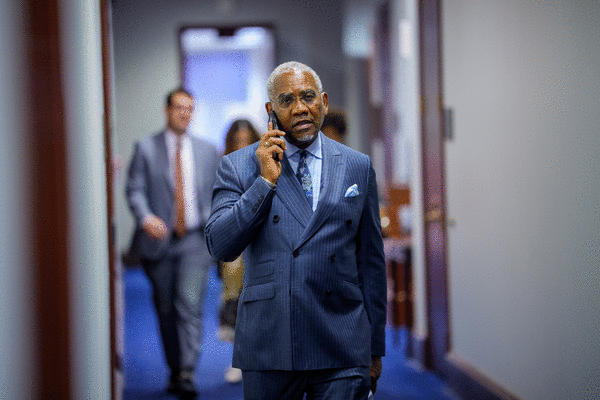
Two senior Democratic lawmakers are accusing the Trump administration of failing to implement a bipartisan law intended to help dismantle gang networks in Haiti by identifying and sanctioning members of the country’s political and economic elite who help fuel the country’s security crisis.
The accusations by Rep. Gregory Meeks of New York and Sen. Jeanne Shaheen of New Hampshire come as Haiti prepares to organize its first general elections in over a decade and the Trump administration remains publicly silent about the candidacies of several individuals under sanctions who are running for president or seats in Parliament.
There are 33 candidates running for president, several of whom are under sanctions from the U.S., Canada or the European Union. Among the 535 candidates for the Senate and 1, 855 for the Lower Chamber of Deputies, some has also been subjected to international sanctions.
While the online registration period has closed, candidates have until Monday to turn in paperwork in order for the Provisional Electoral Council can begin the process of deciding who is qualified to run and who isn’t. The election has been postponed until July 18. With no specific law banning individuals under sanctions, the European Union, Canada and Organization of American States have voiced concerns about the participation of candidates with gang ties.
“At a time when the Haitian people are preparing to vote for the first time in over a decade,” the Democratic lawmakers said, “Congress, the American public and the Haitian people deserve transparency about the nature and scale of collusion between gangs and their political and economic support networks.”
The lawmakers laid out their concerns in a letter addressed to Secretary of State Marco Rubio, Defense Secretary Pete Hegseth and Treasury Secretary Scott Bessent. They specifically single out Rubio, who was the Republican sponsor of the Haiti Criminal Collusion Transparency Act while serving in the Senate.
Despite Rubio’s declaration in May 2025 that “the age of impunity for those supporting violence in Haiti is over,” the lawmakers said his own agency has failed to comply with the very law he pushed.
“By failing to name and sanction the political and economic elite fueling Haiti’s insecurity, the administration allows those responsible to evade accountability and signals that their actions carry no consequences,” the lawmakers wrote, adding that the “inaction undermines U.S. efforts to advance security and democratic governance in Haiti and harms U.S. national security interests.”
Under the Haiti Criminal Collusion Transparency Act, the State Department is required to submit an annual report to Congress identifying Haitians with significant ties to criminal gangs who have supported, protected or benefitted from the ongoing security crisis. The law also requires the agency to detail their criminal collusion and also mandates that the president impose sanctions within 90 days of the report.
But a first report submitted on June 30 listed only individuals who had already been sanctioned before the law was enacted on Dec. 18, 2025, the lawmakers said. The administration also missed a Sept. 18 deadline to impose new sanctions, they said, without invoking a national security waiver or offering an explanation.
“Repackaging existing designations does not meet the Act’s requirement to identify those who finance and enable gang violence in Haiti,” the lawmakers said.
The report, they said, also offered no new insights on the current nature or magnitude of criminal collusion in Haiti, the leadership structure of gangs, their involvement in firearms trafficking and human smuggling, or the concrete steps the U.S. government intends to take to address those issues.
The consequences of the administration’s silence on the matter was already evident, they said, pointing to the candidacy of former Haitian President Michel Martelly.
“At least one individual with ties to multiple gangs, Michel Martelly, is running as candidate for President despite the Organization of American States and other regional leaders calling for bans on gang-linked candidates,” the letter said.
Martelly has been sanctioned by the United States, Canada and the European Union over alleged ties to criminal gangs. He has denied the allegation.
Haiti’s past failures to confront criminal networks, Meeks and Shaheen said, “helped the current crisis in Haiti take hold. Repeating them would undermine the administration’s own goals of credible elections and security gains through” made by the Gang Suppression Force.
“We demand the administration take immediate and concrete steps to comply with the law, provide a bipartisan classified briefing on the Act’s implementation, and prioritize efforts to hold corrupt Haitian elites accountable,” the lawmakers wrote.
©2026 Miami Herald. Visit at miamiherald.com. Distributed by Tribune Content Agency, LLC.















Comments