Editorial: The US and Iran should turn this pause into peace
Published in Op Eds
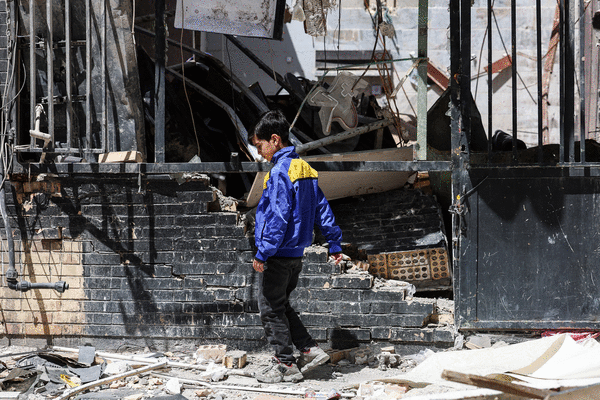
Even as the U.S. and Iran flirt with a return to negotiations, each appears convinced it can dish out more pain — and absorb more — than its opponent. They’d both be wiser to accept the compromises needed to bring their six-week conflict to a close.
Exactly what derailed marathon peace talks in Islamabad last weekend — and whether they were truly “inches away” from a successful conclusion, as Iran’s foreign minister has claimed — remains murky. Reports suggest the main sticking points involved whether Iran would suspend nuclear enrichment for as long as 20 years and surrender its stockpile of near-weapons-grade uranium. What, if any, progress was made toward restoring freedom of navigation in the Strait of Hormuz, or limiting Iran’s missile arsenal and support for terrorist groups, is uncertain.
Each side sees reason to hold firm. U.S. officials view the Iranian economy as near collapse — and think that blockading Iranian ports will tip the regime into crisis. Although costs to the global economy and American pocketbooks continue to mount, there’s still time for them to abate before midterm elections in November. Meanwhile, the president faces pressure to reach a deal that’s stronger than his predecessors achieved, both to justify launching the war and to pacify hawkish allies in Washington and Jerusalem.
For their part, Iranian leaders clearly think that after years of crushing sanctions and weeks of U.S. and Israeli airstrikes, they have a far greater tolerance for pain than their rivals; the blockade, even if successful, isn’t likely to force a quick capitulation. Iranian negotiators also have an unfortunate tendency to overplay their hand, endlessly haggling for a bit more advantage and then being surprised when talks collapse. That the regime is now so fragmented after Israeli decapitation strikes could make it harder to agree internally on difficult concessions.
Both nations ought to appraise their own weaknesses as closely as their rivals’. The U.S. needs to find a way to salvage some strategic gain from this misadventure. A return to fighting would further deplete critical missile inventories, drive up gas prices and harm the economy, raise the risk of military casualties, and distract policymakers from arguably more important global challenges. Meanwhile, if the Iranian regime hopes to survive, it will need funds for reconstruction, an end to its economic isolation and peace with its Persian Gulf neighbors.
In that light, compromise should look rather more appealing. Not every issue has to be solved immediately. Judging by U.S. and Israeli claims about the success of their strikes, Iran’s missiles and proxies should pose a less urgent threat now; the regime will ultimately have to come to some accommodation with its neighbors on both issues if it’s to enjoy the stability needed to rebuild. Similarly, now that Iran has demonstrated it can block traffic through the Strait of Hormuz, it can in theory afford to ease those restrictions — and will need to do so before the U.S. lifts its blockade.
That diplomats are discussing specific time limits — Iranian negotiators reportedly offered to suspend enrichment for three to five years instead of 20 — suggests that finding a middle ground on the nuclear program should be possible, too. Although Iran says it’s only willing to dilute its highly enriched uranium to less-risky levels, it shipped out earlier stockpiles as part of the 2015 nuclear deal with the U.S.; clearly, doing so isn’t a fatal affront to national sovereignty. One nonnegotiable priority must be the return of international inspectors, to restore full monitoring over Iran’s nuclear assets.
The U.S. embarked on this war with grandiose and unrealistic goals. Ending it will require another approach.
____
The Editorial Board publishes the views of the editors across a range of national and global affairs.
©2026 Bloomberg L.P. Visit bloomberg.com/opinion. Distributed by Tribune Content Agency, LLC.




















































Comments