POINT: Throwing parental rights on the barbie won't fly in the United States
Published in Op Eds
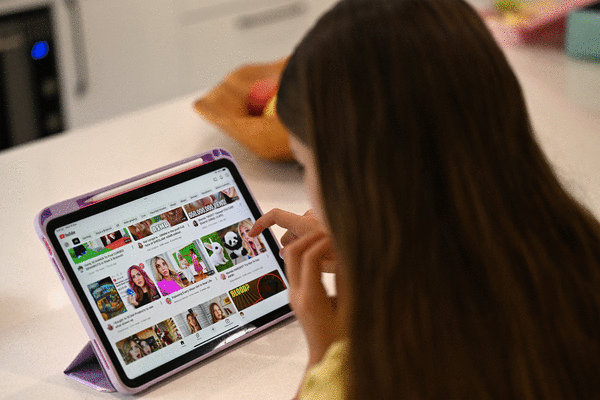
The world’s first social media ban of users under age 16 is now in effect in Australia. Whatever parents’ genuine concerns and understandable frustrations around their kids’ safety online, the Aussie approach is not the answer and should not be emulated by U.S. lawmakers.
The Australian ban covers Instagram, TikTok, Snapchat, X, YouTube and Reddit, among other large, popular platforms. Even parents cannot override the prohibition for their children. Blanket restrictions are appealing to many because they carry the potential to ease the burden of digital parenting. But don’t be fooled: parents are already empowered to protect their kids online, things aren’t as bleak for youngsters as they seem and bans are no silver bullet.
I regret to remind my fellow exhausted and overburdened parents that the government is not a good proxy for hands-on parenting. The good news is that the moms and dads of America don’t need to wait for Congress to pass a bill: They can set the rules of their children’s online life right now. And they’ll do a better job at it to boot.
To state an obvious but often underappreciated fact in this debate, saying “no” remains an option for parents. In the vast majority of cases, parents choose to pay for a phone and its carrier plan. The parental “no” might apply to any kind of phone until a certain age, a flip phone instead of a smartphone to limit social media access, or to set limits on times and places where a smartphone can be used.
It’s not fun to say “no,” but neither is enforcing curfews, having “the talk” or figuring out what’s for dinner (again).
All of those unpleasant parental chores, just like setting parameters for kids online, will look different substantively and in terms of timing from one family to the next.
That’s because not only do values, priorities and standards differ from one household to another, but siblings, even within the same family, may be ready for more or less online time and social media exposure at different ages. Parents, who know their kids best, will make infinitely better personalized choices than a top-down, one-size-bans-all government regulation will.
Parents don’t have to go it alone. Parental control tools already exist at every level of the tech stack. Getting familiar with using them may feel intimidating for some parents at first, but options to help parents are expanding and improving all the time. Or at least they would continue to improve, absent a government blanket ban on kids on social media. A ban might ease the learning curve for parental control tools, but it would also prevent the marketplace from meeting parents’ needs.
For all the negative talk around kids and social media, actual evidence of harm is thin. The scientific literature seems to be a mixed bag and acknowledges that “links between social media and health are complex” and that “the direction of the relationship is difficult to determine, as social media may influence a health outcome and health may influence social media use.”
Simply put, there is insufficient large-scale evidence of harm to suggest that sweeping government bans are superior to more individualized, parental actions.
Bans are no panacea. In practice, bans will be difficult to enforce. Young people are among the savviest online users, and many will surely find ways to circumvent government restrictions. One likely dodge is the use of VPNs to conceal a user’s location and evade government restrictions. VPN use spiked after Utah imposed age-verification requirements for adult content sites. And Down Under, there have already been reports of underage Australian users posting on prohibited sites to demonstrate the practical futility of the ban.
Bans may create more problems than they solve. Restricted access to social media platforms may push kids into much darker corners of the internet that don’t have the protections built into the larger platforms. In the United States, bans would surely face constitutional challenges for violating the First Amendment, as they already have at the state level.
Finally, the reality is that our kids will grow up and have to use social media to communicate with friends, further their careers or maybe even start a business. Keeping them in the dark for too long about how to do so safely isn’t doing them any favors in the long run.
Said no one ever, “If you want something done right, you have to have the government ban it.” Helping kids navigate social media is no exception.
____
ABOUT THE WRITER
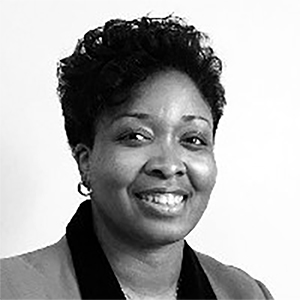
Jessica Melugin is the director of the Center for Technology and Innovation at the Competitive Enterprise Institute. She wrote this for InsideSources.com.
___
©2025 Tribune Content Agency, LLC












































Comments