Commentary: America needs even more billionaires fueled by the American Dream, not fewer
Published in Op Eds

As New York Mayor-elect Zohran Mamdani’s inauguration looms, the wealthiest Americans are being targeted as a rallying cry. In recent weeks, Mamdani’s criticism of millionaires and billionaires has been echoed by Sen. Bernie Sanders, megamillionaire singer Billie Eilish, and even an entity called “Patriotic Millionaires,” which demands higher taxes on those wealthier than them.
Of course, philanthropy is patriotic. While the United States has the most billionaires and millionaires in the world, with 902 billionaires and almost 60 million millionaires, we are also the most philanthropic country across many financial and nonfinancial measures. And you certainly don’t have to be a high-net-worth individual to donate your money and time.
But calling billionaires policy failures is not about fairness. The rich pay much more than their “fair” share, with the top 5% paying 60% of all taxes collected in the U.S. It is a “luxury belief,” proclaiming an opinion to earn status. Debating exactly how much money people should or shouldn’t earn pushes a cultural narrative that frowns on success, disdains merit and the pursuit of meaning, promotes zero-sum thinking, and completely misunderstands the system that led to that wealth and its vast benefits for society.
Critics forget the quintessential American Dream stories that have made the U.S. the land of opportunity. Politicians like Mamdani ignore the myriad of risk-takers and innovators who created job opportunities for millions and improved standards of living for everyone (including his own family ).
One of the best examples is Sam Walton, whose goal was to provide lower-cost items, so people had more disposable income. Walmart now employs 2.5 million people, and both the current and newly appointed Walmart CEOs started as store associates.
The world’s first self-made woman millionaire, Madame C. J. Walker, was a single mother, born to freed slaves. Was she too successful?
Other stories of people pursuing their purpose in life and becoming financially successful abound, such as FedEx founder Frederick W. Smith; Ameritrade founder Joe Ricketts; and my own favorite, Walt Disney, who was born to a poor family with five kids and built an entertainment empire. All of these benefit society.
Financial success follows value creation. Less of it, either by disincentivizing or frowning upon that success, makes us all worse off. Creative entrepreneurial people leave countries that penalize success, such as the United Kingdom, France and more recently Norway. In countries that penalize success, inheritance matters more than effort. In the U.S., 73% of high-net-worth individuals are self-made, while in Norway and Sweden it’s only 47% and 42%, respectively.
Current discontent on affordability misleadingly attributed to billionaires has a clear root cause: lack of housing, “NIMBY” zoning, excessive fiscal spending, energy prices fueled by poor government policies, and even President Donald Trump’s tariffs. But two wrongs don’t make a right when it comes to affordability, and research has shown that there is an anti-profit bias narrative.
Let’s hope that New York’s experiment with democratic socialism is short-lived, and confined to the Big Apple alone. Let’s focus on upward mobility and less on the polarizing, zero-sum narrative of income inequality. Human flourishing comes from positive-sum narratives and from people pursuing their financial success.
Billionaires are the result of innovation, value creation and expanded opportunity that has enabled more paths to human flourishing for billions of people across the world. Dismissing the wealthy as policy failures might score political points, but it can destroy the foundation of a system that has done infinitely more good than harm.
As New York braces for Mamdani, all Americans should rally around the system that supports the American Dream for millionaires, billionaires and all of us who are empowered to flourish too.
____
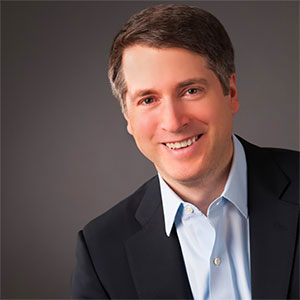
Gonzalo Schwarz is president and CEO of the Archbridge Institute.
___
©2025 Chicago Tribune. Visit at chicagotribune.com. Distributed by Tribune Content Agency, LLC.











Comments