'Dogue' vs. 'Vogue'
Published in Cats & Dogs News
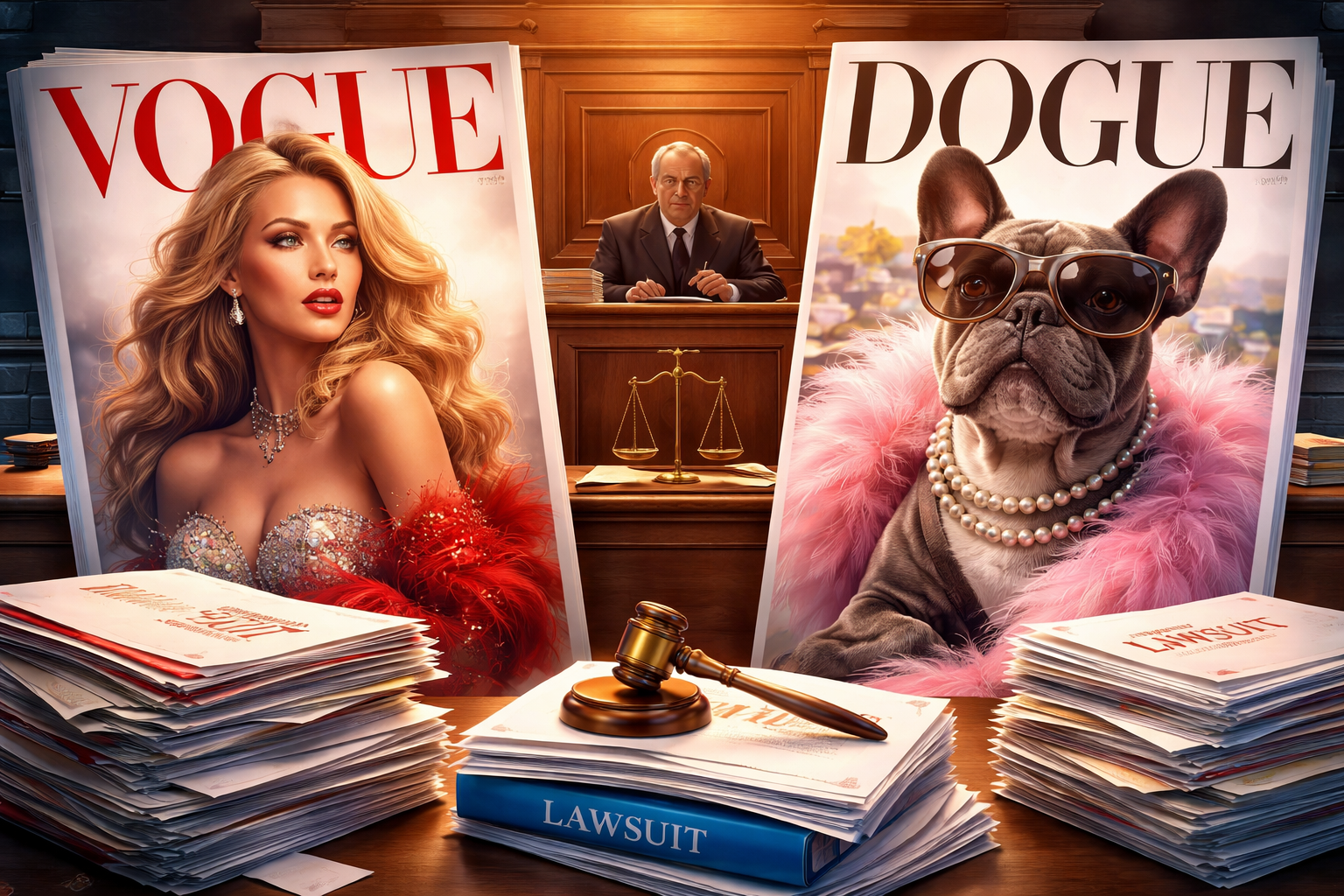
A niche pet-fashion publication with a playful name has found itself in the middle of a serious legal dispute, as Condé Nast, publisher of the iconic fashion magazine Vogue, has filed suit against a small independent outlet called “Dogue.”
At the center of the case is a familiar question in intellectual property law: when does homage or parody cross the line into trademark infringement?
Filed in federal court, the lawsuit alleges that “Dogue,” a digital-first magazine focused on high-end pet fashion and lifestyle, is trading on the established reputation of Vogue by adopting a nearly identical name, similar typography and overlapping editorial themes. Representatives for Condé Nast argue that the similarity is likely to confuse consumers and dilute the brand identity built over more than a century.
The creators of Dogue, however, see the matter differently. They describe their publication as a tongue-in-cheek celebration of the growing pet fashion industry, with content that is clearly distinguishable from its human-focused counterpart.
A question of confusion
Trademark law hinges largely on the likelihood of consumer confusion, and that issue is expected to dominate the case.
Condé Nast’s complaint points to visual and linguistic similarities between the two brands. The word “Dogue,” they argue, is phonetically and visually close to “Vogue,” particularly when rendered in a similar serif typeface. The lawsuit also cites the magazine’s editorial framing — including fashion spreads, seasonal “collections” and lifestyle features — as reinforcing that association.
In legal filings, the company contends that readers encountering Dogue could reasonably assume an affiliation, endorsement or licensed extension of Vogue’s brand into the pet space.
Attorneys for Dogue counter that their audience is distinct and that the context of the publication makes its purpose clear. The magazine’s content focuses on pets — primarily dogs — and often leans into humor, including stylized photo shoots and playful commentary on trends such as canine couture and luxury pet accessories.
They argue that no reasonable consumer would confuse a dog-centered publication with a traditional fashion magazine, regardless of the name.
The rise of pet luxury culture
The dispute arrives at a time when the pet industry is undergoing rapid expansion, particularly in the premium and luxury segments.
In recent years, consumers have increasingly treated pets as extensions of the family, fueling demand for upscale products ranging from organic food to designer apparel. Social media has amplified this trend, with pet influencers and curated accounts showcasing elaborate wardrobes, themed photo shoots and lifestyle branding.
Publications like Dogue have emerged to serve that niche, blending elements of fashion journalism with pet-focused content. Features might include seasonal “looks” for dogs, interviews with pet stylists or coverage of high-end pet events.
From Dogue’s perspective, the name is a natural fit — a playful nod to fashion culture that signals both subject matter and tone.
For Condé Nast, however, that same connection is precisely the problem.
Parody or infringement
One of the central legal questions is whether Dogue’s name and presentation qualify as parody, which can be protected under U.S. law, or whether they constitute infringement.
Parody typically involves imitation for the purpose of commentary or humor, often with a degree of exaggeration or critique. Courts have sometimes been willing to allow such uses, particularly when the intent is clearly expressive rather than commercial.
But the line becomes less clear when the work in question is itself a commercial product.
Condé Nast argues that Dogue is not merely commenting on Vogue, but competing in an adjacent space by leveraging a similar identity. The complaint emphasizes that Dogue operates as a for-profit publication, potentially benefiting from the recognition associated with the Vogue name.
Dogue’s creators maintain that their work is inherently parodic and that the humor and subject matter — dogs rather than human fashion — make that clear. They point to a long tradition of playful imitations in media and branding, arguing that such references are part of cultural dialogue.
Legal experts say the outcome may depend on how the court interprets intent and presentation.
Brand protection in a crowded landscape
For established brands, defending trademarks is often as much about precedent as it is about any single case.
Companies like Condé Nast routinely monitor and challenge uses of their marks that they believe could weaken their distinctiveness. Failing to act, legal analysts note, can make it harder to enforce those rights in the future.
At the same time, the proliferation of niche media and online publications has created a more complex environment, where references, mashups and playful branding are common.
This tension — between protecting established identities and allowing creative expression — has led to a series of similar disputes across industries, from fashion to food to technology.
What comes next
The case is still in its early stages, and it may take months or longer to resolve. Possible outcomes range from dismissal to settlement to a court ruling that could clarify how parody is treated in the context of modern media brands.
If the court sides with Condé Nast, Dogue could be forced to rebrand, potentially losing the recognition it has built. A ruling in Dogue’s favor, on the other hand, could reinforce the boundaries of parody and allow similar publications to operate with greater confidence.
For readers, the case may seem like a minor skirmish over a clever name. But for publishers, it touches on larger questions about ownership, creativity and the evolving nature of media in a digital age.
As pet culture continues to intersect with fashion and lifestyle branding, the outcome of the Dogue case could help shape how far that overlap can go — and how closely one idea can resemble another before it crosses a legal line.
========
Calder Wynn Hart is a features journalist covering media, culture and the evolving dynamics of branding in the digital era. His work focuses on the intersection of commerce, identity and storytelling. This article was written, in part, utilizing AI tools.







Comments