Sandy Hook families weigh in as Supreme Court mulls AR-15 bans
Published in News & Features
Connecticut lawmakers swiftly banned semiautomatic “assault weapons” after a gunman with a Bushmaster XM15 rifle massacred 20 first-graders and six adults at Sandy Hook Elementary School in December 2012.
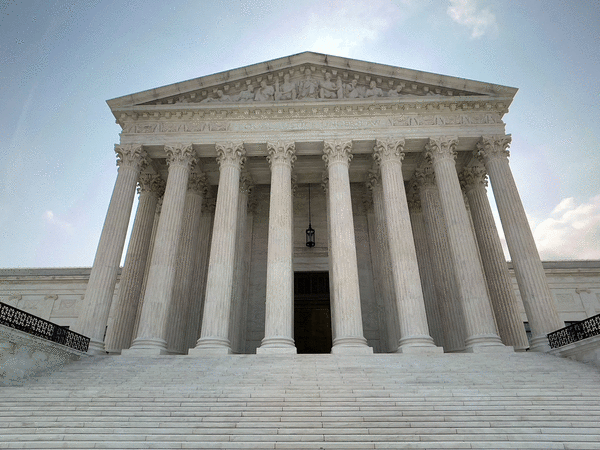
That state ban is now before the U.S. Supreme Court in a case that could produce a major extension of the constitutional right to bear arms, and doom laws outlawing AR-15s and similar weapons in a dozen states. In arguments Wednesday, the court will consider striking down the Connecticut law along with a similar measure in Cook County Illinois, which includes Chicago.
That would put an end to a measure that supporters, including some Sandy Hook families, had hoped would be a meaningful first step toward addressing the plague of U.S. gun violence. The attack remains the deadliest K-12 shooting in American history.
“It would tell me that the Supreme Court doesn’t really care about people,” Nicole Hockley, whose son, Dylan, was killed in the attack and who now runs the gun-violence prevention group Sandy Hook Promise in Newtown, Connecticut. “If they just strike it down, it kind of says, ‘We don’t care about what you want, we don’t care about what you think, we don’t care about what you voted for.’”
The case centers on what the Supreme Court described last year as the most popular rifle in the country. A 2026 survey conducted by Georgetown University Professor William English, a political economist, found that 26 million people owned an AR-15 or similar weapon.
Those guns have been used in some of the deadliest mass shootings in recent years. Gunmen deployed AR-15-style rifles in the 2022 massacre that killed 19 children and two adults at Robb Elementary School in Uvalde, Texas, and the 2018 killing of 14 students and three teachers at Marjory Stoneman Douglas High School in Parkland, Florida.
Dangerous and unusual
The challenge for the law’s defenders will be making those shootings relevant to the conservative-majority court. In a series of divided rulings over the past two decades, the court has said the key question is whether restrictions align with the tradition of American gun regulation — not whether the benefits of gun restrictions to the public are worth the burdens they place on people who want to own or use weapons.
“A constitutional guarantee subject to future judges’ assessments of its usefulness is no constitutional guarantee at all,” Justice Antonin Scalia wrote in the landmark 2008 ruling that said the Constitution broadly protects individual gun rights despite the Second Amendment’s reference to a “well regulated militia.”
The high court since then has established the Second Amendment as a robust guarantee, ruling that people have a right to own a handgun nationwide and to carry it in public for self-defense purposes.
The assault-weapons clash will mark the first time the justices have considered whether a weapon is so lethal it doesn’t qualify for protection. In the 2008 decision, Scalia said the government could continue to regulate “dangerous and unusual weapons.” He also said the Second Amendment, adopted in 1791, protected weapons that were in “common use at the time.”
Gun-rights advocates say that language means the sheer ubiquity of the disputed weapons is reason enough to protect them.
“The AR-15 is the paradigmatic American rifle,” individuals and gun-rights groups challenging the Connecticut and Cook County laws argued in court papers. The lawyers pressing the case declined to make any of the challengers to the Connecticut law available for interviews.
The Trump administration is backing the challengers, calling the AR-15 “the quintessential example of an arm that is in common use among law-abiding citizens for lawful purposes,” including self-defense, target shooting and hunting.
Galvanizing shooting
The Connecticut shooting was perpetrated by a 20-year-old former Sandy Hook student who killed his mother before taking her rifle to the school and firing 154 shots in less than five minutes. Five of the rounds hit Dylan Hockley, who died in the arms of Anne Marie Murphy, a special-education aide killed as she tried to shield him.
The attack became a galvanizing moment for gun-safety efforts and spurred new laws around the country.
The 2013 Connecticut law was enacted less than four months after the attack. It expanded the list of weapons whose sale was banned in the state, adding the Bushmaster XM15 and the AR-15. The law also listed features that in combination would render similar weapons illegal, including a folding or telescoping stock, a forward pistol grip, a flash suppressor and the capacity to accept a detachable magazine.
Connecticut Attorney General William Tong told the Supreme Court that AR-15-style rifles are “unusually dangerous weapons” whose features “enable mass shootings and law-enforcement murders.” Tong’s office declined a request for an interview with him in advance of the argument.
The law let people keep semiautomatic rifles they already owned but barred them from being transferred to someone else. The measure also outlawed high-capacity magazines and took steps to strengthen school security, increase background checks and improve mental health services.
The legislation passed on a 26-10 vote in the state Senate and 105-44 in the House before Democratic Governor Dan Malloy quickly signed it into law.
Dissenting voice
Though the measure won bipartisan support, a majority of Republicans opposed it. State Senator Rob Sampson, a Republican who voted against the bill as a member of the House in 2013, said lawmakers overreacted in the face of “extreme pressure” to do something after the attack.
“There’s nothing in the legislation that passed that would have made the slightest bit of difference had it been in place before that fateful day,” Sampson said in an interview at the state capitol, where next year he will be one of only three Republicans in the 36-member Senate. He said the law “is suggesting that somehow the elimination of the rights of some individuals makes other people safer, and that’s patently false.”
Supporters of the ban include Everytown for Gun Safety, an advocacy group founded and backed by Michael Bloomberg, founder and majority owner of Bloomberg News parent company Bloomberg LP.
Hockley was among those who lobbied for the law. She helped found Sandy Hook Promise only a month after the shooting as she coped with the death of her son.
“I’m just that sort of person that needed to do something and had no idea what that something was and embarked very quickly on a way to learn,” she said in a sunny office filled with images of Dylan, whom she likened to a butterfly because of the way he flapped his arms when he got excited.
Sandy Hook Promise has evolved since then, with its most tangible impacts coming outside the policy realm. Its “Say Something” anonymous reporting system has helped stop at least 20 planned school shootings and prevent more than 1,300 youth suicides since 2018, according to Hockley. The group takes pains to be nonpartisan, viewing that as an essential element for making lasting change, she said.
But the Supreme Court clash hit too close to home for the group not to be involved. The court’s decision to take up the case prompted Sandy Hook Promise to file its first-ever friend-of-the-court brief, urging the justices to uphold the law and give states leeway to address mass shootings.
Hockley later secured a seat for Wednesday’s argument and will attend along with Sandy Hook Promise co-founder Mark Barden, whose son, Daniel, was also murdered in the attack.
She said she sometimes wonders what the country’s founders would think if they could see how the Second Amendment was being applied today.
“Yeah, I wasn’t expecting that,” she said, imagining their reaction. “My ‘well regulated militia’ had nothing to do with a shooter taking an AR-15 into a school and murdering 20 6- and 7-year-olds.”
The cases are Khaya v. Cook County, 25-238, and Grant v. Higgins, 25-566.
_____
©2026 Bloomberg L.P. Visit bloomberg.com. Distributed by Tribune Content Agency, LLC.





Comments