Rev. Jesse Jackson was a 'giant figure in the world,' but he stayed rooted in Illinois
Published in News & Features
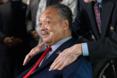
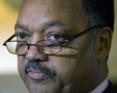
CHICAGO — Courtney Carson did not want to go to the Decatur church that November day in 1999 when the Rev. Jesse Jackson came to town for a rally. To do so, he remembered all these years later, was to admit a truth he had been trying to deny, that he had taken part in the melee that broke out two months earlier in the stands at a high school football game.
Carson’s mother insisted he be there; she had been one of the voices calling for Jackson’s help. Her son, then 17, and five other teens — all of them Black — had been expelled from school for two years over the fight and barred from seeking alternative schooling in the district (a seventh student dropped out before the expulsions came down).
Some in the community believed the school district’s zero-tolerance discipline policy was too severe and too often wielded against Black students.
Jackson agreed. And so, he and a busload of protesters made the nearly three-hour drive from Chicago to the central Illinois city to lead demonstrations in support of the so-called Decatur 7.
Jackson’s presence put a national spotlight on Decatur and eventually led to a compromise that shortened the teens’ expulsions.
For Carson, the moment would change the trajectory of his life.
“He was, for me personally, my lifesaver,” said Carson, now 43. “He was more than a superhero to me. He was more than the greatest civil rights leader that I knew. He was a father figure, that individual who answered the phone when I was faced with a challenging controversy. He was able to give me direction. When I felt like the world threw me away, he caught me and showed me the way to live a better life.”
Jackson’s six-decade career as a civil rights leader took him across the country and around the world. He advocated for the rights of coal miners in Virginia in 1989 and for statehood for Washington, D.C., in the 1990s. He fought to end apartheid in South Africa throughout the ‘80s and ‘90s, to free prisoners in Syria and Cuba in 1984 and the former Yugoslavia in 1999. In 1985, Jackson called for working with Soviet leader Mikhail Gorbachev to end the arms race and denounced President Ronald Reagan’s Central American wars in the 1980s. His international efforts garnered awards and recognition from leaders in the United States, South Africa and France.
And yet, Jackson, who died Tuesday at 84, never lost sight of the issues affecting his adopted home city and state.
“He’s been such a remarkable human being, a standpost of hope for so many in this world,” Carson said. “To be this giant figure in the world and to the world, and to make time for little ol’ me, I’ll never forget that.”
From Greenville to Chicago
Jackson began as Jesse Louis Burns in Greenville, South Carolina, on Oct. 8, 1941, a child of Helen Burns, a beautician, and Noah Robinson, a worker whose job entailed grading the quality of cotton.
Burns would eventually marry civil worker Charles Henry Jackson, the man whose surname Jackson took after his adoption in his teen years.
Jackson was an honor student, a class president and an athlete at Sterling High School in Greenville. A football scholarship would bring him to the University of Illinois at Urbana-Champaign. But after Black fraternities and sororities were not allowed to attend an all-Greek dance on campus where Duke Ellington’s band played, Jackson transferred to North Carolina Agricultural & Technical College in Greensboro the following year.
By the summer of 1960, Jackson and seven others, known as the Greenville Eight, were arrested after staging a sit-in at the whites-only Greenville County Public Library. The library became integrated as a result of public demonstrations by the Black community.
Hermene Hartman was a college student in the late 1960s when she met Jesse Jackson at an Operation Breadbasket meeting. Jackson had been picked by the Rev. Martin Luther King Jr. to lead the economic justice initiative’s Chicago chapter, and then as its national director.
Jackson invited Hartman to Breadbasket’s offices. Soon, she was helping organize boycotts of Chicago grocery stores that did not do business with Black vendors.
“He was very smart,” Hartman, 78, said of Jackson. “We talked a lot. He’d ask me what I was reading. We’d talk about John Locke, the Federalist Papers, sociological theory. He’d ask what I thought about this and that.”
By 1971, Jackson resigned from the Southern Christian Leadership Conference and formed People United to Save Humanity, or Operation PUSH (it was later changed from “Save” to “Serve”). Hartman continued to work with Jackson, helping organize its annual Black Expo in Chicago, meant as a showcase of Black business, culture and entertainment.
The following year, at the Democratic convention in Miami, Jackson and Chicago Ald. William Singer successfully ousted an Illinois delegation of 59 people controlled by Mayor Richard J. Daley, arguing that the Daley slate did not reflect the voters’ demographics.
The move delivered a crushing blow to the seemingly all-powerful Chicago machine boss, four years after the national embarrassment of the ’68 convention in Chicago.
“I think what you saw if you look at the big picture: Jesse took Daley on,” Hartman said. “He took the political machine on, and was fighting through his means of out-organizing, marching, protesting.”
During Jane Byrne’s tenure as Chicago mayor from 1979 to 1983, Jackson successfully mediated a deadly, weekslong strike among Chicago firefighters.
“Jesse was a doer,” Hartman said. “Nobody asked him to do that. He did it because it needed to be done.”
He also led a boycott of ChicagoFest in opposition to Bryne’s decision to replace three Chicago Housing Authority board members who were Black with three white members.
Many credit the boycott and Jackson’s tireless efforts to register voters in Black communities with helping propel Harold Washington to become the city’s first Black mayor in 1983.
Illinois Attorney General Kwame Raoul called Jackson’s work and Washington’s election “hugely impactful on me and my subsequent interest in public service.”
Raoul grew up a block or so from the Kenwood headquarters of Jackson’s Rainbow PUSH Coalition. As a kid in the 1970s, he’d ride his bicycle every Saturday morning past a line of cars parked outside the limestone-clad building with its towering columns. It wasn’t until he was 13 or 14 that he worked up the courage to go inside.
“It was kind of cool to see in person,” Raoul said, “him delivering the lines that he would constantly deliver: ‘I am somebody. Down with dope. Up with hope.’ This person I knew as a kid was more than a figure in Chicago — was a national figure — was so within my reach, just a block or so away.”
Later, Raoul would take his own children to see Jackson, “because I thought it important that if you have this type of leader in such proximity to your home that you be there.”
Raoul, whose parents were Haitian immigrants, said Jackson “would not hesitate” to call him and challenge him “to raise my voice in advocacy for Haiti.”
“There was no accepting of nothing being done,” he said. “And I think that’s important because obviously I’ve spent a significant part of my adult life as a public servant, and it’s easy to hide behind: ‘This is not my domain. This is not within my position.’ When in reality, advocacy allows for just about everything to be within your domain.”
Jackson’s own political career saw him twice seek the Democratic Party’s presidential nomination, in 1984 and again in 1988. His presidential campaigns preceded the elections of the first Black mayors of New York City, Seattle, and Durham, North Carolina; the first Black governor of Virginia, and the first Black woman to the U.S. Senate, Chicago’s own Carol Moseley Braun.
His son U.S. Rep. Jonathan Jackson, mentioned that Gov. Abigail Spanberger, the first female governor of Virginia, made Jesse Jackson buttons in 1988 when he was running. And former Vice President Kamala Harris had a “Jesse Jackson for President” bumper sticker on her car back in the ‘80s.
Jesse Jackson’s “Rainbow Coalition” speech at the 1984 Democratic National Convention is considered by academics to be one of the greatest examples of 20th-century American political rhetoric. It’s remembered both for its message of social, racial and economic equity — themes that would come to shape the Democratic Party platform — and as being the culmination of a groundbreaking presidential campaign in which the civil rights leader became the first Black person to win a major party’s state primary or caucus, a feat unmatched until Barack Obama in 2008.
Some credit Jackson with pushing the Democratic Party to change its nomination process from a winner-take-all approach to a system in which candidates were awarded delegates in proportion to the votes they received — a change, it’s been said, that opened the door for Obama’s 2008 victory over Hillary Clinton on his way to winning election as the first Black president.
Beyond politics
Jackson’s influence on Chicago and Illinois went beyond politics. While he could meet with heads of state and country leaders, he would make time to listen and speak with people, providing a lifeline to those who needed an ear.
Cameron Barnes, 27, national youth director for the Rainbow PUSH Coalition, said Jackson’s team would often try to keep him on schedule when he was attending events, but he couldn’t be rushed. He would reprimand those on the PUSH team because he wanted to take his time with the people who would tell them their stories.
“He doesn’t cut them off when they’re talking. They begin crying when they’re speaking to him,” Barnes said. “He would remind us, the people are the reason why we’re even here in the first place. I’m never going to be too busy.”
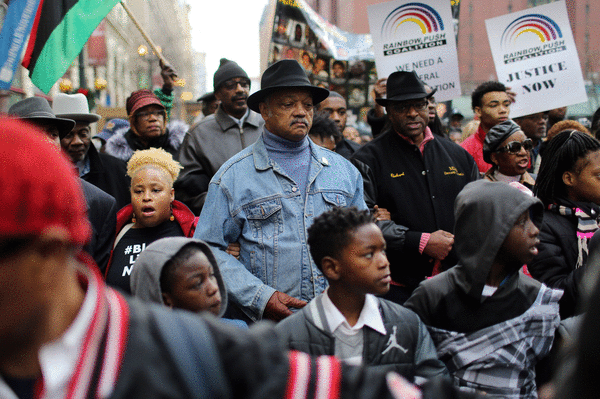
Jackson made annual visits to Cook County Jail and marched city streets in opposition to gun violence or police brutality.
“He always wanted his plate full of what to engage in, in Chicago in particular,” Raoul said. “Yes, he was an internationally known figure, but his local influence and his affinity for the city was undeniable. Whether you agreed with him or not, you had to deal with him.”
One October day, a year or two after the Rev. Marvin Hunter’s great-nephew Laquan McDonald was shot dead in 2014 by a Chicago police officer, Hunter received an invitation to fly out to Los Angeles to visit Jackson, who was celebrating his birthday at a Beverly Hills hotel.
The two men sat in the hotel lobby at 3 a.m. and talked about what happened to the 17-year-old, about the impending criminal case against the officer who fired the 16 bullets that killed him, and about how to best serve Hunter’s grieving family and humanity.
“My goal was justice,” Hunter, 59, recalled. “I needed the wisdom of a Rev. Jackson to stay focused and find out how that could happen. And he was able to provide that.”
Jackson remained in contact with Hunter throughout former Officer Jason Van Dyke’s subsequent trial and conviction. He’d ask how the family was doing, if he could help.
“He was a father. He was an activist. He was a humanitarian. And he was a friend,” Hunter said.
The day after Jackson’s death, Irene Robinson sat on a panel at Malcolm X College alongside her granddaughter, Kyla Nash, the 18-year-old narrator of the documentary film “Against the Current,” which examines how the Black community in Illinois has resisted racist systems. Robinson recalled when Jackson stood with her and others during a 34-day hunger strike in 2015 to keep Dyett High School open. Before she left the stage, she shouted Jackson’s mandate, “Keep hope alive.”
“I was so proud to build a relationship with him at that time,” she said. “He was a great leader who left a great legacy. Now we have to fight to continue to fight for the next generation. We can’t walk in fear; we have to walk in our authority.”
Rainbow PUSH’s Barnes took a weeklong tour of historically Black colleges and universities in 2015. He’s been part of the organization ever since. After graduating from Central State University, Jackson asked Barnes, a Roseland native, to serve as the national youth director. He’s held the position for the last 11 years, traveling with Jackson until Jackson’s mobility issues became a concern.
This week, Barnes was in Houston on a get-out-the-vote tour, “doing the work that he taught us how to do,” he said. University students were marching from campuses to polls, saying it’s not a matter of picking up Jackson’s torch, but earning theirs.
Nate Rodgers, 41, a journalist and East Garfield resident, lost his father at the age of 6. His mom had to raise three children on her own. He grew up at Rainbow PUSH, a self-described PUSH baby. His aunt is the Rev. Janette Wilson, a senior adviser to Jackson. The organization gave Rodgers exposure to leaders at a young age. He recalls being in rooms with Nelson Mandela, Louis Farrakhan and Carol Moseley Braun. It was access that he did not appreciate until now.
“Everybody from everywhere would come to PUSH,” Rodgers said. “The fear that I have is that my generation had access, but our modern-day savior is now gone. Younger generations, they don’t have this person, they don’t have the experiences, and they may not even know the history. When you hear about the challenges Black men deal with, you think, ‘Praise God I had access to somebody like Jesse Jackson, Rainbow PUSH’ — that’s what saved me.”
Rodgers saw Jackson as an uncle figure. He laughs recalling how as a child the threat of an adult calling “Reverend” as a disciplinary measure to shenanigans got results.
“When my mom or grandfather said ‘I’m calling Reverend, that was a threat,” Rodgers said. “It was a threat to world leaders because people knew Rev. Jackson was going to do something about it. That’s all you had to say, I’m calling Reverend.’ And Rev. Jackson would show up.”
Case in point: In 2021, Jackson came out to the city’s Eden Green neighborhood to see the substandard living conditions of residents at a 297-unit apartment complex — privately owned but federally subsidized. “We’re a part of this process so people don’t feel alone,” Jackson said of PUSH’s involvement. “We want the standards raised.”
‘He always called me back’
Jackson’s 1999 visit to Decatur was met with mixed reactions. While praised by some, others saw it as a misguided publicity stunt.
The New York Times quoted the school district’s superintendent at the time, Kenneth Arndt, as saying: “Rev. Jackson has done a lot of wonderful things for our country, but I think he’s really picked the wrong case here. This is not Selma.”
But to Carson, one of the expelled teens, Jackson had exposed Decatur’s racial divide to the larger public. “We knew there was a significant divide present here,” he said, “not just in the culture, but in the community, in local government, how the school district hired Black folks, how Black folks were going to work or the lack thereof.”
To punctuate the point, he added: Jackson’s visit sparked dual demonstrations from separate white supremacy groups.
Carson and the other teens were eventually charged in connection with the fight — he served a short stint in jail on a misdemeanor battery conviction. Jackson was also briefly jailed following a demonstration outside the high school. Then-Gov. George Ryan stepped in to help broker a deal.
When the dust finally settled, Carson continued to seek Jackson’s guidance.
When Carson wanted to earn his GED certificate, Jackson encouraged him to do so. When he couldn’t afford to continue his undergraduate education at Aurora University, Jackson’s organization awarded him a scholarship.
“He never stopped answering the phone for me,” Carson said. “He never stopped having conversations with me. He always called me back. Sometimes those calls would be at 2 a.m. just because of where he was in the country. He has always made time for me when there were no cameras. He was always providing mentorship when there were no cameras. My own father acted as if he didn’t want me. Rev. Jackson embraced me.”
Carson eventually graduated from Aurora University and earned his master of divinity degree from Illinois Baptist College. He was elected to the same school board that expelled him.
“Here’s a case of another ghetto kid thought to be very dispensable and thrown away on stereotypes,” Jackson said of Carson in a 2017 Chicago Tribune story. “The case of a rejected stone who became a cornerstone.”
Today, he is vice president of external relations at Richland Community College in Decatur, where he runs the EnRich program he created that offers students life and skills training. It’s based in part, he said, “on what Rev. Jackson was to me.”
Late last month, Carson visited Jackson at his Chicago home. He joked about Jackson’s rap career — he appears on Che “Rhymefest” Smith’s 2016 song, “Master Mind,” reciting part of his iconic “I am somebody” speech.
Jackson said nothing; Parkinson’s disease — he was diagnosed in 2015 — and progressive supranuclear palsy had robbed him, and the public, of his unmistakable voice.
Before he left, Carson told Jackson about his family and his 1-year-old son, named Chi Jesse Jackson Carson in honor of the man who changed his life.
Jackson turned his head toward Carson. His eyes widened. “I saw him light up,” Carson said.
©2026 Chicago Tribune. Visit chicagotribune.com. Distributed by Tribune Content Agency, LLC.





Comments