Seminole Tribe's $4B Las Vegas project marks new chapter in tribal gaming
Published in Business News
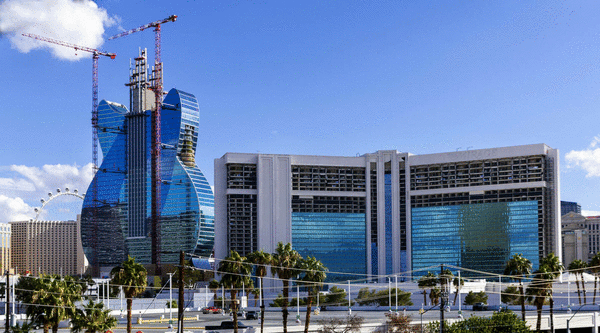
The 660-foot guitar-shaped hotel rising above the Strip represents more than just another addition to the Las Vegas skyline for Marcellus Osceola Jr.
For the chairman of the Seminole Tribe of Florida, the Hard Rock Las Vegas project is another milestone in a decades-long evolution of tribal gaming, one that began with a high-stakes bingo hall in Florida and has grown into an international gaming and entertainment enterprise.
That history is personal for Osceola, whose grandfather, Bill Osceola, was the Seminole Tribe’s first Tribal Council chairman. Elected in 2016 and re-elected in 2019, the younger Osceola is the seventh person to hold the position.
The opportunity to bring the Hard Rock brand to the Strip, he said, represents both the tribe’s continued growth and its responsibility to future generations.
“It means a great deal to me because it’s supporting the efforts back home,” Osceola said, referring to the tribal programs funded by gaming revenue, including medical care, education, recreation and services for seniors. “And (it means) making sure the tribe is stable long after my tenure.”
Right opportunity in Las Vegas
The Seminole Tribe’s gaming enterprise traces its origins to 1979, when it opened what became the first high-stakes bingo hall and casino in the United States. The operation, now known as Seminole Classic Casino Hollywood, helped establish a model that would spread throughout Indian Country.
Just shy of five decades later, the tribe is preparing to open Hard Rock Hotel & Casino Las Vegas and the adjoining Guitar Hotel Las Vegas on the site of the former Mirage hotel-casino. The approximately $4 billion development is scheduled to open in late 2027 and will feature nearly 3,600 hotel rooms, about 175,000 square feet of gaming space, entertainment venues, restaurants and other amenities.
Hard Rock International, which the Seminole Tribe bought in 2007 for $965 million, purchased The Mirage’s operating business from MGM Resorts International for $1.075 billion in 2022. VICI Properties owns the underlying real estate.
Las Vegas was the latest step in a long-running expansion strategy. Osceola said the tribe had spent more than a decade exploring expansion opportunities, including its 2018 entry into Atlantic City through the purchase and redevelopment of the former Trump Taj Mahal. The Mirage, he said, offered the right combination of location, acreage and opportunity.
“We’ve been looking for a long time,” he said. “And we waited for the right opportunity.”
‘No limit’ to tribal growth in gaming
The Seminoles’ investment reflects how far tribal gaming has moved beyond its original geographic boundaries. What began as a means of generating revenue for tribal communities has developed into an increasingly sophisticated commercial enterprise, with tribes acquiring established casino properties, developing destination resorts and expanding internationally.
Victor Rocha, conference chair at the National Indian Gaming Association and owner and editor of Pechanga.net, sees the Seminoles’ expansion as representative of that broader transformation.
“The story of the Seminoles is the story of Indian Country,” Rocha said. “Taking the opportunity that was presented before us and making much more of,” the Indian Gaming Regulatory Act of 1988.
As evidence, he pointed to successful tribes such as the Mashantucket Pequot Tribal Nation, which developed Foxwoods Resort Casino in Connecticut, to the Seminoles’ acquisition of Hard Rock International, an internationally recognized entertainment and hospitality brand.
With that growth, Rocha said, tribes have demonstrated that their gaming enterprises can succeed well beyond reservation boundaries.
“With every victory, we’ve learned as Native American tribes that there’s no limit to where we can grow, especially in gaming,” he said. “So, Las Vegas would just seem like the natural place.”
Mohegan in Southern Nevada
When the Seminole Tribe purchased HRI in 2007, the Hard Rock Las Vegas hotel-casino on Paradise Road was excluded from the deal. A dozen years later, tribal gaming’s initial entry into the Las Vegas market came through management agreements rather than ownership.
The Mohegan Tribe announced in 2019 that it would operate the casino at the former off-Strip Hard Rock hotel-casino, which reopened as Virgin Hotels Las Vegas in 2021. The arrangement marked the first time a tribal gaming enterprise managed a commercial casino in the market.
That agreement ended in 2024, when Virgin announced it would assume control of casino operations. Mohegan did not publicly explain its decision to relinquish the management role.
Mohegan elected not to participate in this story.
A rising tide lifts all boats
The Yuhaaviatam of San Manuel Nation’s $650 million acquisition of the Palms hotel-casino in 2021 represented a different approach, establishing the first tribal ownership of a Las Vegas casino.
The tribe reopened the off-Strip property in April 2022 after it had remained closed following Nevada’s pandemic-related casino shutdowns. Since then, San Manuel has expanded the gaming floor, including increasing its slot inventory from 1,275 machines at acquisition to nearly 1,800, according to Peter Arceo, the tribe’s chief gaming officer.
The Palms also recently added a dedicated nonsmoking gaming area, reflecting an effort to attract customers looking for alternatives in a market where such options have historically been limited.
Arceo said the tribe viewed Las Vegas as a natural extension of its established gaming business in Southern California, offering opportunities to introduce existing customers to the Palms while attracting Las Vegas visitors to its flagship Yaamava’ Resort & Casino.
He also sees additional tribal investment as beneficial to the Las Vegas market.
“We don’t see that as a threat to the Palms, because we think that it’s going to boost the city as a whole,” Arceo said of Hard Rock’s impending arrival. “The more Las Vegas thrives, the more everyone that’s within the city thrives.”
Pathway to more tribal gaming operators in the desert
Rocha said the different approaches taken by San Manuel and the Seminoles illustrate that tribal gaming enterprises are not following a single expansion strategy.
“The tribes are not monolithic,” he said. “It’s a different path to success.”
The potential for further expansion extends beyond the two tribes already operating in Las Vegas.
The Mandan, Hidatsa and Arikara Nation, also known as the Three Affiliated Tribes of the Fort Berthold Indian Reservation, spent more than $115 million acquiring approximately 23 acres along Las Vegas Boulevard near the south end of the Strip. Several years ago, the tribe proposed a roughly $2 billion development that would include a casino-resort, hotel, convention center, theater and an indoor arena with seating for 15,000 to 20,000 people. No progress has been made on the proposal.
Arceo said he would not be surprised to see more tribes enter the market through acquisitions or management agreements. Rocha also pointed to the Three Affiliated Tribes’ land holdings as a potential future development opportunity.
‘First is not a curse’
For Osceola, being the first tribal developer and operator of a casino-resort on the Strip carries historical significance, but he said the tribe has experience breaking new ground in gaming. The pressure, if there is any, is a privilege for Hard Rock.
“Being first is not a curse,” he said. “It’s a great opportunity.”
He also emphasized that the project is part of a broader effort to create economic stability for the Seminole Tribe, rather than simply an opportunity to compete in one of the world’s most recognizable casino markets.
Tribal gaming’s past gives way to its future
Rocha sees the growing tribal presence as another chapter in Las Vegas’ own history of reinvention. The city has repeatedly reshaped its identity, most recently expanding into professional sports and entertainment beyond traditional casino offerings.
With tribal gaming enterprises increasingly investing in the market, he believes they will help shape what comes next.
Thirty years ago, Rocha said, tribal gaming interests and Las Vegas operators often viewed one another as adversaries. He sees a different relationship developing today, particularly as the broader gaming industry faces new competition from prediction markets and other forms of wagering.
“We’ve learned there’s enough to share for everyone,” he said.
The giant guitar taking shape above the Strip may be the most visible symbol of that arrival. But for the Seminole Tribe, its significance extends beyond the Las Vegas skyline.
Osceola said the opportunity exists because of the sacrifices made by previous generations of tribal members, whose survival and perseverance created the foundation for today’s economic opportunities.
“With all that from our ancestors, we’re able to be here today,” he said.
___
©2026 Las Vegas Review-Journal. Visit reviewjournal.com.. Distributed by Tribune Content Agency, LLC.



Comments