What Jensen Huang's departure means for the Bay Area
Published in Business News
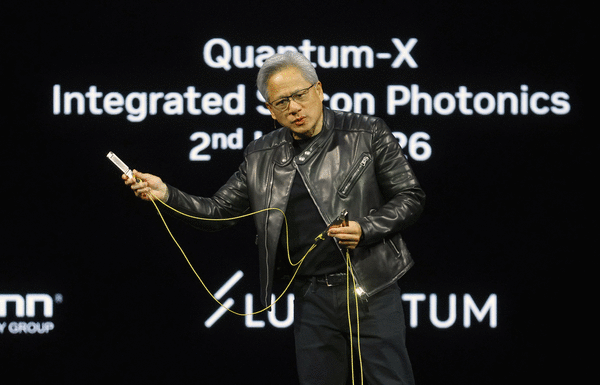
In March, Santa Clara, California-based Nvidia’s influence on the Bay Area could be seen in the occupied restaurant tables and crowded sidewalks of downtown San Jose. Technology workers wearing green conference badges filled coffee shops and hotels as the chipmaker’s annual gathering brought the AI industry to town.
For a downtown still struggling to recover from the pandemic, Nvidia’s ambitions had become something tangible: customers.
Eight months later, Jensen Huang’s abrupt resignation has left the region confronting how much of the company’s momentum belongs to the institution he built — and how much depended on his judgment, relationships and willingness to bet on what came next.
For Bay Area companies that depend on Nvidia’s technology, the immediate disruption could be limited. Existing product plans and supply agreements should keep customer orders filled, industry analyst Tim Bajarin said. The longer-term stakes extend to local hiring, investments in AI companies and Nvidia’s own expansion — decisions its next leader will help shape while working to retain the people behind its success.
“That supply position does not walk out the door with one person,” Bajarin said.
Huang resigned Thursday as president, CEO and a director of the Santa Clara company he co-founded in 1993. Nvidia named Chief Financial Officer Colette Kress interim CEO while its board searches for a permanent successor, considering both internal and external candidates.
The resignation followed reports of extramarital affairs, including one with a woman suspected of spying for China and another with an executive who reported to him, according to The New York Times. Reuters separately reported Thursday, citing two people familiar with the matter, that Huang had an intimate relationship with a second Nvidia employee. Huang publicly acknowledged infidelity Sunday.
Nvidia has been a source of local hiring growth even as other large technology employers have pulled back. Its Bay Area workforce grew by about 1,000 in 2025, the biggest increase among the region’s 20 largest tech employers, according to estimates in Joint Venture Silicon Valley’s 2026 Silicon Valley Index. Those companies collectively reduced their Bay Area workforce by about 13,400, or 5%.
Its plans to expand in Santa Clara are still moving through city review. On Nov. 18, the city is scheduled to consider Nvidia’s proposal for a 692,634-square-foot office building at 2300 and 2350 Walsh Avenue. City staff recommends approving the architectural review for the project, which would replace 12 existing industrial buildings and connect to Nvidia’s campus by a pedestrian bridge over Walsh Avenue.
Nvidia did not respond to questions about what the leadership transition could mean for its Bay Area workforce, investments and expansion plans. Its board said Thursday it expected operations, customer commitments and product development to continue without interruption.
Bajarin expects Nvidia’s near-term business to be supported by decisions made well before the leadership crisis. Future chip generations are already being designed, prepared for manufacturing or ordered, he said. The company has spent years securing access to chip manufacturing, advanced packaging, specialized memory and the partners that assemble its computing systems.
Bajarin expects existing orders to be filled and sees the product business remaining strong for at least two years.
His confidence, he said in a follow-up email, rests on the multiyear plans Huang laid out publicly at Nvidia’s GTC conference in March — the same gathering that filled downtown San Jose. Nvidia’s presentation included its Vera Rubin computing platform and plans for a subsequent architecture called Feynman.
Bajarin founded Creative Strategies and said he has retired from the firm and has no current involvement in it. Nvidia continues to purchase the company’s research reports, he said.
For businesses elsewhere in the Bay Area, Nvidia’s future is already woven into their own.
Robotics company Figure announced a partnership with Nscale in September for access to as many as 100,000 Nvidia graphics processing units, or GPUs, with initial deployment targeted for the second half of 2027 in Texas. The computing capacity is intended to help train Figure’s artificial intelligence models for humanoid robots.
Together AI, which provides services for developing and running AI models, has a multiyear, $240 million agreement with IBM involving Nvidia systems, with availability expected in early 2027. Nvidia also participated in Together AI’s $800 million funding round announced in July.
Figure and Together AI did not respond to requests for comment.
The agreements show how other companies have made plans around Nvidia’s products, with deployment dates extending well beyond this week’s upheaval. Nvidia’s investment in Together AI also makes it a financial backer of a business using its technology.
Nvidia reported about 42,000 employees worldwide at the end of its fiscal year in January, including 31,000 in research and development. Its next leader will inherit that workforce along with the task of keeping the people who turn product plans into working systems.
Bajarin said many key technical employees have worked with Huang for at least a decade. Engineering, software and supply-chain expertise will all be important to the company’s future, he said.
He has no indication that key people are preparing to leave.
“At the moment they all seem committed to Nvidia,” he said.
Employees also have a financial stake in the company’s performance through stock compensation. Nvidia recorded nearly $4 billion in stock-based compensation expense worldwide in the six months ended July 26, up about 28% from a year earlier, according to a securities filing. Those figures do not identify the portion attributable to Bay Area workers or the current value of their holdings.
The transition could create an opening for competitors, Bajarin said, although he believes Nvidia’s current products and ability to deliver future generations remain ahead of its rivals.
The next earnings report will offer only a partial view of the transition. Results due Tuesday cover a quarter that ended Oct. 25, before Huang resigned. Bajarin expects strong numbers; the question of how the company develops under a new leader will take longer to answer.
The succession question also reaches into how Nvidia is managed. In a 2024 interview at Stripe’s annual conference, Huang said all 60 members of his leadership team reported directly to him. He described discussing problems and decisions with the group so everyone could hear the reasoning. That approach raises another question for the transition: how much of the management system he built will carry over to his successor?
Bajarin said he believes an internal successor would offer the strongest continuity. His preferred choice is Ian Buck, Nvidia’s vice president of hyperscale and high-performance computing, who joined in 2004 and helped develop CUDA, the software platform that enabled programmers to use its GPUs for general computing.
“Whoever becomes the next CEO has to be well informed on Nvidia’s architecture, supply chain, and customers,” Bajarin said.
The crowds that filled downtown San Jose in March were one visible result of years of Nvidia decisions. The company’s product plans, hiring and proposed expansion show how far those decisions extend beyond a conference week. Its next leader will inherit that reach — and the task of deciding where it grows from here.
©2026 MediaNews Group, Inc. Visit at mercurynews.com. Distributed by Tribune Content Agency, LLC.









Comments