Are your feeders full? Birds need birdfeeders more than ever in heavy snow.
Published in Outdoors
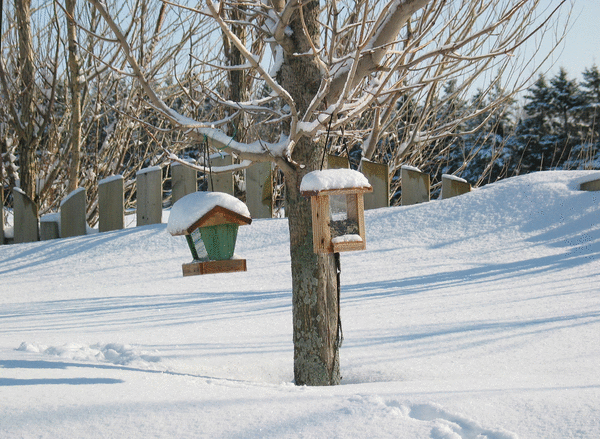
PITTSBURGH — More than a foot of snow has blanketed many areas where local birds look for food.
"So if you have been feeding birds this winter, don't stop when conditions are at their worst," says Kenn Kaufman, a national bird author and artist who visits Pittsburgh regularly.
In the run-up to the Pittsburgh region's biggest snowfall in 16 years this past weekend, the Audubon Society of Western Pennsylvania reported an influx of customers stocking up on birdseed from the nature store its Beechwood Farms in Fox Chapel.
The birds need the extra food now, according to experts.
"Most of the time, birds aren't really dependent on our artificial feeding. They can get by just fine on their own," Kaufman wrote on his Facebook page this weekend.
"Most of these birds can survive extreme cold if they can get enough to eat. Heavy snow cover can make it harder for them to reach natural food supplies, and ice cover is especially dangerous," he said.
Birds might be experimental in what they will eat in frigid conditions, he added. Sparrows may gravitate to a suet cake instead of relying on seeds.
"If you have a chance to watch feeder birds during this winter storm, you may witness some novel behaviors."
The heavy snow can cause birds to leave and roam farther afield to find food, he added.
Pittsburghers and others should be on the lookout for some unusual visitors at their feeders during heavy snowfall.
For example, Kaufman and his wife, who live in northwestern Ohio, don't ordinarily see American tree sparrows at their feeders. But when the snow falls, they show up and leave when it melts.
Bird behavior can also change during extreme weather conditions, Kaufman said.
"Dark-eyed juncos are well adapted to winter, and in the coldest temperatures they often hop around on one foot, keeping the other foot drawn up among their belly feathers to cut down on heat loss," Kaufman said. "Other species may do the same."
During severe winter weather, birds stay warm by fluffing their feathers to trap heat. They hunker down somewhere away from the elements.
Audubon closes 2 small stores
Audubon closed its two small nature stores within their larger nature parks in Butler County last week.
The closures of the stores, which had limited hours and smaller inventories compared to the larger Beechwood Farms facility in Fox Chapel, were prompted by changes in public shopping behavior post-pandemic and Audubon's desire to redirect resources for education and public programs, said Chris Bason, Audubon's executive director.
The Succop Nature Park in Penn Township and the Buffalo Creek Nature Park in Sarver will remain open, continuing nature programming and access to trails and rental facilities.
Audubon will sell one of its most popular items — Beechwood Blend bird food, formulated for southwestern Pennsylvania birds — at those two Butler nature parks next month, with pickup beginning in March. Audubon also sells food online at aswp.app.neoncrm.com/np/clients/aswp/giftstore.jsp.
Audubon decided on remote sales because people still want their bird food, Bason said.
"Folks are loyal to those stores, and we will continue to support our customers there," he said.
Customers stocked up on birdseed at Beechwood Farms on Friday, Bason said.
He announced plans to launch an online store and increase Beechwood Farms' inventory of bird feeders, original artwork, uncommon books and nature gifts.
For more details, visit Audubon's website at aswp.org.
© 2026 the Pittsburgh Post-Gazette. Visit www.post-gazette.com. Distributed by Tribune Content Agency, LLC.





Comments