Editorial: Iran rolls the dice if they underestimate US resolve
Published in Political News
Stocks soared and oil prices cratered on Wednesday after the United States and Iran agreed to a two-week ceasefire in the ongoing conflict. But whether the fragile peace can hold for that long remains the looming question. It’s in Iran’s hands.
The deal came after President Donald Trump had threatened Iran in increasing apocalyptic terms, saying late Tuesday that, if the Strait of Hormuz wasn’t quickly opened, “A whole civilization will die tonight, never to be brought back again.”
The U.S. and Israel had also ramped up attacks in recent days, with the former taking aim at “Kharg Island, Iran’s main oil export hub, while Israel bombed railroads and bridges across” Iran, The New York Times reported this week.
There were conflicting reports about the extent of the ceasefire, which was brokered through Pakistan. The Iranians attempted to spin the details as a victory, but the war so far has exposed their nation’s many major defense vulnerabilities, particularly to air attacks. Its aspirations to become a nuclear power have been demolished for the foreseeable future.
It would also be a mistake for Iran to view the ceasefire as a sign of weakness on the part of Trump. While ultimatums and bluster are a calculated part of his approach to war and diplomacy, he has also demonstrated a willingness to follow through when pressed. (See: Venezuela and last year’s targeting of Iran’s nuclear facilities.)
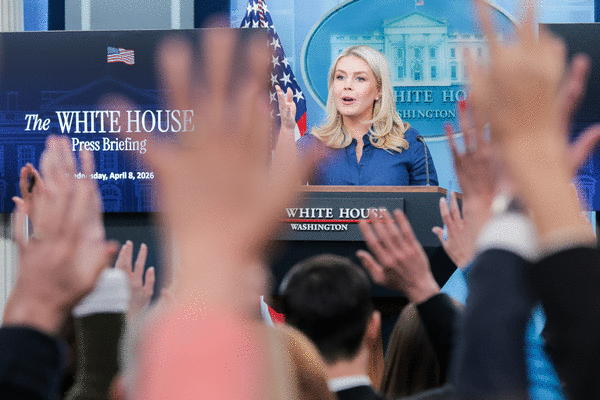
Conflicting reports abounded in the aftermath of the deal, particularly involving the Strait of Hormuz. Some accounts claimed that Iran had shut down the waterway again after Israel struck Lebanon as part of its efforts to decapitate Hezbollah, an Iran client terror group. But White House press secretary Karoline Leavitt on Wednesday afternoon called that false, saying that Iranian officials are privately telling the administration the waterway is open, The Wall Street Journal reported.
Shippers may understandably be wary about resuming operations initially, but that hesitation will dissipate if Iran understands the consequences. Trump has said that anything other than Iran allowing open passage is “completely unacceptable” — and this has become the crux of the conflict. The United States cannot allow Iran to dictate what commerce may pass through one of the world’s most important shipping lanes.
If Iran insists on continuing to play games with global commerce, it rolls the dice that the United States won’t launch a military offensive to ensure the Strait of Hormuz reopens permanently. Is that really a risk the mullahs — or whoever is actually running the country at this point — want to take?
_____
©2026 Las Vegas Review-Journal. Visit reviewjournal.com.. Distributed by Tribune Content Agency, LLC.

















































Comments