Why the ‘Streets of Minneapolis’ have echoed with public support – unlike the campus of Kent State in 1970
Published in Political News
The president announces an aggressive, controversial policy. Large groups of protesters take to the streets. Government agents open fire and kill protesters.
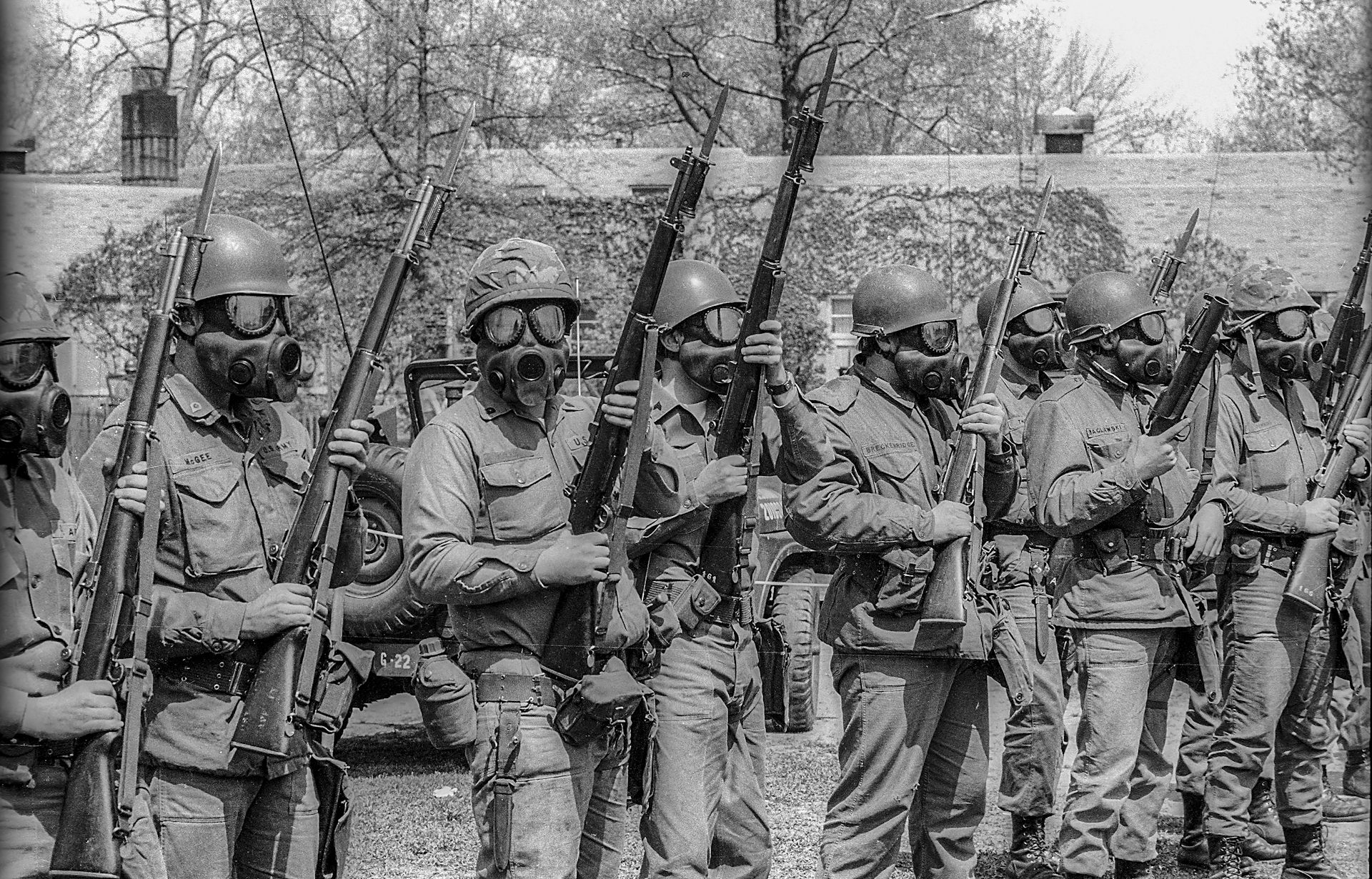
All of these events, familiar from Minneapolis in 2026, also played out at Ohio’s Kent State University in 1970. In my academic writing about the First Amendment, I have described Kent State as a key moment when the government silenced free speech.
In Minneapolis, free speech has weathered the crisis better, as seen in the protests themselves, the public’s responses – and even the protest songs the two events inspired.
In 1970, President Richard Nixon announced he had expanded the Vietnam War by bombing Cambodia. Student anti-war protests, already fervent, intensified.
In Ohio, Gov. James Rhodes deployed the National Guard to quell protests at Kent State University. Monday, May 4, saw a large midday protest on the main campus commons. Students exercised their First Amendment rights by chanting and shouting at the Guard troops, who dispersed protesters with tear gas before regrouping on a nearby hill.
With the nearest remaining protesters 20 yards from the Guard troops and most more than 60 yards away, 28 guardsmen inexplicably fired on students, killing four students and wounding nine others.
After the killings, the government sought to shift blame to the slain students. Nixon stated: “When dissent turns to violence, it invites tragedy.”
Minneapolis in 2026 presents vivid parallels.
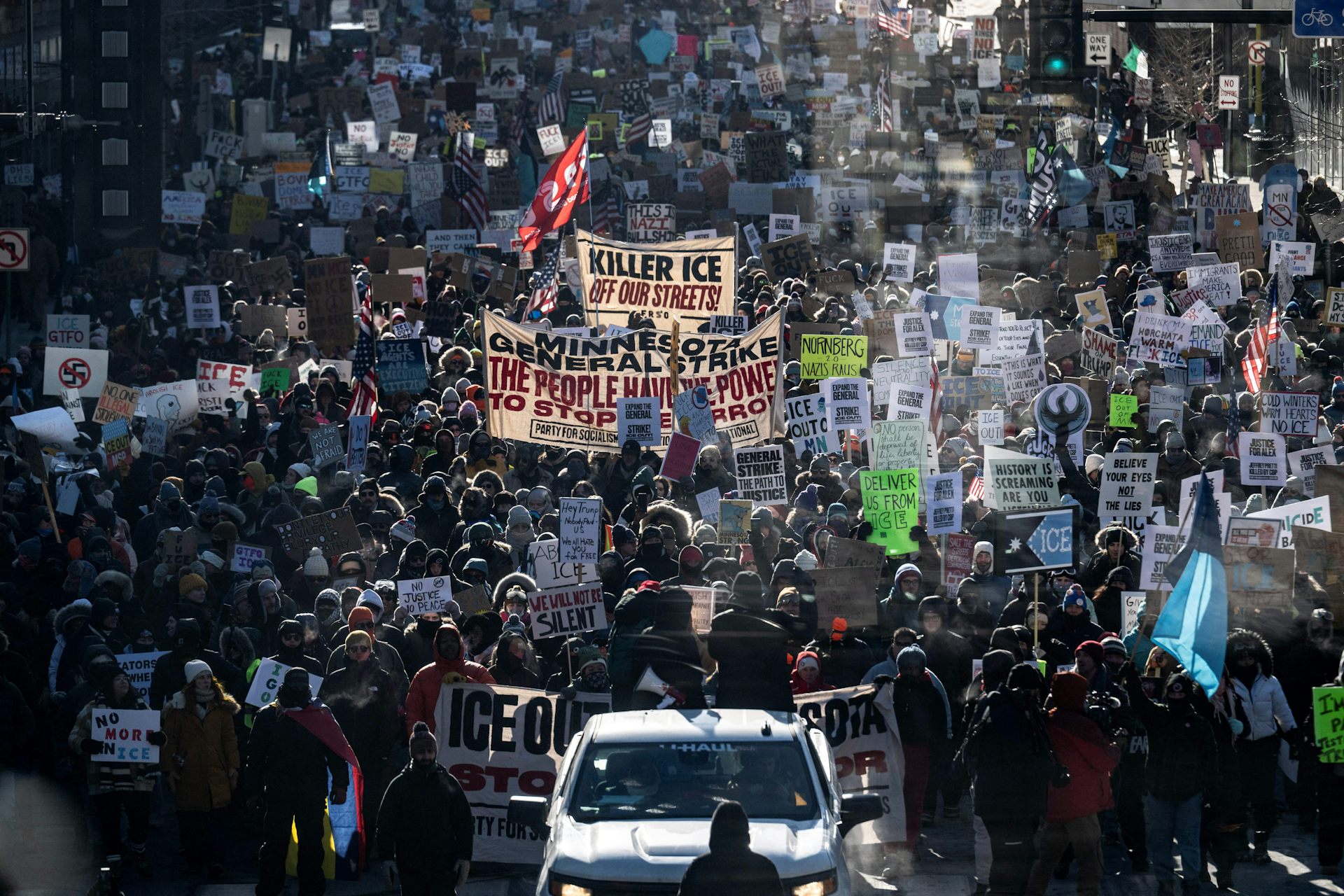
As part of a sweeping campaign to deport undocumented immigrants, President Donald Trump in early January 2026 deployed armed U.S. Immigration and Customs Enforcement and Customs and Border Protection agents to Minneapolis.
Many residents protested, exercising their First Amendment rights by using smartphones and whistles to record and call out what they saw as ICE and CBP abuses. On Jan. 7, 2026, an ICE agent shot and killed activist Renee Good in her car. On Jan. 24, two CBP agents shot and killed protester Alex Pretti on the street.
The government sought to blame Good and Pretti for their own killings.
After Kent State, amid bitter conservative opposition to student protesters, most Americans blamed the fallen students for their deaths. When students in New York City protested the Kent State shootings, construction workers attacked and beat the students in what became known as the “hard hat riot.” Afterward, Nixon hosted construction union leaders at the White House, where they gave him an honorary hard hat.
In contrast, most Americans believe the Trump administration has used excessive force in Minneapolis. Majorities both oppose the federal agents’ actions against protesters and approve of protesting and recording the agents.
The public response to Minneapolis has made a difference. The Trump administration has announced an end to its immigration crackdown in the Twin Cities. Trump has backed off attacks on Good and Pretti. Congressional opposition to ICE funding has grown. Overall public support for Trump and his policies has fallen.
What has caused people to view the killings in Minneapolis so differently from Kent State? One big factor, I believe, is how free speech has shaped the public response.
The Minneapolis protests themselves have sent the public a more focused message than what emerged from the student protests against the Vietnam War.
Anti-war protests in 1970 targeted military action on the other side of the world. Organizers had to plan and coordinate through in-person meetings and word of mouth. Student protesters needed the institutional news media to convey their views to the public.
In contrast, the anti-ICE protests in Minneapolis target government action at the protesters’ doorsteps. Organizers can use local networks and social media to plan, coordinate and communicate directly with the public. The protests have succeeded in deepening public opposition to ICE.
In addition, the American people have witnessed the Minneapolis shootings.
Kent State produced a famous photograph of a surviving student’s anguish but only hazy, chaotic video of the shootings.
In contrast, widely circulated video evidence showed the Minneapolis killings in horrifying detail. Within days of each shooting, news organizations had compiled detailed visual timelines, often based on recordings by protesters and observers, that sharply contradicted government accounts of what happened to Good and Pretti.
Finally, consider two popular protest songs that emerged from Kent State and Minneapolis: Crosby, Stills, Nash & Young’s “Ohio” and Bruce Springsteen’s “Streets of Minneapolis.”
Crosby, Stills, Nash & Young recorded, pressed and released “Ohio” with remarkable speed for 1970. The vinyl single reached record stores and radio stations on June 4, a month after the Kent State shootings. The song peaked at No. 14 on the Billboard chart two months later.
Neil Young’s lyrics described the Kent State events in mythic terms, warning of “tin soldiers” and telling young Americans: “We’re finally on our own.” Young did not describe the shootings in detail. The song does not name Kent State, the National Guard or the fallen students. Instead, it presents the events as symbolic of a broader generational conflict over the Vietnam War.
Springsteen released “Streets of Minneapolis” on Jan. 28, 2026 – just four days after CBP agents killed Pretti. Two days later, the song topped streaming charts worldwide.
The internet and social media let Springsteen document Minneapolis, almost in real time, for a mass audience. Springsteen’s lyrics balance symbolism with specificity, naming not just “King Trump” but also victims Pretti and Good, key Trump officials Stephen Miller and Kristi Noem, main Minneapolis artery Nicollet Avenue, and the protesters’ “whistles and phones,” before fading on a chant of “ICE out!”
Critics offer compelling arguments that 21st-century mass communication degrades social relationships, elections and culture. In Minneapolis, disinformation has muddied crucial facts about the protests and killings.
At the same time, Minneapolis has shown how networked communication can promote free speech. Through focused protests, recordings of government action, and viral popular culture, today’s public can get fuller, clearer information to help critically assess government actions.
This article is republished from The Conversation, a nonprofit, independent news organization bringing you facts and trustworthy analysis to help you make sense of our complex world. It was written by: Gregory P. Magarian, Washington University in St. Louis
Read more:
3 ways the government can silence opinions it disagrees with, without using censorship
Political violence: What can happen when First Amendment free speech meets Second Amendment gun rights
From Kent State to Los Angeles, using armed forces to police civilians is a high-risk strategy
Gregory P. Magarian does not work for, consult, own shares in or receive funding from any company or organization that would benefit from this article, and has disclosed no relevant affiliations beyond their academic appointment.
















Comments