Rep. Panetta introduces MOLD Act to address military housing issues
Published in Political News
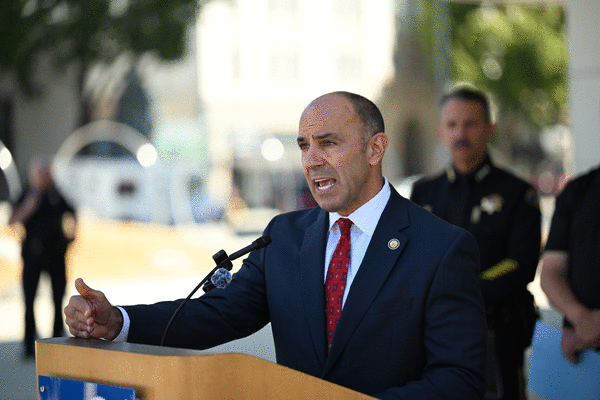
MONTEREY, Calif. — Bipartisan and bicameral legislation that would strengthen protections for more than 700,000 servicemembers and their families across the country living in privatized military housing, has been introduced by U.S. Rep. Jimmy Panetta, D-Carmel Valley, and U.S. Senator Richard Blumenthal, D-CT, with others joining.
The Military Occupancy Living Defense – MOLD – Act would address hazardous conditions in military-provided housing, including prolonged mold exposure, which is associated with elevated risks of respiratory illnesses, neurological symptoms, developmental delays in children and other severe health effects. The bill would set enforceable health and safety standards, mandating independent inspections and requiring transparency in reporting habitability issues such as water damage, humidity, and mold.
“In their service, our military members and their families sacrifice a great deal. The last thing they should have to deal with is shoddy conditions, including mold, in their military housing,” said Panetta in a press release. “The MOLD Act will help ensure that privatized military housing is up to standard with frequent inspections, proper repairs and renditions, and better response times by landlords. This legislation is our way to ensure that military readiness starts at home.”
The MOLD Act addresses these concerns by requiring the Pentagon to issue humidity and ventilation standards within 1 year, and releasing test results to tenants within 10 days, requiring inspections at move-in and move-out dates, after complaints and after repairs. Inspections must be by certified third-party professionals. Failed units must be remediated or tenants relocated within 30 days, and establishing a complaint hotline for 24/7 reporting, and requiring a landlord response within five business days.
The MOLD Act is endorsed by Change the Air Foundation, Blue Star Families, Military Officers Association of America, Safe Military Housing Initiative, Military Housing Coalition, National Military Families Association, Institute of Inspection Cleaning and Restoration Certification and the National Organization of Remediators and Microbial Inspectors.
Joining Panetta and Blumenthal in introducing the bipartisan and bicameral Military Occupancy Living Defense Act were Reps. James Moylan, R-GU and Gus Bilirakis, R-FL, and Senators Joni Ernst, R-IA, Tim Sheehy, R-MN, Mazie Hirono, D-HI and Richard Shelby, R-AL.
“This measure will help ensure that military families are protected from housing that endangers their health. They deserve the gold standard, nothing less,” said Blumenthal in the release. “The MOLD Act will require strict health and safety standards, independent inspections, and financial accountability for contractors. This bipartisan, bicameral reform deserves quick passage so servicemembers and their families have a safe place to call home.”
According to the Military Installations website, there are more than 3,500 military family housing units under the Presidio of Monterey Defense Language Institute Foreign Language Center and the Naval Postgraduate School.
The Presidio of Monterey has privatized nearly all military housing under the Military Housing Privatization Initiative Act of 1996 which provides the military services with alternative authorities for the management and operations, construction and improvement of military housing.
About 99% of U.S. military family housing is privatized under MHPI on a national level, and managed by private companies in partnership with the Department of Defense.
Monterey Bay Military Housing is the entity under which the housing is privatized in the Monterey Peninsula area. The private developer and managing member for MBMH is The Michaels Organization, which oversees day-to-day operations and property management.
“Accountability is essential when neglect and inadequate maintenance result in hazardous military housing conditions,” said Military Officers Association of America President and CEO Lt. Gen. Brian T. Kelly, USAF (Ret) in the release. “Service members and their families should not have to sacrifice their health or well-being due to substandard housing.”
The Military Housing Privatization Initiative provides for quality housing for DoD service members and their families as well as single service members at 150 installations. There are 80 projects managed by 14 MHPI partners and more than 200,000 privatized family housing units.
©2026 MediaNews Group, Inc. Visit at montereyherald.com. Distributed by Tribune Content Agency, LLC.



















































Comments