Naomi Ishisaka: How the SAVE America Act would make it harder for you to vote
Published in Op Eds
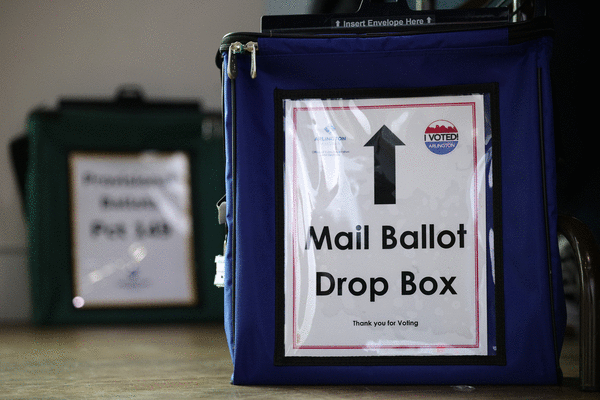
I know with all the bad news in the world right now the last thing you probably want to hear about are renewed threats to our democracy, but unfortunately the gravity is real.
In February, the U.S. House passed the so-called SAVE America Act, one of a slate of efforts to restrict access to voting nationwide through new documentation requirements and other rules. The measure is now in the Senate, and while some believe it faces an uphill battle, it’s likely these types of efforts will emerge again and again, particularly as President Donald Trump has said on social media, “THERE IS NOTHING THAT IS MORE IMPORTANT FOR THE U.S.A.” than the SAVE America Act.
In a classic example of a solution in search of a problem, the SAVE America Act is purportedly about preventing voting fraud, a phenomenon that the conservative Heritage Foundation’s own database said has happened in just 0.000008% of cases between 1985 and 2025, or 1,620 of 1.3 billion votes cast in presidential elections over that period, The New York Times reported.
To address that vanishingly small number of cases, the SAVE America Act would upend registration and voting processes in states like Washington, where mail-in voting became the standard in 2011. It would require documentary proof of citizenship to register to vote, such as a birth certificate or a passport, and would require registration in person. Further, it would require that voters in Washington include a copy of their photo ID along with their ballot for voting by mail.
Washington’s enhanced ID would work for registration, but according to the Secretary of State’s office, only about 33% of the state has an enhanced ID. The legislation would cost $35 million to implement in Washington, the Secretary of State and other groups determined.
In Washington, you already need a driver's license, a state ID or a Social Security number to register to vote, and your signature is verified when you vote.
State Director of Elections Stuart Holmes said the SAVE America Act is “a big, big barrier that's created to solve a problem that's just not founded in fact.”
Holmes said the act would not only impact every U.S. voter, but would create a disparate impact on those who were not able to overcome the barriers, and “those individuals that we already see underrepresented in our democracy or underserved communities around our great state would just have one more barrier to participate in their constitutionally protected right if this were to pass.”
It’s not just the SAVE America Act and similar legislation in states that are being used to create obstacles to voting access. Last week, Washington state sued the Trump administration to block a new executive order that would create a national list of voters and curtail mail-in voting.
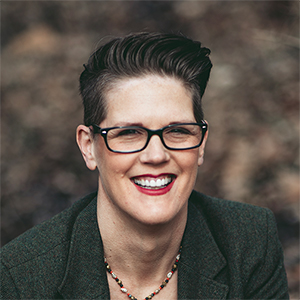
Vanessa Hernandez, the integrated advocacy director for the ACLU of Washington, said the net impact of the related bills circulating in Congress would be to disenfranchise millions of voters, particularly voters of color, rural voters, people with disabilities, older voters and people in the military.
According to the Brennan Center for Justice, researchers have found voter ID laws disproportionately impact voters of color, leading to larger turnout gaps and longer wait times in states that rely on polling places, among other impacts.
Under the SAVE America Act, cost barriers for the documentation and physical distance to election offices that could be hundreds of miles away are just some of the obstacles that voters would face.
Brennan found 21 million people in the U.S. lack ready access to the documents required by the SAVE America Act.
Hernandez said similar legislation passed by Kansas in 2011 was found to disenfranchise 30,000 state residents and was blocked by the courts.
“Since this nation's inception, we've had this tension between the high ideals of democracy, enshrining a constitutional principle of one person, one vote, enshrining the importance of democratic access, and then also excluding folks from democratic access as a mechanism of control, as a mechanism to extract resources from communities, and as a mechanism to really define who belongs in the American project,” Hernandez said. “So we've simultaneously said, ‘Yes, we believe in democracy and equity, just not for you.’ ”
That history Hernandez describes is necessary to understand this effort to roll back progress within the larger context of voting rights and voter suppression.
The national civil rights organization Legal Defense Fund has been fighting against iterations of the SAVE Act for years and for racial justice since its inception in 1940 under Thurgood Marshall.
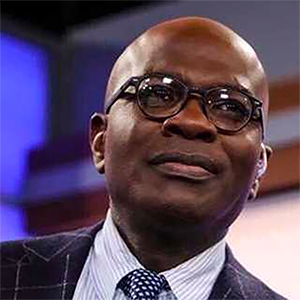
LDF Policy Counsel Louis Bedford said since the U.S. Supreme Court’s decision in Shelby County vs. Holder in 2013 that struck down parts of the Voting Rights Act, nearly 30 states have passed 100 restrictive voting laws, which disproportionately affect voters of color and exacerbate racial disparities in voter participation. He described the SAVE America Act as a modern-day poll tax, designed to suppress access to voting rights.
“The unfortunate reality is that a lot of these conversations circle on power and trying to be able to make sure that certain individuals are not able to have access to the ballot while others are,” he said.
Bedford said it’s important to recognize that the U.S. only became a multiracial democracy after the 1965 Voting Rights Act, and although we are about to celebrate the 250th anniversary of the country, it has only been a multiracial democracy for 61 years. “My father, he was born in 1959, so when he was born, there was a very real reality where he did not have the same rights and privileges to be able to participate in our American democracy as I do today,” Bedford said.
And those rights require all of our effort to protect, Bedford said.
“As much as we would like to be able to look back on what happened during the Civil Rights Movement and admire the work and the tenacity of our ancestors, it's also important to realize that generations from now, people are going to look back on us and say that we are their ancestors,” he said, “and we also need to make sure that we are doing what we can to help move the ball forward, to be able to fight for civil rights, to be able to fight for this multiracial democracy that we all desperately rely on.”
©2026 The Seattle Times. Visit seattletimes.com. Distributed by Tribune Content Agency, LLC.











































Comments