Commentary: The time for Cesar Chavez to fall
Published in Op Eds
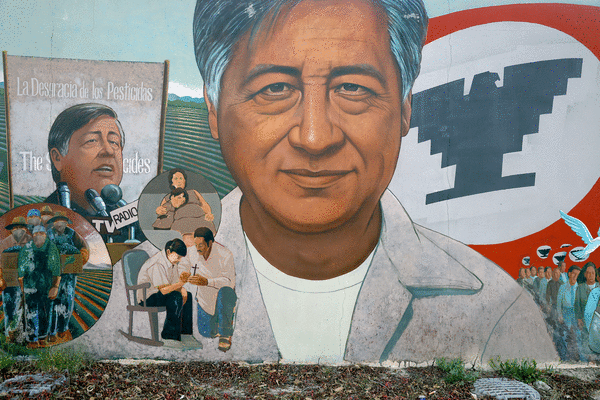
Those who quote Shakespeare’s “Julius Caesar” often mistake “Et tu, Brute?” as the dictator’s final line, as Caesar realizes his friend, Marcus Junius Brutus, has stabbed him. With vulgar Caesars dominating the news, from Donald Trump to Cesar Chavez, perhaps Caesar’s actual final line, “Then fall, Caesar,” offers a more appropriate lesson for our time.
The allegations reported in the New York Times that Cesar Chavez, labor leader and perhaps the most famous Latino in U.S. history, molested and raped girls and young women, will come as a shock to many Americans. For others, especially the victims, this disclosure initiates a journey toward justice long overdue. It also illustrates what the victims, and some scholars of Chavez and the United Farm Workers movement, including myself, have found to be true in recent years: No matter his failures, Chavez, like Bank of America during the Great Recession, had become “too big to fail.” Both individuals and the entire movement suffered as a result.
What reckoning should these revelations produce now? Many will make excuses, especially when powerful men, including the president of the United States, are accused of some of the same crimes. Some may worry that President Trump will use this news to further distract the public’s attention from the Epstein files. Others may even ask, what do Chavez’s personal life, or his private words and deeds, have to do with the business of the union? For many years, this was the attitude of some UFW veterans.
Debra Rojas learned this the hard way. More than a decade ago, she found the courage to disclose Chavez’s assault of her, when she was just 12, on a private Facebook account for UFW veterans: “Wake up, people. This man u march for every year molested me and many, many other young girls.” Rather than support her, fellow Chavistas accused her of tarnishing the movement she and her family belonged to. She took down her post.
In 2012, after I published a history of the UFW that also revealed much of Chavez’s complicated truth, I faced backlash within this same community. My book chronicled how, in 1977, when UFW signed a historic agreement to end years of conflict with the Teamsters, Chavez showed greater interest in building an intentional community at the union headquarters in La Paz than in advancing the gains made by farmworker advocates over the previous decade. My book also described the humiliating group therapy exercises Chavez made residents participate in, and some of the infidelity that we now know only scratched the surface of his criminal conduct.
Chavez had many enablers whose blind devotion ultimately harmed the union. Because UFW founders failed to build a democratic structure that allowed for members to challenge him, Chavez’s words — no matter how profane or misguided — were taken as gospel.
I also chronicled even earlier consequences of this unchecked power. In 1973, Chavez scuttled contract extension talks with grape grower John Giumarra Jr., citing concerns about Giumarra’s failure to stop Filipino workers from having sex with “whores in the camps.” Jerry Cohen, head of the UFW legal team, could not persuade Chavez to let the prostitution issue go; Chavez’s obsession, which weakened the union, now feels strangely telling as well.
Another turning point came in 1976, when Chavez went against the advice of Gov. Jerry Brown and many within the union by supporting a risky ballot measure rather than working within the system to extend funding for the landmark Agricultural Labor Relations Act. When the measure lost, Chavez blamed it on UFW volunteers, saying they betrayed his orders or did not work hard enough to win. The union descended into chaos marked by purges of innocent volunteers — alongside, as is now alleged, the grooming and violation of girls.
The abuse is said to have happened at a time when many women dedicated themselves to the movement only to be overlooked or driven out by this corrosive behavior. It has become common to recognize Dolores Huerta, now identified as a survivor of Chavez’s abuse, as the co-founder of the union. But the meaningful contributions of other women, including Jessica Govea and Elaine Elinson, remain mostly hidden to the public.
Govea and Elinson’s management of the boycott in foreign countries helped deliver the first contracts for farm workers in 1970, though you would never know it from popular depictions of this history. The 2014 biopic “Cesar Chavez,” for example, shows British transport workers dumping grapes into the River Thames alongside Chavez — when it had in fact been Elinson. Govea fought sexism in the union while working on the frontlines of the boycott in Montreal, only to encounter it at headquarters when she returned to California in the 1970s and 1980s. Labeled a troublemaker by Chavez, she ended up outside the union, working as a labor educator on the East Coast.
Chavez’s victims never achieved a fraction of the influence Govea fought for or Elinson temporarily enjoyed. It’s impossible to measure how much the individuals and the union lost. It is time to begin a process of healing for the victims of Chavez’s violence, and for the full story of the UFW to become public knowledge.
We need to acknowledge that whatever the UFW accomplished, it often did so as a collective. There’s a reason the UFW’s slogan, “Sí se puede,” is translated as “Yes, we can.” History shows us that organizers, workers and advocates solved problems by coming together, not by blindly following orders from Chavez. This is the moment for Cesar to fall.
____
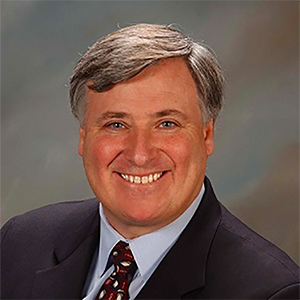
Matt Garcia is a professor of Latin American, Latino and Caribbean studies, history and human relations at Dartmouth College. He is the author of “ From the Jaws of Victory: The Triumph and Tragedy of Cesar Chavez and the Farm Worker Movement.” This article was produced in collaboration with Zócalo Public Square.
©2026 Los Angeles Times. Visit at latimes.com. Distributed by Tribune Content Agency, LLC.



































Comments