Commentary: In an age of anxiety and division, the arts are not an 'extra,' they're a lifeline
Published in Op Eds
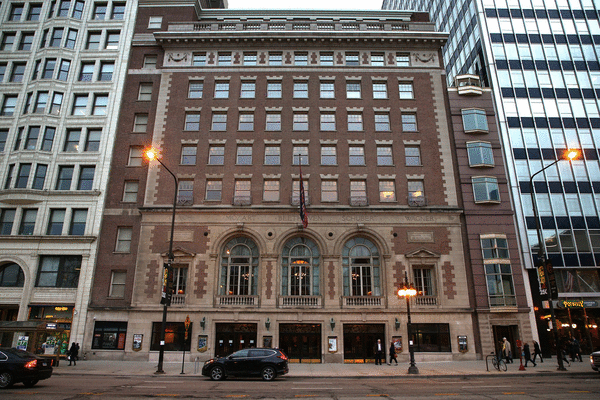
In November, I halted a rehearsal and walked out.
My choir was preparing for our winter concert at Chicago's Symphony Center. Thousands would attend the two performances. But the singers really struggled with Samuel Barber’s haunting “Agnus Dei,” which was to accompany huge overhead photographs of loved ones that our singers and staff had recently lost.
It was exquisitely difficult music for young voices. Eight parts simultaneously sung with no section carried by another. It required something teenagers don’t always possess at 5 p.m. after school, or first thing Saturday mornings: focus, patience and collaboration.
The kids sounded like a slow-motion train wreck. Some attempted to muscle through off-key. Others closed their mouths when harmonies got complicated. This persisted, and I realized they had neither memorized the song nor practiced it, as they had been asked.
“Is this just too hard?” I finally asked the group. “Are you committed to doing the work this piece requires?”
In frustration, I left. The kids were startled.
At the start of our next rehearsal, I was still unsure if “Agnus Dei” had to be cut. But something was different. The mood shifted, and singers seemed focused, more accountable to one another. They had decided, collectively, to meet the moment.
This exchange captured two important lessons I’ve learned over 26 years leading thousands of young people in Uniting Voices Chicago.
The first is that children want to be challenged. Again and again, I’ve seen them rise to the occasion. High expectations draw out excellence and build confidence. Second, young people need places where they can express themselves, work side by side with peers from different backgrounds toward a shared goal and feel a sense of belonging that isn’t always experienced in school.
Rates of depression, anxiety, loneliness, trauma and suicidal thinking among young people have surged in recent years, prompting major pediatric and child-psychiatry organizations to declare a national emergency in 2021. Some measures have improved slightly since the height of the pandemic, but the overall picture remains sobering: Too many teenagers and pre-teens feel isolated, unmoored and overwhelmed.
Arts programs like Uniting Voices aren’t just extras. They’re part of a community’s mental health and civic health infrastructure.
A growing body of research suggests engagement in the arts supports psychological well-being, helping young people regulate emotion, manage stress and build social connection. But you don’t need a study to marvel at what happens inside a rehearsal room. Young people arrive tired, distracted by electronic devices and burdened by the day. Then they begin to sing. Their breath deepens and attention sharpens. They listen — to the music and to one another. For hours, they are fully present, together.
There is another dividend to this work, one relevant to the polarized world in which we find ourselves.
Arts programs bring people together around shared goals that require contact, cooperation and trust. The nearly 4,000 young people involved in Uniting Voices hail from every Chicago ZIP code. They sing in 36 languages across genres, from classical to gospel to hip hop. With each piece, they step into someone else’s history, culture or story. Through repeated contact, and through challenge, failure, support and success, they learn how to work across difference with respect.
At a time when many traditional arts spaces are disappearing, that matters. Young people need opportunities outside of school where they can gather to work toward something meaningful. They need space to find their people, be known by adults who care.
Counterintuitively, our arts infrastructure has become more fragile than ever. Public and private funding has retrenched. Arts programs such as ours are often the first to be trimmed when budgets tighten.
Young people carry academic pressure, family stress, identity questions and fear about the future. Last fall, we canceled a rehearsal after a federal law enforcement operation unsettled families and onlookers within sight of our downtown practice space. On top of everything else, kids didn’t also need to feel unsafe coming to rehearsal.
We must stop treating arts programs as “enrichment” that can be trimmed when budgets tighten. We should fund them as protective factors for young people. We should build intentional partnerships between schools, community arts organizations and the youth mental-health ecosystem, so that students in need of belonging and structure can find it as readily as they would tutoring or sports.
When we create conditions of excellence — when we set a high bar and then support young people to reach it — they rise. Not because they are perfect, but because they are hungry for meaning.
Two weeks after our botched rehearsal, Voice of Chicago delivered a stunning performance of “Agnus Dei." The piece elicited tears and held the room in silence for over eight minutes as images of lost loved ones flashed overhead. In that performance, Chicago’s youth had created beauty, a moment that allowed grief to be shared by the thousands who filled Symphony Center.
____
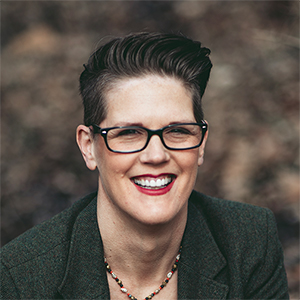
Josephine Lee is the president and artistic director of Uniting Voices Chicago, formerly Chicago Children’s Choir, which engages nearly 4,000 youth across Chicago through 12 neighborhood choirs, 85 school-based programs and two citywide ensembles.
___
©2026 Chicago Tribune. Visit at chicagotribune.com. Distributed by Tribune Content Agency, LLC.

























Comments