Commentary: Spay/Neuter Awareness Month shows how we can help prevent suffering
Published in Op Eds
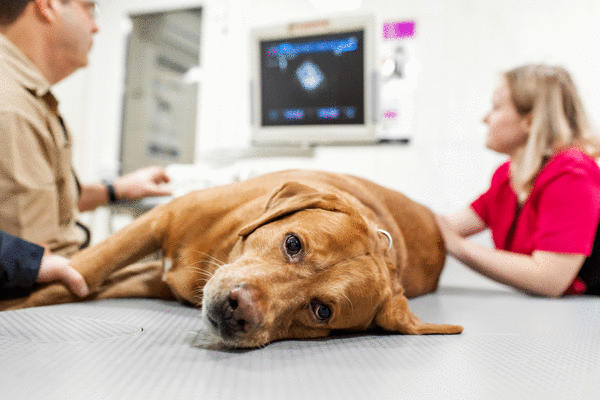
Recently, a dog arrived at PETA’s clinic clinging to life. She had pyometra—an infection that fills the uterus with pus, causes crushing pain and is often fatal without emergency surgery.
Her guardian couldn’t afford the thousands of dollars quoted elsewhere. So she scraped together a nominal donation, and we covered the rest. The surgery saved her dog’s life. Last year alone, PETA performed 49 emergency pyometra surgeries and three emergency dystocia spays—life-threatening “difficult birth” cases in which a fetus is stuck—each one entirely preventable with a routine spay.
As a licensed veterinary technician, I can say with certainty that one of the most important things we can do for our animal companions is to have them spayed and neutered.
February is Spay/Neuter Awareness Month, but the need for these surgeries is a daily reality—especially in underserved communities. Studies suggest that nearly 88% of animal companions in these areas are unaltered, not because their guardians don’t care but because services are out of reach. When almost nine out of 10 animals are intact, preventable suffering becomes the norm.
Dogs arrive barely responsive from infections that a routine surgery could have prevented. Others are pregnant when they’re only just out of puppyhood themselves, their bodies exhausted long before adulthood. And guardians are often blindsided by emergency bills because they didn’t know affordable spay/neuter services existed—or couldn’t access them in time, leaving them struggling to care for animals depending on them.
Veterinary medicine is largely about prevention. Vaccinations protect against deadly diseases, and heartworm medications prevent dangerous parasite infestations. Just the same, sterilization eliminates the risk of many infections, prevents certain types of cancer and stops litter after litter from entering a world already overwhelmed with animals who have nowhere to go.
Sterilized females’ risk of mammary cancer is dramatically lower, and they have no chance of developing ovarian or uterine diseases, including cancer and pyometra. Male animals benefit, too. Neutering lowers the risk of prostate cancer, eliminates the possibility of testicular cancer and greatly reduces roaming and fighting.
More than 20 million animal companions live with families facing serious financial and logistical barriers to basic veterinary care. In the communities I serve, people love their animal companions—but may be hours from the nearest clinic, stuck on months‑long waitlists or forced to choose between missing work and taking their animal to an appointment. Some guardians have no reliable transportation. Others didn’t realize the yearly costs associated with caring for animals, which can range from $300 to $1,000 for cats and $500 to $1,500 for dogs. Emergency care often costs thousands more.
Meanwhile, affordable clinics are closing despite the growing demand. With fewer opportunities for spay and neuter surgeries, more unwanted litters are born, and many of these animals end up struggling on the streets—where they reproduce repeatedly and fuel an overpopulation crisis that has left millions of animals without homes.
But animals shouldn’t suffer because the humans who love them are struggling.
Nonprofit organizations are doing everything they can to help. PETA’s mobile clinics sterilize thousands of animals from underserved areas of Virginia and North Carolina for free every year, and thanks to compassionate supporters, we can help guardians cover the cost of certain other veterinary services, including emergencies like the one we saw recently. Helping people care for the animals they already have gives animals the chance to have healthy, stable lives and reduces the likelihood of future crises.
If you’re thinking about welcoming an animal companion into your family, consider the cost involved before doing so. Never buy animals, and only adopt when you’re emotionally and financially ready to make that lifetime commitment. And if you’re wondering what else you can do, please consider volunteering or donating to support your local shelter or spay/neuter clinic to help keep these vital services available to those in need. Preventing suffering is everyone’s responsibility, and animals deserve that commitment every day of the year, not just in February.
_____
Thomas McNulty is a licensed veterinary technician and a veterinary and field outreach specialist for the PETA Foundation, 501 Front St., Norfolk, VA 23510; www.PETA.org.
_____
©2026 Tribune Content Agency, LLC.





















































Comments