Commentary: Admitting unprepared students into college isn't equity
Published in Op Eds

As the regular application deadlines approach this month, getting into college is top of mind for many high school seniors. But students assume that if a college admits them, it means the school has accurately assessed that they can handle the work. That is hardly the case anymore.
Even though COVID-19 lockdowns no longer prevent students from taking the SAT or ACT, most colleges have remained test-optional, many citing that requiring the tests would diminish their ability to compete for applicants.
Yet we are seeing the consequences of these admissions policies: Less-informed decisions lead to worse decisions. And the data proves it.
After the University of California San Diego stopped using SAT and ACT scores in admissions beginning in 2020, the percentage of its students who placed into remedial math jumped from 1% to 12%. Even worse, the school had to redesign a remedial math course, Math 2, and teach students not just high school or even middle school math but also elementary school math — meaning what students learn in first to fifth grade. Yet, despite UCSD’s best efforts, the report shows that these students never catch up to their peers — and suffer the consequences.
Nearly one-third of students who take Math 2 are unable to complete their degrees in psychology and biology because they drop, withdraw from or fail the final calculus course required for graduation in these majors. Worse, it appears that “few, if any students who place into Math 2 have successfully completed an engineering degree.”
Admitting underprepared students hurts those students, who complete all the credits leading up to math courses they then cannot pass. Their dreams of graduating in their chosen profession are crushed, and they then have to switch majors, spend additional time in college, take on more debt and often earn less in life. For instance, students who graduate with degrees in science, technology, engineering or mathematics have, on average, 50% higher incomes than those of other college graduates.
Compounding the problem, even the remaining information that college admissions officers use (grades) is less reliable. According to the Higher Education Research Institute, in 2024, 84% of students in its survey of freshmen at four-year bachelor’s degree-granting universities had A averages in high school. When almost everyone has an “A,” then no one does because grades cease to accurately communicate the academic preparedness they did before.
This is exactly what the UCSD researchers found as well: “Grades achieved in high school math classes are not helping UC to evaluate math skills much more either.” In 2024, over 25% of the students in remedial Math 2 had a math grade average of 4.0.
That’s stunning. One-fourth of the students who could not do elementary and middle school math had perfect grades in high school math. Their high school math grades were essentially meaningless, rising even as their actual math skills declined. In 2024, the National Center for Education Statistics found the same trend: The vast majority of 12th grade students are not proficient in reading and math.
In fact, 12th grade students have the lowest ever recorded proficiency in reading and math. But inflated grades hide the problem from parents: 90% of parents in the U.S. believe that their children are at or above grade level proficiency.
The situation is not hopeless. While I don’t think high schools will return to grading based on academic preparedness — their students would have lower grades and likely face lower chances of getting into colleges — both high schools and colleges can use long-established, statistically valid standardized measures of academic preparedness.
For instance, the College Board is already expanding its Advanced Placement exams to cover a broader range of courses. Students, parents, high schools and colleges don’t have to wonder whether an A in, for example, pre-calculus means the student actually learned pre-calculus; they can now look at the AP exam score to more accurately understand how much pre-calculus a student knows. Recognizing this, Caltech and Stanford recently became the first colleges to require that students submit their AP exam scores. All stakeholders need to know how well-prepared a student is.
The colleges remaining test-optional or test-blind should follow the lead of a majority of the nation’s most prestigious institutions (and plenty of middle-of-the-road ones as well): Return to using standardized measures of academic achievement. As the UCSD report notes, “the single best predictor for math placement has been the SAT (math section) score, with the ACT score being an equally good predictor.”
This echoes what other schools, such as Yale, Brown and Dartmouth, have publicly stated: SAT and ACT scores are the best predictors of success at their institutions. A 2024 multi-institution study found that SAT/ACT scores are 3.9 times better predictors of success at Ivy and Ivy-plus colleges than are high school grades.
When students are not academically ready for a major or a college, they have lower rates of completing their desired degrees, take longer to graduate (and are less likely to do so), and take on more debt. In fact, according to National Student Clearinghouse data, the six-year college completion rate in 2024 was only 61.1%. That means nearly 40% of college students fail to graduate within six years or at all.
But students are not aware that they are not being fully vetted. Like a homebuyer who takes out a loan, they assume the professionals did their job to determine whether they can actually afford it. As nonprofits, colleges are supposed to serve a public benefit; admitting underprepared students, taking their money and watching them fail is the opposite of that.
Colleges should immediately return to fully vetting applicants to ensure that they are enrolling students who are prepared for the coursework in their desired major and will graduate without taking on excessive debt from additional years of college.
____
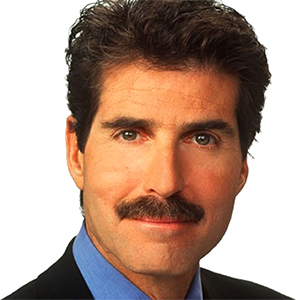
David Blobaum is on the board of directors and is the director of outreach for the National Test Prep Association, a nonprofit that works to support the appropriate use of testing in admissions.
___
©2026 Chicago Tribune. Visit at chicagotribune.com. Distributed by Tribune Content Agency, LLC.




















































Comments