Editorial: A $2,000 tariff dividend for everyone? Bad idea
Published in Op Eds
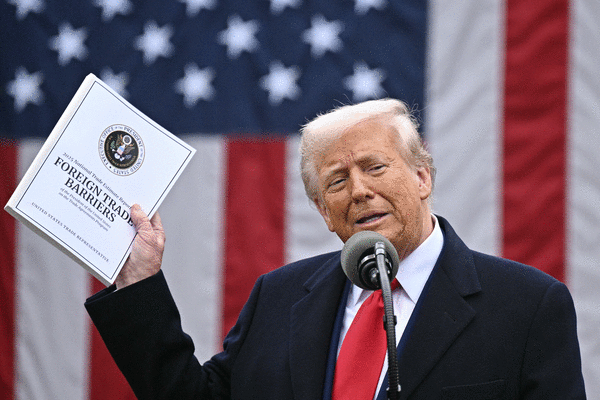
Unsustainable government borrowing has already put the economy on course for fiscal breakdown — but don’t discount Washington’s ability to make things worse.
The latest idea from the White House is to use tariff revenue to offer taxpayers a “dividend” of at least $2,000 a person. The administration hasn’t said whether it intends this as a one-off payment or an annual distribution, as the term “dividend” seems to suggest. Exactly who would receive this bounty is also uncertain. The president has promised cash for “everyone” — except for “high-income people.”
Assume a one-off $2,000 payment per person with income-based eligibility similar to the Biden administration’s pandemic-relief measures. This would cost about $600 billion, roughly double what the tariffs currently in place are likely to collect each year. At a stroke, the fiscal rationale for tariffs collapses. Import taxes are at least partly intended to reduce government borrowing. If a subsidy of this kind is necessary to ease the burden of higher prices on households, budget deficits will only worsen.
To be clear, tariffs would be a bad idea even if the resulting revenue was enough to balance the government’s books. The endless to-and-fro over what levies will be applied to which countries has made it far harder for producers (domestic and foreign alike) to plan and invest. There’ll be no broad or durable resurgence of US manufacturing amid such acute uncertainty.
Worse, to the extent that tariffs succeed in shielding domestic suppliers from competition, they’ll blunt growth and innovation. And in the end, they won’t reliably narrow trade imbalances because the external deficit depends on the gap between national saving and national investment — which tariffs don’t directly affect. If anything, a policy that bundles tariffs and subsidies in such a way as to increase government borrowing will reduce national saving and worsen the external imbalance.
If there’s one good thing about the proposed dividend, it’s that the administration is starting to recognize voters’ doubts about tariffs more broadly. Its claim that foreign exporters would absorb the costs so US consumers wouldn’t have to is wearing thin. Shoppers don’t need reminding that prices are still rising too fast, and they hear US producers complaining constantly about the effects on their own costs.
The administration is right that it needs to address these concerns. But the way to do so is by rolling back its tariff war — restoring a settled economic climate that favors investment and innovation and lets competition drive prices down. Controlling the budget deficit should be done through an orderly combination of more revenue and less spending. At best, tariffs are ill-suited for this purpose. At worst, if Washington has to spend hundreds of billions a year to cancel the harm they inflict on households, they’re downright counterproductive.
So yes, fix the tariff problem. Just not like this.
____
The Editorial Board publishes the views of the editors across a range of national and global affairs.
©2025 Bloomberg L.P. Visit bloomberg.com/opinion. Distributed by Tribune Content Agency, LLC.
















































Comments