Commentary: Student-athletes betting on pro sports. What could go wrong?
Published in Op Eds
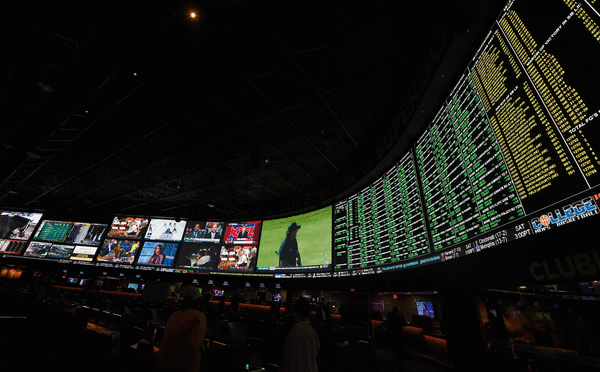
While everyone who pays attention to sports has been focused on games and front-page betting scandals, the NCAA quietly approved allowing student-athletes to bet on professional sports. What could possibly go wrong?
Thankfully on Nov. 21, a day before sports betting was going to be permitted, two-thirds of Division I schools rescinded their approval.
Over half a million student-athletes play college sports. This means over half a million students would have been eligible to bet without fear of sanction from their coaches, schools or even the governing body of college sports.
Sports betting is a huge business in this country, with legalized sportsbooks operating in 39 states plus D.C. and Puerto Rico. Over $150 billion was legally wagered in the U.S. in 2024. That is roughly the same size that Americans spend on the pet sector. Except in the pet sector, we are taking care of our loved ones. With sports betting, we are permitting our loved ones to engage in behavior that is leading to growing addictions and severe detrimental financial and emotional consequences. And now, we still may be unleashing this on those who thrive on the short-term thrill-seeking that sports betting provides.
We also now have the prediction markets, which, while structured like financial derivative products, are also akin to sports betting. For those in states such as California and Texas that have not legalized sports betting yet or in states that have legalized sports betting but require the bettor to be at least 21 years old, there is the possibility for anyone who is 18 years old in any state to use the prediction markets. This marketplace now offers sports event contracts, which can look and feel exactly like sports betting and are available to anyone with an account on financial platforms such as Robinhood and Kalshi and soon DraftKings, FanDuel, Polymarket and more.
Changes in college sports allow players to profit from the use of their own name, image and likeness, known as NIL, as well as allowing Division I universities that opted into the House settlement to pay their student-athletes directly. Beyond scholarships for tuition, many student-athletes are therefore able to monetize their athletic performance. These earnings should be protected and invested in their future and not used to chase the typically losing proposition of sports betting. In fact, a recent study shows that for the states that have legal sports betting, every dollar a sports bettor uses to gamble displaces their investments by slightly more than $2. As a hypothetical, someone who bets $100 a week (or $5,200 a year) would have, but for the sports betting costs, invested over $10,400.
Furthermore, sports betting is regressive and hurts those of lower-income levels more than those in the upper-income brackets. Studies have shown that those financially constrained households that engage in sports betting increase their credit card balances, reduce their credit card payments and increase bank account overdrafts. The data is stark for these financially constrained households as they are not substituting sports betting expenditures from other sources of entertainment but instead taking on more debt to finance sports betting habits.
Do we really want our student-athletes possibly developing gambling habits, a known addiction, and suffering the detrimental financial consequences of such an addiction while they are in school?
The NCAA and possibly Congress or the administration should step in and clarify this further. No support system exists for student-athletes — and the support system for nonathlete people who bet on sports is weak and almost nonexistent, depending on the state.
Moreover, college athletic programs are increasingly associated with professional athletes; for example, NBA star Stephen Curry was hired by his alma mater, Davidson College, as an assistant general manager for both men’s and women’s basketball. Such roles, as well as university alumni moving to the professional ranks or becoming draft-eligible, blend the lines between professional and collegiate sports and add possible integrity issues to sports betting. There have been a number of scandals not only in professional basketball and baseball in recent months, but also with numerous college athletes associated with gambling rings.
Student-athletes work hard on the field and in the classroom too. The NCAA’s rule change appeared to be shortsighted and adopted without any forethought of the negative consequences it will have for student-athletes. There has been little focus or news on this issue. The rule seemed to benefit mostly the sportsbooks, which already have more than enough customers.
Thankfully, for now, at least two-thirds of the Division I schools have come to their senses and realized what a can of worms this would open.
____
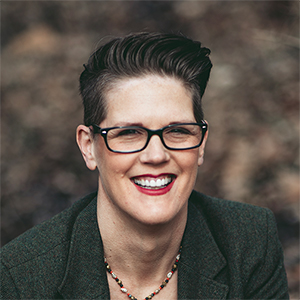
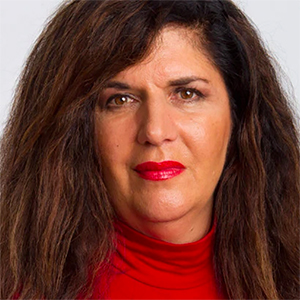
Melinda Roth is a visiting associate professor at Washington and Lee University School of Law.
___
©2025 Chicago Tribune. Visit at chicagotribune.com. Distributed by Tribune Content Agency, LLC.

































Comments