Commentary: How do we become the gatekeepers?
Published in Op Eds
“Do you have a moment?”
I turned and saw my senior colleague, Paul (not his real name), a mentor and sponsor, at my office door.
“Come on in!” I said—excited to have a chat with him.
We engaged in small talk before he said, “I am worried for your career. Would you consider taking classes to correct your accent?”
The air left my body; I was stunned. Where was that coming from?! And why now, when I was thriving professionally? And why me and not my husband, a man also with an accent being considered for a senior role?
After that day, I found it difficult to speak with Paul or anyone. I became painfully aware of my voice. I did not hear my accent, but after Paul’s question, I began to doubt that I could speak English at all. I would say something and immediately wonder—did it come out OK? Was that expression on my interlocutor’s face an indication they did not understand me? I would stutter or find myself unable to recall words I knew well. I felt uncomfortable and alone in a world that just hours ago had been my (professional and personal) home.
As I processed this experience, I was lost in all these feelings. Paul is a good man, and he was my rock. He is and was a thoughtful, kind, and supportive person. In retrospect, I think he meant well. Yet, his impact stays with me until this day.
I also wondered if Paul’s advice was born of his discomfort. Was his solution to the “problem of my accent” intended to solve a problem of his? Could he have considered listening to more non-native speakers to attune his hearing to a more diverse set of accents or asking for clarification when I spoke? If so, perhaps Paul might have been able to see a person who departed her native country at the age of 26 to face uncertainty about her future. He might hear in my accent the cost of learning multiple languages and cultural systems. I felt that Paul’s proposed solution was aimed at fixing something he perceived as “broken” within me by asking me to fit into “professional standards” of the (academic) world.
That experience forced me to confront an uncomfortable truth: I’ve been Paul too.
I remembered Julie (not her real name). A brilliant graduate student who gave an outstanding seminar. As I listened with eagerness and interest, I found myself distracted by what she was wearing and the tone of her voice, which I felt sounded flirtatious. I worried that the men in the audience would only see an attractive woman and miss a scientist with significant intellect and scientific contributions. After the seminar, I offered her feedback. I covered the scientific part first. Then, a little warily, I expressed my concerns about her attire and tone of voice. I don’t remember how Julie reacted, except that we talked for a while about my feedback.
A few weeks later, I was sitting with colleagues, and I described what had happened with Julie. A male colleague said that he had heard that Julie had not taken my feedback well. I was surprised. I thought I was shedding light on the sexist structure of our profession! My male colleague couldn’t possibly understand the double standard we women have to deal with! But was I preparing her for the world, or was I projecting my own fears? I became the gatekeeper of what is “professional standard."
This is how gatekeeping works and is enforced.
We live and work within a prejudicial system that expresses itself within academia and each of us through countless examples, such as the ones described above. Academic standards for professionalism are rooted in so many forms of oppression that strip every inch of self-expression. Accents, clothes, hair, our arguments, and pitches of our voices, the list is endless. While many of us spend large parts of our lives cultivating our individuality, those same characteristics are weaponized against us.
As I reflect on my own characteristics and behaviors, I recognize that I have adopted many different ways to cope, deal, prevent, and defend. I often wonder if my fast talking and constant smiling are part of a version of myself that evolved from a belief that I would be given little space or time to make my points, and that it was my role to make others comfortable with my friendly facial expressions. Smiling is good. Making people feel comfortable is good. But are these just tools for survival in a world primed to bend and dismiss me?
I realize now that the cost of “survival” and adapting is too high. We lose extraordinary scientists who are tired of shrinking themselves to fit. We lose their ideas, their creativity, their insights. We lose them because we fail to see how the system works through us. We ought to name these status quos and challenge them as they silence the voices of scientists, make them question their contributions and credibility, and deter women at all stages of their careers because of the friction they experience daily.
When I think back on Paul’s comment, I realize how easily I became him with Julie. Both moments came from caring and both upheld the very standards of oppression. I now know it when I see it—I see my reaction that stings. Then, I pause, I can now name it, I watch it, and I smile internally. I smile not to soothe it but to acknowledge the bias still living in me. Because that is how change begins. Each of us has the power and the obligation to notice when discomfort drives our judgment, when our “help” is really about control, and when our advice asks others to disappear. If we want an equitable academic world, we must start by listening to the dissonance within ourselves.
So I ask you: when have you been the gatekeeper?
____
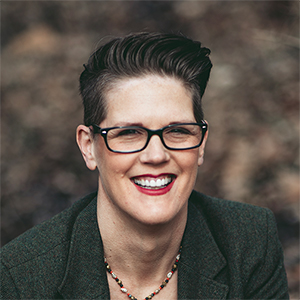
Dr. Valentina Greco is a Carolyn Walch Slayman Professor of Genetics at Yale University, Howard Hughes Medical Institute Investigator, a member of the American Academy of Arts and Sciences, and a fellow with The OpEd Project. Opinions are her own and do not reflect those of her employers.
©2025 The Fulcrum. Visit at thefulcrum.us. Distributed by Tribune Content Agency, LLC.

















Comments