California extends red abalone fishing ban for another 10 years
Published in Science & Technology News
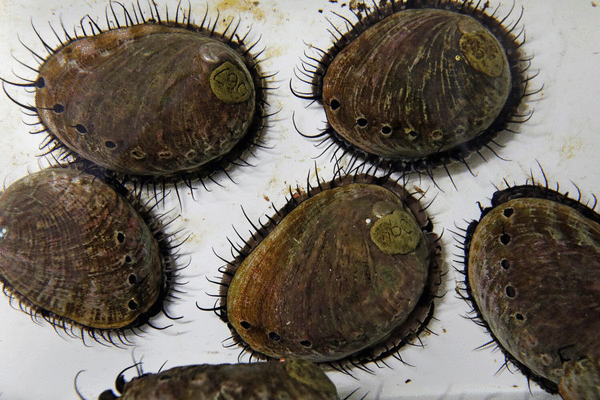
SACRAMENTO, Calif. — The California Fish and Game Commission voted Thursday to extend the closure of the recreational red abalone fishery for another decade, keeping the ban in place until April 2036.
The fishery has been closed since 2018, when the commission shut it down in response to a dramatic population decline along Northern California’s coastline, prompting regulators to enact what was initially intended to be a temporary ban.
State regulators said the main reason for the abalone’s decline was the collapse of California’s kelp forests, their primary food source, driven by climate-related factors like warm ocean temperatures, major storms and exploding purple urchin populations.
“(Red abalone) don’t have enough to eat,” Sheila Semans, executive director at Noyo Center for Marine Science said.
“A lot of people are trying to figure out how to build some resiliency in our kelp forest, but…until we can reduce the grazing pressure on kelp from purple urchin, it’s a big challenge to try to restore kelp beds.”
After the multi-year marine heat wave hit the North Pacific in late 2013, warmer ocean temperatures that followed not only stressed kelp but also worsened the spread of sea star wasting disease that wiped out sunflower sea stars — one of the purple urchin’s main predators. With their predators gone, purple urchin populations exploded beginning around 2014 and have remained one of the key drivers of ongoing kelp collapse.
Multiple individuals have been arrested for violating the ban since it took effect. In 2020, a Santa Rosa man was fined $40,000 and his sport-fishing license was revoked after investigators found 80 abalone in his home. Another suspected poacher was arrested on Nov. 7 along the Sonoma Coast with 15 abalone in his possession.
Kristin Aquilino, associate director at the University of California, Davis’ Bodega Marine Laboratory, explained that abalone struggle to reproduce when they’re too spread out.
“When their densities get too low, and abalone aren’t close together with one another, they can’t reproduce successfully. It’s really important for abalone populations to be maintained at a density that’s high enough that they can reproduce successfully and reliably,” Aquilino said.
©2025 The Sacramento Bee. Visit sacbee.com. Distributed by Tribune Content Agency, LLC.






Comments