Chef's table: He makes Appalachian cuisine that's worth the trip to West Virginia
Published in Variety Menu

Though he grew up on a dairy farm, Matt Welsch never thought much about food beyond what was on the table for lunch or dinner.
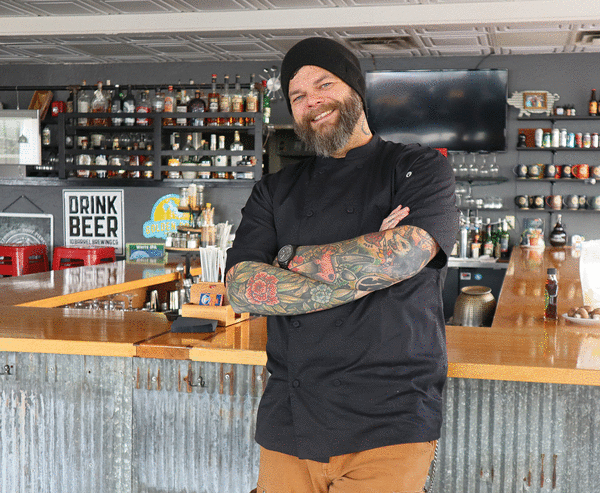
"I wanted to be a bus driver," the 48-year-old chef admits with a grin as he sits inside Vagabond Kitchen, the slow-food restaurant he opened in the McLure Hotel in downtown Wheeling, West Virginia, in 2014.
Born three months premature with underdeveloped lungs, Welsch suffered from asthma and allergies as a child and was somewhat of an introvert. Instead of sports, he spent a lot of time alone reading, developing a fascination with explorers in general and the frontiersmen who settled the country in particular.
After graduating from high school in 1995, he studied graphic design at Pittsburgh Technical Institute, then earned a degree in English literature and philosophy at West Liberty University.
"So of course I ended up cooking," he quips, working his way up from the dish pit to line cook while in college.
Travels throughout Europe, South America and Japan followed, and he also criss-crossed the U.S. on his motorcycle. He traveled 13,000 miles and stopped at 60 restaurants along the way, exploring new culinary techniques for the blog he called "The Vagabond Chef Rides."
Welsch then took a job as a barista and line cook at a coffee shop in Chicago. Realizing he liked cooking and was good at it, in 2009 he took a job as sous chef at Galena Lodge in Ketchum, Idaho.
In 2014, he used his life savings and credit cards to open Vagabond Kitchen.
He wanted to bring back some of the food he had seen in his travels, he says, but with a "wordly" focus. He is largely inspired by prominent West Virginia chef Tim Urbanic, who opened Cafe Cimino in 1999 in historic downtown Sutton.
"He's the godfather of West Virginia farm to table," Welsch says.
Appalachian food means different things to different people, but generally it reflects the region's unique terroir and the hardscrabble spirit of the resourceful people who call it home.
Corn in all its forms is a staple, along with hunted and seasonal foods that can be foraged, such as mushrooms, berries and wild herbs and ramps.
Beans, an inexpensive source of protein, play a starring role as well, and you'll find fermented, cured and pickled foods made from kitchen gardens — often with heirloom varieties — because food preservation was key for survival in rural and mountain living.
Don't forget about buckwheat, a mainstay of Appalachian cuisine for centuries, or Golden Delicious apples, which were discovered in West Virginia in the early 1900s and was designated as the state fruit in 1995.
"It's very broad," Welsch says, adding, "Don't forget Pittsburgh is the capital of Appalachia."
With his bushy beard and colorful tattoo sleeves, Welsch — who stands 6 foot 3 — cuts an imposing figure. He describes his food as an elevated take on Appalachian comfort food, though at least a couple of dishes might raise an eyebrow if you're not a particularly adventurous eater.
Entrees include a smoked rabbit cornbread casserole and instead of chicken wings, he offers frogs legs with a variety of sauces and rubs.
"They've been eaten on the banks of the Ohio for centuries," he quips.
Other dishes are just plain fun: His "redneck" Just Dew It Chicken features chicken that's been marinated in Mountain Dew soda, and his Churched-Up Soup Beans come garnished with the homemade pickled relish known as chow chow, cornbread dust, spicy-sweet pickled onions and candied lardon.
Everything is made from scratch using as many local, high-quality ingredients as possible. Some are sourced from Wheeling's Public Market, a nonprofit with products from more than 40 regional farmers who share in the market's profits. He also has established relationships with artisan food producers like Ronk Family Farm, which was settled in the mid-1800s by the Ronks from Pennsylvania and revived in 2005 to specialize in maple syrup production.
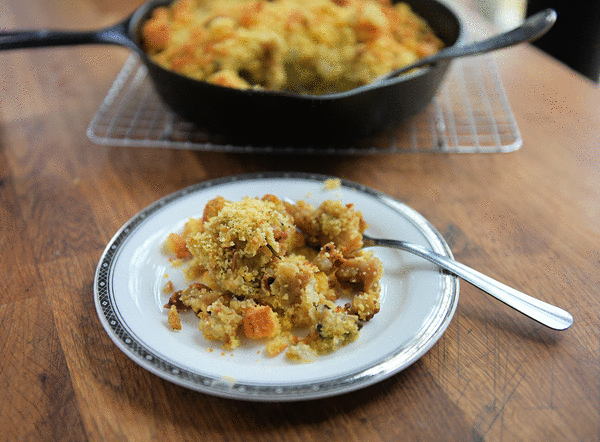
Arbaugh Farm in southern West Virginia, which stone grinds high-quality heritage grains into meals and flours and also produces small-batch sorghum syrup, is another favorite. Welsch uses the farm's cornmeal to make a savory stuffing accented with sweet, freeze-dried apples from Harvest Trails Co.
Two years ago, the father of two added another feather to his knit cap: He was named executive chef for the West Virginia State Parks system. The job involves re-imagining the menus for food and beverage programs at each of 12 state parks by championing local and heritage ingredients and dishes that honor the past. For example, he chose crawdad cakes over crab cakes.
Welsch also is one of eight West Virginia Chef Ambassadors hired by the West Virginia Department of Tourism to shine a spotlight on tastes and talents across the Mountain State. And in August, he launched season two of his popular "Recipes and Roadmaps" YouTube series.
In a way it's a tough job, Welsch says, because everything he does has to serve two masters.
"I don't want to cook food my neighbors won't eat, but I want to draw people in" by offering recognizable dishes that are elevated and more noteworthy "so it's worth the trip."
His latest venture: brand ambassador for the newly created Appalachian Cellar online marketplace launched earlier this year by Mountain State Co-Op. It features hundreds of shelf-stable products from small-scale statewide producers.
The jams, syrups, honey and coffee are currently only offered wholesale, but Welsch hopes some items will also eventually be available for retail.
"Appalachian food is having a moment," he says, noting that ramps are selling like crazy in New York City.
"I think there's a place for it and an interest in our heritage. It's important to keep it alive."
West Virginia Apple, Mushroom and Cornbread Dressing
PG tested
Looking for something a little different but still familiar? Chef Matt Welsch uses locally sourced ingredients in this stuffing recipe, but substituting whatever is on your grocer's shelves or in the produce aisle is OK, too. I used a Martha White Sweet Yellow Cornbread & Muffin Mix for the cornbread.
Chestnuts might sound exotic but they're easier to find than you might think — they were on sale at Kuhn's for $9.99 a pound last week. They're also very easy to roast — simply score them with a serrated knife, soak in a bowl of water for 1 or 2 hours, then bake in a 400-degree oven for 25-40 minutes, depending on size. (They're done when they are soft.) When cool, the skins should peel right off.
2 tablespoons unsalted butter, plus more for pan
1 medium yellow onion, diced
2 celery ribs, finely diced
3/4 teaspoon kosher salt
1 cup Mon Valley mushrooms
2 1/2 ounces Harvest Trails freeze-dried apples
1 tablespoon fresh sage
1 tablespoon fresh thyme leaves
1/2 teaspoon black pepper
5 cups baked Arbaugh Farms cornbread, divided
1 tablespoon Ronk Family Farm maple syrup
1 1/2 cups warm chicken or vegetable stock
1 egg, slightly beaten
1/2 cup chopped, toasted chestnuts
Preheat oven to 350 degrees. Butter a cast-iron skillet.
In large skillet, melt 2 tablespoons butter over medium heat. Add onion and celery and a pinch of salt.
Cook until softened and translucent.
Add mushrooms and cook until tender. Add apples and cook another 3-4 minutes, just until they begin to soften but still hold shape.
Stir in herbs and pepper. Remove from heat.
Crumble 4 cups cornbread and add to a large bowl with sauteed vegetables. Drizzle in maple syrup. Toss gently to evenly coat.
Pour in 1 1/2 cups warm stock and the beaten egg. Fold lightly. The mix should be moist but not soupy — it should not hold together when pressed. Add more stock if needed.
Fold in chestnuts.Transfer mixture to the buttered cast-iron skillet. Dot with a few pieces of butter on top.
Bake uncovered for 20 minutes, then crumble reserved 1 cup cornbread and add to the top.
Cook for another 10-20 minutes, until golden brown on top and set in the middle (crisp edges are key).
Remove from oven and let dressing rest for 5-10 minutes before serving. Enjoy!
Serves 4-6.
— Chef Matt Welsch, Vagabond Kitchen
© 2025 the Pittsburgh Post-Gazette. Visit www.post-gazette.com. Distributed by Tribune Content Agency, LLC. ©2025 PG Publishing Co. Visit at post-gazette.com. Distributed by Tribune Content Agency, LLC.







Comments