Why Dogs Need Sniff Walks: The Neuroscience of Olfactory Enrichment
Published in Cats & Dogs News
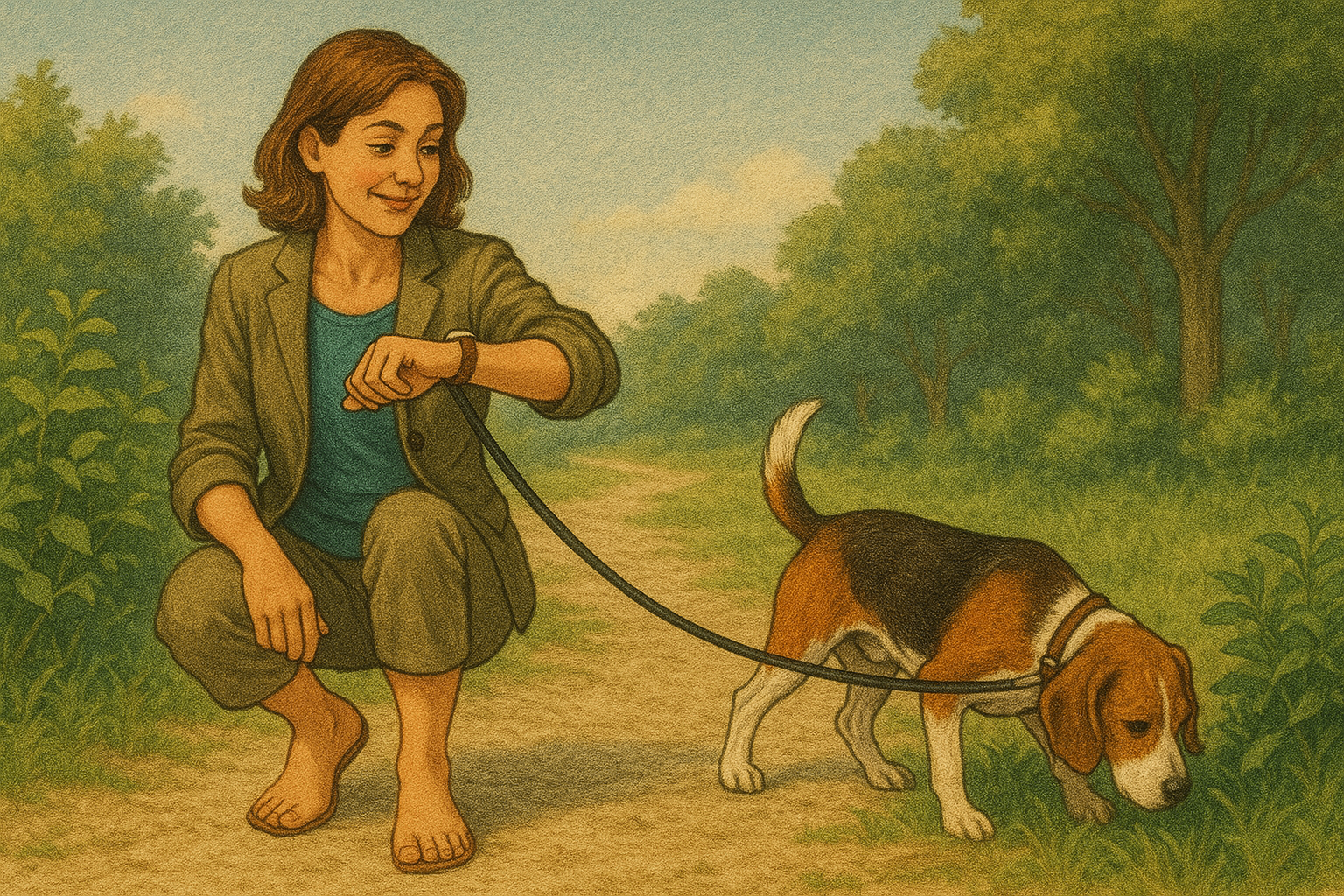
For generations, dog owners have thought of walks primarily as exercise — a chance for a dog to stretch its legs, burn energy, and relieve itself. But animal-behavior researchers say this traditional view overlooks the most important part of a dog’s outdoor experience: the nose.
Across parks, sidewalks, and backyards, dogs aren’t just wandering aimlessly. They are gathering information, mapping their surroundings, and regulating their nervous systems through scent. Scientists call this process “olfactory enrichment,” and they say it can be as essential to a dog’s well-being as physical activity.
At the heart of the growing research is a simple idea with profound implications: for dogs, smelling *is* thinking.
The Nose as a Cognitive Engine
A dog’s nose represents one of the most powerful sensory organs in the animal kingdom. While humans possess around 5 million scent receptors, dogs can have up to 300 million, depending on the breed. Their brains devote massive neural real estate to interpreting scent — proportionally 40 times more than the human brain.
This means dogs process odor the way people process language and visual detail. When a dog stops to sniff a patch of grass for 20 seconds, it may be performing the equivalent of reading a short news report.
“It’s not a distraction — it’s cognition,” said Dr. Elena Brooks, a neuroscientist who studies canine sensory processing. “Every scent your dog investigates becomes information that helps them navigate the world with confidence.”
Brooks compares the average neighborhood stroll to a library filled with invisible books. Each blade of grass, fencepost, and fire hydrant holds molecular traces from other animals, foods, plants, and environmental changes. Dogs detect not only who passed by, but when, in what mood, and sometimes even what they ate.
This data stream feeds into brain areas associated with memory, emotion regulation, and problem-solving. In short: while the body walks, the brain works.
Stress Reduction Through Scent Exploration
Olfactory enrichment does more than stimulate cognition — it also reduces stress. Studies show that when dogs are allowed to sniff freely instead of being hurried along, their heart rates decrease and their overall behavior becomes calmer.
The act of smelling triggers the release of dopamine, a neurotransmitter associated with pleasure and motivation. It also activates neural circuits that help dogs process and discharge tension.
“For a dog, a walk without sniffing is like meditation without breath,” said Brooks. “It removes the grounding mechanism.”
Animal-welfare groups warn that rushing a dog during a walk, particularly by using constant leash pressure or commands to “leave it,” can create frustration. Over time, this stress may manifest as reactivity, anxiety, or destructive behavior.
By contrast, slow, scent-rich walks allow dogs to decompress. Trainers often prescribe “sniffaris” — unstructured walks where the dog leads the pace — as part of behavior-modification programs.
Why Human Expectations Get in the Way
Part of the challenge lies in differing sensory priorities. Humans walk with visual goals in mind: the next block, the scenic viewpoint, the end of the trail. Dogs walk for olfactory immersion.
This mismatch leads many owners to interpret normal sniffing behavior as stubbornness or inefficiency. In reality, dogs and humans simply experience the walk through different sensory lenses.
“It’s like going to an art museum with someone who wants to sprint to the gift shop,” said Brooks. “The value of the experience depends on taking time to appreciate the details.”
Urban design plays a role as well. Sidewalks often lack natural textures or varied plant life, reducing scent opportunities. That makes lingering over lampposts or trash bins even more important — even if the behavior seems odd to human observers.
Sniffing as Communication and Social Processing
Scent also plays a crucial role in how dogs interpret social information. A single sniff can convey identity, gender, health status, and emotional state. Dogs can detect cortisol levels, pheromones, and hormonal changes in other animals with remarkable accuracy.
This means that when a dog pauses to investigate a scent, it may be assessing social context, evaluating safety, or simply catching up on the neighborhood’s unspoken gossip.
For dogs with social anxiety, sniffing provides distance and control. Trainers note that some reactive dogs calm down significantly when given permission to investigate smells rather than being forced into unwanted interactions.
Sniffing, then, is not avoidance — it is strategy.
How Much Sniff Time Do Dogs Need?
Experts generally recommend incorporating at least one sniff-focused walk into a dog’s daily routine. Duration matters less than autonomy: even 10–15 minutes of relaxed, exploratory pacing can yield measurable benefits.
Variety enhances enrichment. Grassy patches, mulch beds, tree trunks, and even city corners offer different olfactory landscapes. Rotating routes can keep a dog’s brain active and engaged.
Owners who cannot provide long walks may consider scatter-feeding treats in the yard, using scent-based puzzle toys, or setting up simple nosework games indoors.
“Every dog, from Chihuahua to Great Dane, benefits from using its nose,” Brooks said. “It’s what they were born to do.”
A Shift in Mindset
The growing movement toward sniff-centric walks reflects a broader cultural shift in how people understand pets. As dogs take on deeper emotional and social roles within families, their mental health is receiving increased attention.
Rather than thinking of walks solely as exercise or obedience practice, owners are encouraged to think of them as sensory adventures — opportunities for dogs to explore, interpret, and decompress.
In the end, the science highlights what many dog owners intuitively feel: a dog who gets to stop and smell the world returns home more settled, more satisfied, and more themselves.
And for a species that communicates through scent as richly as humans communicate through words, a leisurely sniff walk is not a luxury.
It is a language.
========
This article was written, in part, utilizing AI tools.








Comments