The Enduring Threads of Hippie Fashion
Published in Fashion Daily News
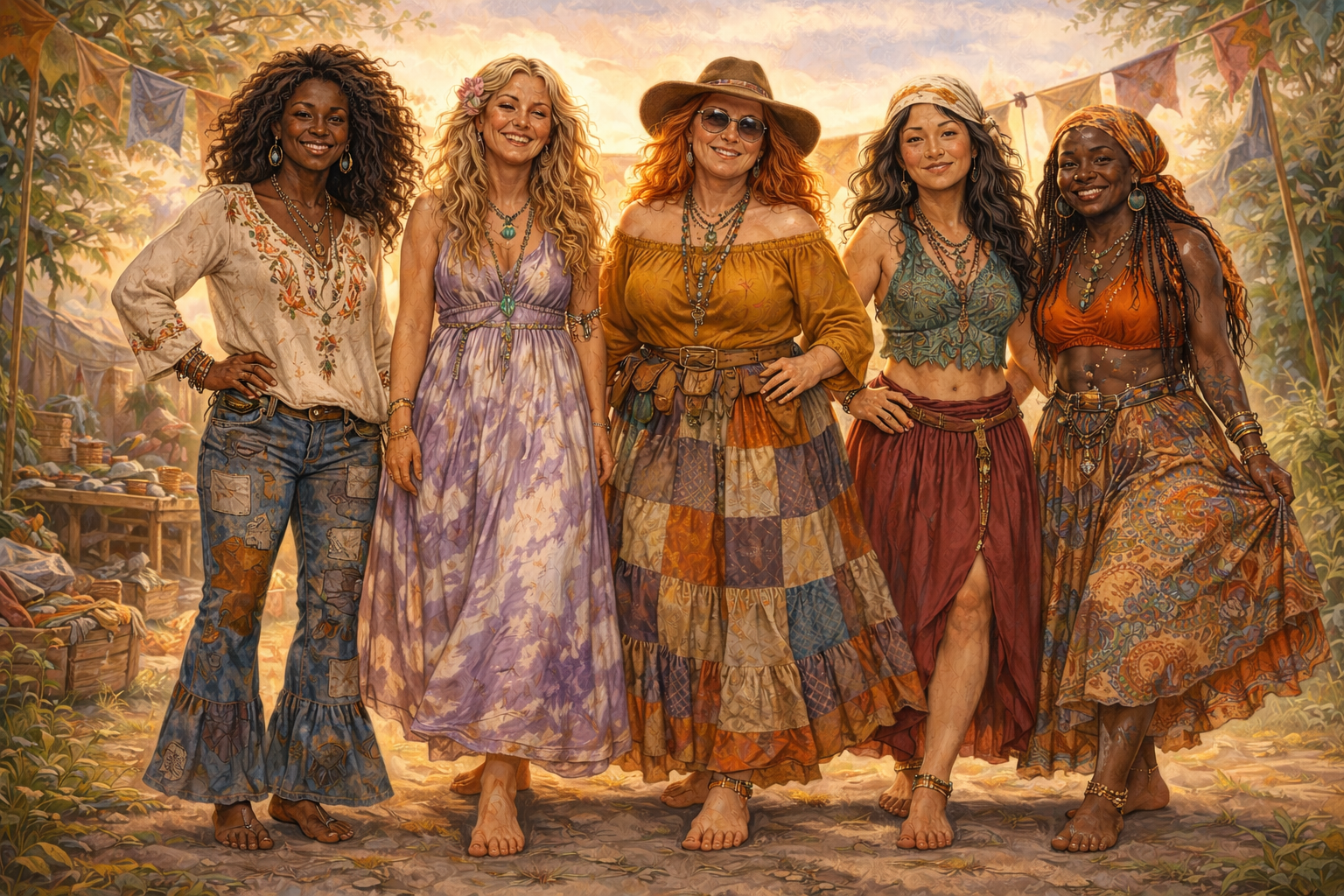
SAN FRANCISCO — Hippie fashion was never just about clothes. It was about rejecting a system. In the mid-1960s, young Americans began expressing dissent not only through protests and music but through the fabric they wore. Bell-bottoms, flowing skirts, beads, patched denim and handmade garments became visual shorthand for a generation that wanted to live differently.
The movement’s style grew out of a mix of influences: folk culture, Eastern spirituality, Native American craft traditions and a deliberate embrace of thrift. Young people turned away from department stores and toward flea markets, army surplus shops and secondhand bins. Clothing was rarely new. It was found, traded, altered, patched and repurposed.
The result was a look that felt almost anti-fashion — and yet became one of the most recognizable styles in modern history.
A rebellion you could wear
Hippie clothing was political before it was aesthetic. In the mid-1960s, American culture was sharply divided by the Vietnam War, civil rights struggles and a widening generational gap. For many young people, the act of dressing differently was itself a protest.
Uniforms were rejected. So were suits, pressed skirts and the tidy suburban wardrobe associated with their parents.
Instead, clothing became looser, softer and more improvised. Jeans were worn until they tore and were then patched with bright fabrics. Shirts were embroidered or dyed by hand. Fringed vests, ponchos and loose tunics replaced structured jackets.
The message was simple: conformity was out. Individual expression was in.
The global roots of the look
Much of what Americans now associate with hippie fashion actually came from other parts of the world. Travelers returning from India, Morocco and Afghanistan brought back garments that fascinated young counterculture communities.
Indian cotton tunics, Afghan coats, Turkish vests and embroidered peasant blouses began appearing on the streets of San Francisco’s Haight-Ashbury neighborhood and New York’s East Village.
These garments offered something American clothing often lacked: handmade character. Patterns were irregular, fabrics were textured and each piece felt personal rather than mass-produced.
Tie-dye, perhaps the most famous hippie aesthetic, drew inspiration from traditional dyeing techniques used in Asia and Africa. The swirling colors became symbolic of freedom, creativity and psychedelic experimentation.
The handmade ethos
Hippie fashion was deeply connected to craft. Sewing, knitting and embroidery became everyday practices within the movement. Clothing was rarely discarded if it could be repaired or transformed.
Patchwork jeans and quilted jackets were common sights. A torn sleeve might be replaced with a different fabric entirely. A plain shirt could become a canvas for painted flowers or peace symbols.
This do-it-yourself philosophy carried both practical and ideological weight. It rejected consumerism while celebrating creativity.
Many hippies believed that making one’s own clothing restored a sense of connection to labor and materials that industrial society had lost.
Natural fabrics and natural living
Synthetic fabrics dominated mainstream fashion in the 1960s, but hippie culture often preferred natural materials. Cotton, linen, leather and wool were valued for their texture and durability.
Clothing frequently appeared worn or weathered. That look was not accidental. It reflected a broader cultural shift toward living closer to nature.
Bare feet were common in many hippie communities, especially during summer festivals and gatherings. Sandals, when worn, were often handmade leather designs inspired by ancient styles.
Jewelry also reflected this natural aesthetic. Wooden beads, turquoise stones, shells and feathers replaced the polished metals favored by conventional fashion.
Music festivals and visual identity
Few events captured hippie fashion more vividly than the music festivals of the late 1960s. Gatherings like the Monterey Pop Festival in 1967 and Woodstock in 1969 served as open-air runways for the counterculture.
Photographs from those events show a tapestry of styles: flowing dresses, army jackets decorated with peace signs, colorful scarves and layers of necklaces.
Musicians helped popularize the look. Artists such as Janis Joplin, Jimi Hendrix and members of The Grateful Dead embraced flamboyant clothing that blurred gender norms and celebrated visual individuality.
These images traveled across magazines, posters and album covers, spreading the aesthetic far beyond the original communities where it began.
From counterculture to mainstream
By the early 1970s, hippie fashion had already begun migrating into the mainstream. Major clothing companies started producing versions of bell-bottom jeans, embroidered shirts and fringe jackets.
Ironically, the anti-consumer movement had inspired a lucrative fashion industry.
Yet something subtle changed in the process. The mass-produced versions often lacked the improvisational spirit of the originals. A factory-made tie-dye shirt could mimic the colors, but not the personal story behind a handmade garment.
Still, the influence endured.
Modern bohemian fashion — sometimes called “boho chic” — draws heavily from hippie traditions. Designers regularly revisit flowing silhouettes, patchwork textiles and artisanal details that echo the counterculture era.
The philosophy stitched into fabric
More than half a century later, hippie fashion remains culturally significant because it represents more than a trend.
It was an attempt to live visibly according to a different set of values: peace, creativity, environmental awareness and freedom from rigid social expectations.
Clothing became a language. A patched pair of jeans or a handmade necklace signaled membership in a community that believed the world could be gentler and more imaginative.
Fashion historians often note that the hippie movement permanently changed how people think about personal style. It encouraged experimentation, individuality and a willingness to mix cultural influences in new ways.
Even today, the spirit of that era can be seen wherever clothing is altered, repaired or reinvented rather than simply replaced.
In that sense, hippie fashion never really disappeared. Its threads continue to run quietly through modern wardrobes, reminding us that what we wear can carry meaning far beyond fabric and stitching.
========
Rowan Alderwick writes about cultural history, clothing and the strange lives of everyday objects. His work explores how ordinary materials reveal larger social changes. This article was written, in part, utilizing AI tools.






Comments