Tesla loses EV crown to BYD after second annual sales drop
Published in Automotive News
Tesla Inc. ceded the title of world’s top seller of electric cars to China’s BYD Co., squandering a lead the Elon Musk-led company built as it popularized plug-in vehicles over the past decade.
Deliveries for the Austin, Texas-based automaker fell 8.6% in 2025, marking the second consecutive annual decline. Fourth-quarter sales tumbled 16% to 418,227 vehicles, Tesla said in a statement Friday, trailing analyst estimates compiled by Bloomberg and an even more pessimistic average the company shared earlier this week.
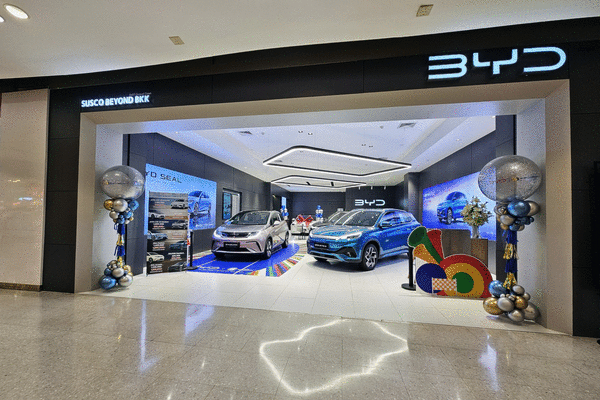
BYD, by contrast, increased battery-electric vehicle sales both for the quarter and the full year, delivering almost 2.26 million EVs in 2025 to Tesla’s 1.64 million.
Investors have paid little mind to Tesla’s declining position in the global EV pecking order and have instead bought into Musk’s emphasis on artificial intelligence and autonomous vehicles. The chief executive officer has drawn attention away from the state of Tesla’s core business by touting progress in his longstanding effort to start a robotaxi service.
Standing up those operations will be crucial in 2026 given the outlook for EV demand in the U.S., Tesla’s largest market. President Donald Trump’s administration has ceased federal incentives supporting plug-in vehicle purchases and hollowed out fuel economy and emissions regulations that have generated billions of dollars in revenue for the company.
AI emphasis
Wall Street had been bracing for Tesla to report a rough quarter following the end of a key consumer tax credit for EV purchases in the U.S., William Blair analyst Jed Dorsheimer said in a note. The actual results may have little impact on the stock, which “is valued almost entirely on the transformation to real-world AI.”
Tesla shares rose 0.9% at 9:57 a.m. Friday in New York, paring earlier gains. The stock advanced 11% last year, even after closing 2025 with six consecutive trading-day declines.
BYD pulled away from Tesla last year after coming up just short of its U.S. counterpart in 2024. While the Chinese manufacturer delivered more fully electric cars in the fourth quarter of that year, Tesla maintained a slim lead on an annual basis. BYD also sold more than 2 million plug-in hybrids each of the last two years.
Wall Street has grown increasingly skeptical about Tesla’s 2026 sales prospects. This time two years ago, analysts were predicting Tesla would deliver more than 3 million vehicles. The average estimate has plunged to around 1.8 million.
Battery deployments
Tesla’s energy storage battery business, on the other hand, has never been better.
The company deployed 14.2 gigawatt hours of products last quarter, up from the 11 gigawatt hours a year earlier. In total, Tesla deployed 46.7 gigawatt hours of energy storage products last year, up from 31.4 gigawatt hours in 2024.
Tesla ended the year by building anticipation for Cybercab, a two-seat compact car with butterfly doors. While the prototype Musk first unveiled in late 2024 lacked a steering wheel or pedals, Tesla’s board chair Robyn Denholm told Bloomberg News in October that the company will sell the car with those components if required by regulators.
Musk also pointed to milestones for the robotaxi business late last month. But while the company began driverless testing in Austin, consumers thus far are only able to summon rides from small numbers of cars in the Texas capital and the San Francisco Bay area with safety supervisors in the front seats.
©2026 Bloomberg L.P. Visit bloomberg.com. Distributed by Tribune Content Agency, LLC.






Comments