Want a prescription with your grocery delivery? Walmart's Florida healthcare strategy expands
Published in Health & Fitness
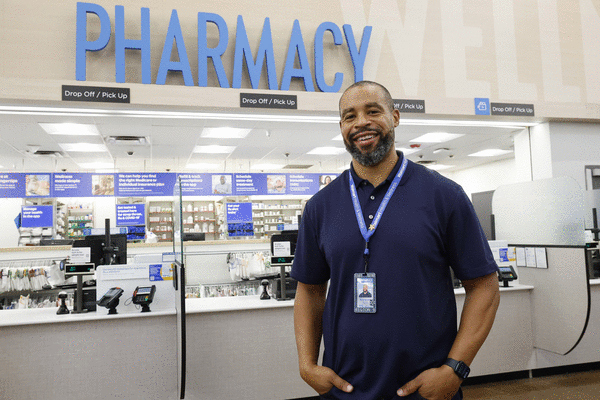
For many South Floridians, the nearest point of medical care isn’t a doctor’s office or an urgent care clinic — it’s the pharmacy counter past the grocery aisles at the local Walmart.
Leveraging its vast store footprint, Walmart is aggressively expanding clinical, digital, and bilingual healthcare across South and Central Florida as pharmacies evolve beyond dispensing medication. Regional Health and Wellness Director Marques Hunter, who oversees 118 pharmacies and 100 vision centers stretching from Orlando to Miami and Naples, says the retail giant is positioning itself as a frontline healthcare hub.
“We’re the closest access to healthcare across all of the communities in America,” said Hunter, who has been with the company for more than 15 years and in his regional leadership role for over six. “Approximately 90% of the U.S. population lives within 10 miles of a Walmart store or Sam’s Club.”
Rather than running traditional medical clinics, Walmart has pivoted its healthcare strategy. Its standalone in-store clinics are gone, and the retailer now relies heavily on its pharmacists in Florida as everyday care providers. Pharmacists can administer rapid point-of-care tests for flu, strep throat, and COVID-19 and prescribe antiviral or antibiotic treatments on the spot without requiring a separate doctor’s visit.
“You’re not having to go to an urgent care, get a prescription, and then come to your Walmart pharmacy,” Hunter said. “We can do all that in-house now.”
Walmart pharmacists also conduct on-the-spot A1C tests for diabetes management and cholesterol screenings. Rather than waiting for patients to ask, they actively review patient records to flag overdue vaccines for pneumonia, shingles, or MMR during routine flu shot visits.
Virginia Joseph, a pharmacist at the Lauderdale Lakes Walmart store, said she monitors customers’ digital profiles and makes proactive clinical recommendations. When she dispenses medication for asthma or COPD, for example, she recommends the pneumonia vaccine.
“We come in with our clinical knowledge and our clinical judgment to try to inform the patient of something that they may need,” Joseph said.
To better serve South Florida’s diverse communities, Walmart has heavily staffed its regional pharmacies with Spanish- and Haitian Creole-speaking pharmacists and technicians, allowing staff to counsel patients in their native languages.
“We’re able to connect at a higher level with our patients to be able to serve their healthcare needs,” Hunter said.
Walmart is not alone in shifting away from physical medical clinics. After years of aggressive expansion by retail giants hoping to disrupt primary care, the footprint of in-store clinics has shrunk dramatically due to high clinical labor overhead and low insurance reimbursements. Walgreens has scaled back its VillageMD clinic rollout, and CVS has trimmed underperforming MinuteClinic locations. CVS announced earlier this month it will uncouple its pharmacy business from its retail stores. Minute Clinics and the mail-order pharmacy would stay with the retail entity.
Overall, though, retailers are leaning into pharmacy convenience. Consulting firm Bain & Company projects that mass merchants and grocers will capture up to 32% of U.S. pharmacy market share by combining affordability, convenience, and app-based ordering without losing in-person pharmacist trust.
The future is digital
To compete against regional grocers like Publix and warehouse clubs like Costco, Walmart is leaning heavily into digital integration and bundled convenience through the Walmart app, Hunter said.
A centerpiece of that push is Rx Delivery, which brings prescriptions to customers’ doorsteps the same day — paired with their grocery or household orders.
“If you don’t feel good, we can deliver that Tamiflu to your house same day with some chicken noodle soup,” Hunter said. “It’s all about the convenience of being able to pair your grocery order with your prescription order, which a lot of our competitors cannot do.”
While standard delivery is included with a $98 annual Walmart+ membership (discounted by 50% for students and those on government assistance through Walmart+ Assist), the company recently introduced “unscheduled delivery” in South Florida. For a $5 fee, this service extends prescription drop-offs beyond standard store zones to reach rural areas and residents without reliable transportation.
Walmart has also rolled out BetterCare Services within its app, a third-party telehealth platform offering transparent, cash-pay virtual visits for patients without insurance or those seeking quick care. Current cash pricing includes: $18 for a pediatric visit; $30 for a prescription renewal or GLP-1 medication evaluation; and $39 for a virtual urgent care visit.
“So if you need a quick doctor’s appointment or if you need an urgent care appointment or if you want to get your feet checked, there are some really cool things that you can do on the app now through BetterCare,” Hunter said.
Customers can also manage prescriptions and book immunizations or test-to-treat appointments directly through the app.
“People are starting to realize, ‘Hey, I don’t have to come to the pharmacy for every single thing that I need,'” Hunter said.
Customers want affordability
With inflation squeezing household budgets, Hunter emphasized that Walmart continues to anchor its pharmacy business around its $4 and $10 generic prescription formulary, which covers common maintenance medications for blood pressure and cholesterol.
“Our prices are very, very competitive because that’s what we hang our hat on,” Hunter said.
Karen Peterson, 73, of Pembroke Pines, said those prices keep her coming back. Approaching the pharmacy counter with a cart full of groceries, Peterson noted the convenience of handling her errands in a single stop.
“I drive here twice a month to refill my prescriptions. The prices are good. They are efficient and polite, and I can pick up some other things I need while I am here,” Peterson said.
Joseph said her role as a pharmacist increasingly involves advocating for patients’ wallets.
“Let’s just say a patient can’t afford a particular medication. We use our clinical know-how to say, well, you know what? This might be a comparable medication, and then I can reach out to the doctor and have a conversation to get something the patient can afford. That happens all the time,” Joseph said.
For Walmart, the financial payoff of a pharmacy customer extends well beyond the prescription counter. Shoppers who fill prescriptions at Walmart visit the store significantly more often and routinely add higher-margin groceries and household goods to their baskets, the retailer has discovered.
While health and wellness has been one of Walmart’s fastest-growing U.S. revenue categories — fueled heavily by surging demand for GLP-1 weight-loss drugs — the retailer faces a growing financial balancing act. New Medicare drug-pricing rules and federal cost caps are squeezing pharmacy margins, meaning Walmart can fill more prescriptions while generating less revenue per script.
During its third-quarter earnings call Thursday, Walmart CFO John David Rainey said drug price declines — caused in part by the federal government’s Medicare prescription drug regulation — undermined its U.S. sales. The company cited GLP-1 drug prices as a particular factor, “as script growth was more than offset by price-mix headwinds.”
Because of a major Washington push to lower drug costs, America is experiencing its biggest prescription drug price deflation in generations, Axios’ Courtenay Brown reported Monday.
Still, four in 10 Americans said that in the past year they hadn’t taken medication as prescribed because of cost, according to a KFF poll. Some even resort to over-the-counter medicines instead.
“People don’t care about what the true cost of the drug is,” Geoffrey Joyce, a USC health economist, told Axios. “They just say, ‘What’s my copay?’ or ‘What’s my cost-sharing at the pharmacy counter?'”
What this means for Walmart remains to be seen.
Community health and trust is key
Even as margins tighten, Walmart continues to use community events to bring uninsured and senior shoppers through its doors.
“A lot of people that come in are uninsured,” Hunter said, noting that Walmart hosts biannual “Walmart Wellness Days” featuring free health screenings and outreach, including recent events in Hialeah and Miami. “When we do things like point-of-care testing on the spot or offer immunizations, that’s really the only access they have to care throughout the entire year.”
During Medicare open enrollment periods, select South Florida stores also host “Healthcare Begins Here” kiosks, connecting seniors shopping for groceries directly with licensed insurance agents to compare plan options.
As retail healthcare evolves from standalone clinics to everyday convenience, Hunter says Walmart’s strategy is to become a reliable fixture in residents’ routines. “A lot of trust has just been built with our communities because of all these services that we now offer.”
©2026 South Florida Sun Sentinel. Visit at sun-sentinel.com. Distributed by Tribune Content Agency, LLC.









Comments