Salmonella outbreak tied to raw oysters reaches Maryland
Published in Health & Fitness
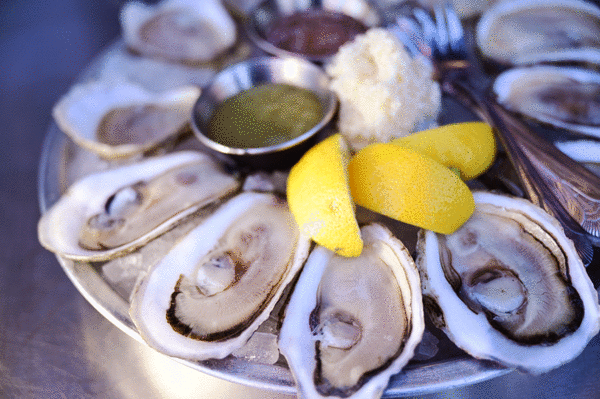
BALTIMORE — A Maryland resident is among at least 64 people in 22 states who have fallen ill after being infected with the same strain of salmonella linked to raw oysters, according to the Centers for Disease Control and Prevention.
Of those sickened nationwide, 20 people were hospitalized as of Tuesday. No deaths have been reported. Federal officials did not say whether the Maryland case resulted in hospitalization or identify where the contaminated oysters were harvested or sold.
The CDC did not provide requested updated figures Friday.
“People in this outbreak are being hospitalized at a higher rate than expected when compared to other Salmonella outbreaks linked to oysters,” the CDC wrote in a news release. “State and local public health officials are interviewing people about the different foods they ate in the week before they got sick.”
The CDC and the Food and Drug Administration are continuing to trace the oysters to determine whether they came from a shared harvesting area or distributor.
No recall has been announced, and officials said the investigation remains ongoing. In nearby states, Virginia saw six cases, Pennsylvania 10 and Delaware two.
Salmonella is a common cause of foodborne illness in the United States, but raw oysters pose a particular risk because they are often eaten uncooked and can harbor bacteria year-round, according to the CDC. Unlike some foods, oysters can look, smell and taste normal even when contaminated.
Federal health officials are urging consumers to cook oysters thoroughly before eating them to reduce the risk of infection. Condiments such as hot sauce and lemon juice do not kill harmful bacteria, officials warned.
Most people infected with salmonella develop symptoms including diarrhea, fever and stomach cramps within six hours to six days after exposure. Illness typically lasts four to seven days, and many people recover without medical treatment. However, some infections can become severe, requiring hospitalization.
Young children, adults 65 and older, and people with weakened immune systems are at higher risk for serious illness, health officials said. In those cases, salmonella can spread beyond the intestines and cause life-threatening complications.
Health officials recommend contacting a health care provider immediately if symptoms include a fever higher than 102 degrees, diarrhea lasting more than three days without improvement, bloody diarrhea, repeated vomiting that prevents keeping liquids down, or signs of dehydration such as little urination, dry mouth or dizziness when standing.
To reduce the risk of food poisoning, officials advise keeping raw seafood separate from other foods and preventing juices or drippings from contaminating surfaces. Consumers are also reminded that there is no way to tell by sight whether an oyster contains harmful germs.
For those who choose to eat oysters, the CDC recommends cooking them thoroughly. Oysters in the shell should be boiled until the shells open or steamed for four to nine minutes. Only shellfish that open during cooking should be eaten.
Shucked oysters should be boiled for at least three minutes, fried at 375 degrees for at least three minutes, broiled 3 inches from the heat for three minutes, or baked at 450 degrees for 10 minutes, according to the CDC. Seafood should reach an internal temperature of at least 145 degrees for 15 seconds to ensure safety, according to the CDC.
Health officials said people with questions about salmonella cases in their state should contact their local health department. They also emphasized that investigations like this can take time, and additional cases could be identified as reporting continues.
For now, the CDC is urging caution, particularly for people at higher risk of severe illness, as officials work to determine whether contaminated oysters from a single source are responsible for the multistate outbreak.
---------
©2025 The Baltimore Sun. Visit at baltimoresun.com. Distributed by Tribune Content Agency, LLC.









Comments