Trailblazing Orlando theater celebrates 100th birthday with a huge homecoming
Published in Entertainment News
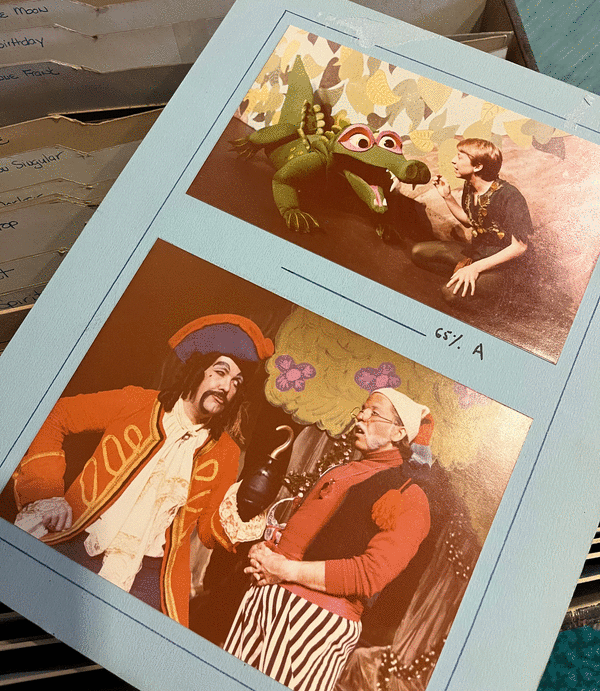
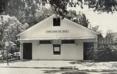
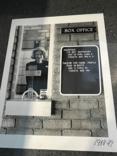
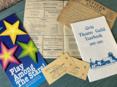
ORLANDO, Fla. — The trailblazing theater troupe that presented its first production a century ago has survived a lot: A wartime hiatus, multiple locations, a painful financial collapse, a divisive rescue plan and more than a half dozen name changes.
Known today as Orlando Family Stage, it’s the region’s second-oldest cultural organization behind Orlando Museum of Art, the only professional theater for young audiences in the state, among the top 10 children’s theaters in the nation, and one of Central Florida’s leading cultural organizations with a national reputation for excellence.
It only took 100 years to get here.
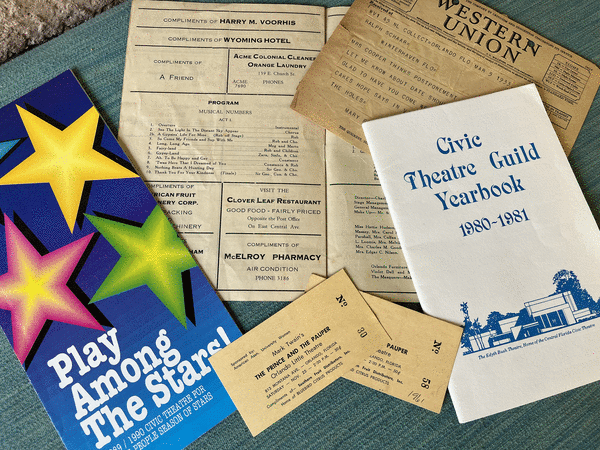
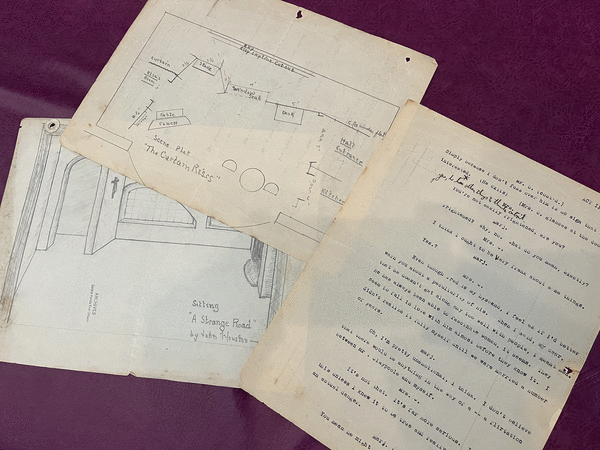
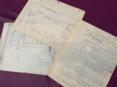
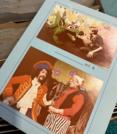
“It’s mind-blowing to think how many people have been pushing this up the mountain,” said executive director Chris Brown on a recent afternoon as he combed through a century’s worth of photos, clippings, brochures and other paraphernalia.
It’s impossible to count the number of lives the theater has touched since December 1925 when the Orlando Little Theatre Players organized as an amateur community theater. For some, like 90-year-old Frank Goldsmith, the theater has provided a place to have some onstage fun. For others, like actor-director David Lee, it was where his life changed.
Orlando Family Stage is celebrating one and all with a 100-Year-Reunion on Feb. 3 — exactly 100 years since the organization’s first night of short plays was presented on Feb. 3, 1926, at downtown’s Beacham Theatre, which is also still around.
Anyone involved with the organization under any name — the Civic Theatre, as it was known in its 1980s-90s heyday, or Orlando Repertory Theatre in the 2000s — is invited.
“It’s not possible to get to this milestone without those people. We want to reconnect with them,” Brown said. “We want to show them it’s still the same place.”
Refreshments will be served, and attendees will be able to peruse tables loaded with souvenirs from every decade. It should be quite a trip down Memory Lane.
A long history
In early 1926, the Orlando Reporter Star reported the Little Theatre Players was already “growing rapidly in popularity.” A second evening of one-act plays, following the Feb. 3 debut, was planned for March 16 “under the direction of Mrs. D.A. Cochran and Miss Lucille Whitehead.”
By 1934, the Orlando Little Theatre had officially incorporated, with productions staged in church halls, high school auditoriums and social clubs. World War II interrupted the fun, but the theater returned in 1946 — with the usual artistic travails.
“Occasional fits of temperament,” as one historical account puts it, “led to new groups splitting off.” But the organization carried on, and in 1958 the city announced it could have a home in Loch Haven Park. One obstacle The group had to raise the money to construct the building.
It would take more than a decade.
New names, new homes
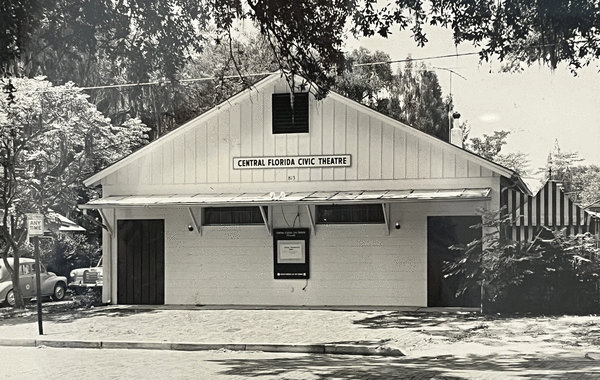
In 1959, while fundraising for a move to the park, the company bought a bungalow at 813 Montana St. and transformed it into a theater with 100 seats for patrons, actors’ dressing rooms in what had been the garage, and eventually, a special luxury — air conditioning.
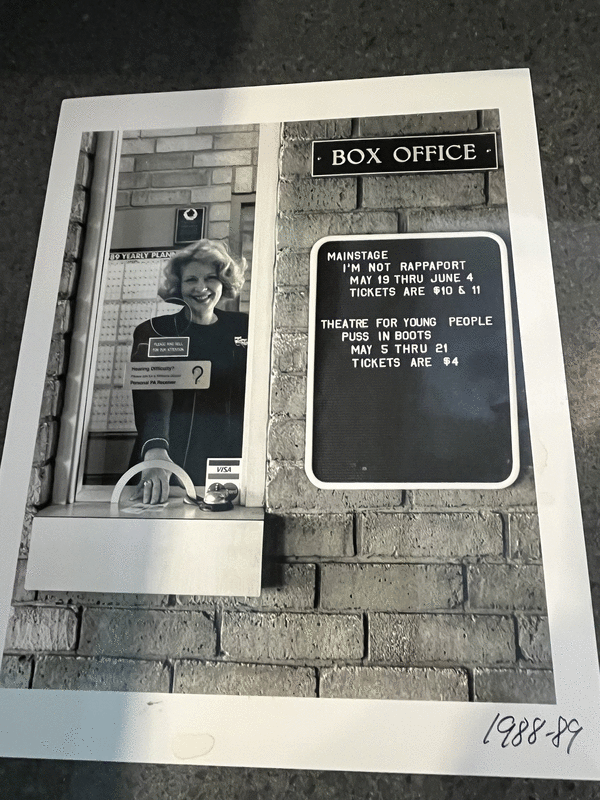
The theater was once again renamed in the late 1960s, this time to Central Florida Civic Theater, later rearranged to Civic Theatre of Central Florida. But for decades, it was affectionately — or later angrily — known as “the Civic.”
At a cost of about $780,000, that Loch Haven Park building was finally finished in 1973. It had two theaters — the Edyth Bush, named for the prominent philanthopist, and a small black-box theater. The original main entrance and lobby, now the side entrance, faced Princeton Street — which was relocated a block to the south when the park was refreshed in the 1980s.
A new theater, originally named for donor Ann Giles Densch — later embroiled in a messy divorce scandal — and now for the Universal Orlando Foundation, a new entrance and lobby opened in 1990, creating the layout familiar to theatergoers today.
A community spot
Through it all, the theater was a community resource. For much of its history, it was the only game in town for large-scale theater. Often, it would have multiple shows running concurrently, a big Broadway-style production, a smaller off-Broadway play and a children’s show.
Other groups used the space, too — similar to how Orlando Fringe rents the venues today for its May festival. Former AAA art director Frank Goldsmith remembered performing there with the Fab Follies, an amateur group of local seniors who would sing, dance and perform comedy bits.
Goldsmith was part of the group 15 years, performing from Kissimmee to Ormond Beach. But the Civic’s Edyth Bush remained a favorite.
“I loved that theater,” he said. “It’s a great theater to play — everybody can see you and you’re very close.”
It also became home to a special and unexpeced surprise, when he was asked to don makeup, wig and dress for an ongoing comedy bit.
“I became a drag queen at 67,” he recalled. “It was such fun.”
Haven for actors
TV and Broadway performers such as Wayne Brady, Jasmine Forsberg, Ashley Eckstein and Josh Segarra got their starts at the Civic or later Orlando Repertory Theatre.
For David Lee, it was where he found his calling.
“I grew up in that theater,” he said. “They took such good care of me.”
His first role: a chorus part in “Oliver!” while he was in high school. He later memorably played Hawkeye in a youth production of “M.A.S.H.” After attending college at the University of Miami, he returned and continued as an actor and director — including directing a production of “Jesus Christ Superstar” with Brady starring as Judas.
“I was blown away by how great, how over the top production values had become,” he recalled.
He starred as Oberon in “A Midsummer Night’s Dream,” the play that opened the new Densch-turned-Universal theater. It was directed by Michael Fortner, who spent a memorable decade from 1983-93 as artistic director of the Civic in its prime.
Other notable leaders included John Loesser — son of Broadway great Frank Loesser, the composer and lyricist of classic musical “Guys and Dolls” — who spent three years as executive director in the ’90s.
“John was 10 years ahead of his time” in his efforts to make the community enterprise more professional, Brown said.
Lee was able to use his Civic success to further his education, wowing admissions officers: “I had professional work on my resume when a lot of people did not.” In graduate school at Yale University, he learned how lucky Orlando was to have the Civic’s complex.
“I remember being confused when I went to Yale Repertory Theatre for the first time,” he said. “I was like, ‘Where are all the other theaters?’ I had been kind of spoiled.”
Crisis point
By the end of the 1990s, the headlines that had once raved about spectacular productions of Broadway’s best-known titles — “La Cage aux Folles,” “Into the Woods,” “Sweeney Todd,” “Angels in America” — had turned grim.
“Civic Theatre runs out of cash” trumpeted the Orlando Sentinel in February 2000. The theater, now drowning in debt, had suffered from an identity crisis: Trying to pay actors as a professional enterprise while keeping a community-theater vibe. The productions had gotten more expensive; administrations had changed, sometimes alienating patrons; revenue had not kept up.
The Sentinel’s theater critic at the time, Elizabeth Maupin, noted that the one-time “foremost theater in Orlando” now “existed in a theatrical no man’s land, where the quality of theater has been so erratic and the inner workings so peculiar that audiences and actors alike have simply moved on.”
Who saved the Civic? Children.
Well, technically, it was the University of Central Florida, which stepped in with plans to offer a master’s degree specializing in theater for young audiences.
Not everyone was happy with the solution. Feelings were hurt, fans were disappointed and the Civic name disappeared as the institution was re-christened Orlando Repertory Theatre.
“When I started in 2010, no one wanted to mention the Civic,” said Brown, who was hired as production manager and became executive director in 2019.
“People were sad and mad that this theater was becoming a children’s theater,” Revels recalled. “That was a huge wound to the theater.”
Young audiences
The UCF partnership and emphasis on family theater flourished, culminating in yet another name change — to Orlando Family Stage, in 2023.
In a way, Revels said, children’s theater was always the engine driving the troupe through the decades — back to the 1920s, when prominent Orlando Judge Donald Cheney called for more after-school activities for young people.
“The community always felt it was important to have kids go through this experience,” Brown said. “I think, like is still the case, that people just downplayed the children’s programming.”
In fact that third theater at Orlando Family Stage was built specifically to keep up with demand for young people’s shows.
The small black-box venue, where children’s plays had been offered, “was bursting at the seams,” Revels said. “They were turning away field trips.”
Generations
Revels, who came on board in 1995, is the only staff member from the old Civic to still work for the nonprofit.
Others also provide continuity as time marches on.
Susan Mitchell, a theatergoer for 70 years, remembers attending a show at the old Civic and being impressed. Years later, after the rebranding, she would attend children’s shows — with her grandson.
“They create an atmosphere where children feel they are loved and appreciated,” Mitchell said of the theater’s current incarnation. She still recalls a memorable performance when her grandson became enthralled with an onstage actor: “He kept pointing to him and saying, ‘That’s my friend.'”
You can see the generational history in the theater’s leadership, too: Current board member Jacob Stuart Jr., an Orlando attorney, is the grandson of Virginia Stuart, a board member who helped get the Loch Haven building constructed.
Brown sees another example of continuity in Orlando Family Stage’s success.
“The Civic was one of the largest community theaters in the country,” he said. “Now we’re a Top 10 theater-for-young-audiences theater in the country.”
Community that cares
In addition to the Feb. 3 public reunion, Orlando Family Stage also will host an invitation-only breakfast for past leaders, artists, board members, donors and other longtime community partners.
“None of this would be possible if we didn’t have a community that cared about the arts,” Brown said. “The fabric of our community is built on arts and culture.”
He smiled as he reflected on those who paved the way, no longer here to see the success the theater has found.
“It goes back to those people who really put everything they had into this,” he said. “It takes generations.”
———
100-YEAR REUNION
“Anyone who has ever been part of the theater” under any name or incarnation is invited to visit Orlando Family Stage 5:30-8 p.m. Feb. 3 for a free reunion. Refreshments will be served, and historical scripts, playbills, photos and more will be available. RSVP at orlandofamilystage.com/show/the-hundred-year-reunion
———
©2026 Orlando Sentinel. Visit orlandosentinel.com. Distributed by Tribune Content Agency, LLC.




Comments