Review: Book argues that pop culture is eating itself
Published in Books News
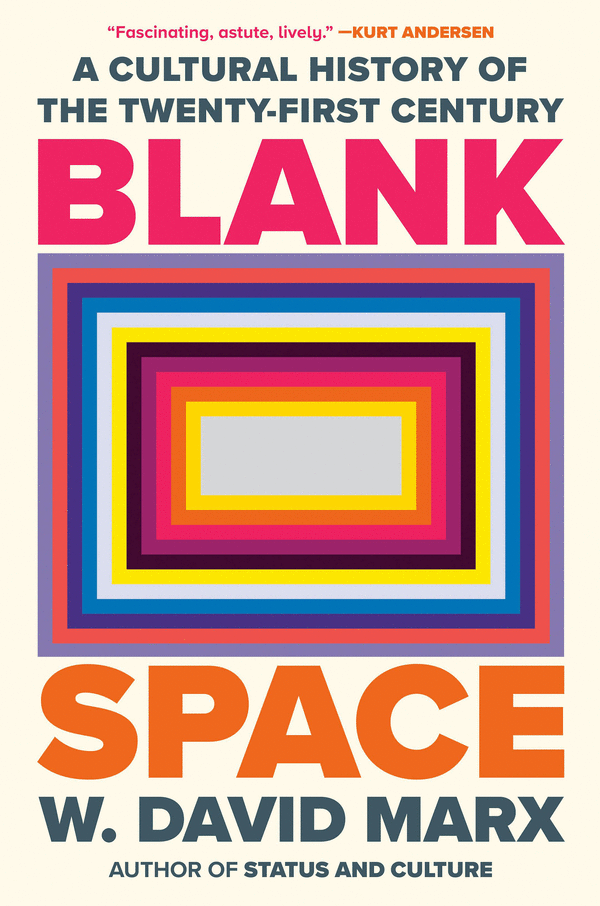
The phrase “Time is a flat circle” often refers to how the manic post-pandemic news cycle makes comprehension of the recent past impossible. A similarly dazed bafflement is explored in W. David Marx’s lucid and entertaining —yet despairing — book about the new millennium’s flattening of culture, “Blank Space.”
One of the primary culprits Marx identifies is perhaps his most controversial theme: omnivorism. Marx does not see artistic freedom in the breakdown of cultural hierarchies and increased genre-mixing. He sees risk aversion, anything to fill the blank spaces.
When country, R&B, hip-hop and classic rock become interchangeable bits to sample, rather than distinct musical styles, nothing stands out, he argues. “Genre blending gave hip-hop a burst of innovation in the early 2000s,” Marx writes, but by the 2010s most popular music followed a formula: “Swedish pop production, alt-rock melodies, and seventies grooves.”
For Marx, the understandable desire to cross musical boundaries in once-unthinkable ways has turned into a slurry of stagnation. He describes the now-lost narrative of cultural transitions: the Beatles knocked off Elvis, were dethroned by Led Zeppelin, who lost out to disco and punk, and so on.
Marx sees some original art still being created. But the prevalence of pastiche and lack of urgency — due in part, he believes, to the desire of “poptimist” critics to celebrate the successful rather than highlight the lesser known — means that “new aesthetics no longer displaced older artists.”
Playing a bit too perfectly to the Gen Xers who will make up much of the book’s readership, Marx starts with an illustrative look at Lollapalooza. Once a celebration of alternative music, the 1992 festival featured Pearl Jam, then fretting that their success meant selling out. Thirty years later, one of Lollapalooza’s main acts was DJ D-Sol, the stage name of Goldman Sachs CEO David Solomon. He “could only share a stage with real musicians,” Marx writes, “in a world that assigns equal value to commerce and creativity.”
“Blank Space” is less a rant against art’s monetization than it is a despairing look at the enthusiastic embrace of selling out. Seeing how the early 2000s’ performatively grungy, downtown vibe (The Strokes, Yeah Yeah Yeahs) was packaged and sold without regret, he notes that “you just had to party hard and find the right corporate sponsor.”
Marx also ponders the strange desire of mega-artists’ stans to celebrate their heroes’ business savvy as much as their art. He mordantly describes Taylor Swift fans’ ecstatic reaction to her re-recording albums in order to devalue the masters then owned by Scooter Braun as people picking sides in “a corporate rivalry between multi-millionaires.”
Given “Blank Space”’s grumpy tone and Marx’s unsuccessful attempts to rope conservatism to his theme, the book could be dismissed as another scattershot complaint from a critic who misses when cultural history could be easily segmented. Marx’s critique of Lady Gaga as just “recycling a palette of zany antics” feels correct, but couldn’t a pundit from an earlier time have thought the same about David Bowie’s 1970s persona shifts?
Still, Marx’s key point about the bland sameness of art in 2025 will resonate with anybody who has a hard time remembering when a new song made them perk up, pay attention and realize they have never heard anything like that before.
____
Blank Space: A Cultural History of the Twenty-first Century
By: W. David Marx.
Publisher: Viking, 375 pages.
©2025 The Minnesota Star Tribune. Visit at startribune.com. Distributed by Tribune Content Agency, LLC.











Comments