El Niño could spawn poisonous mushroom surge, health officials warn
Published in News & Features
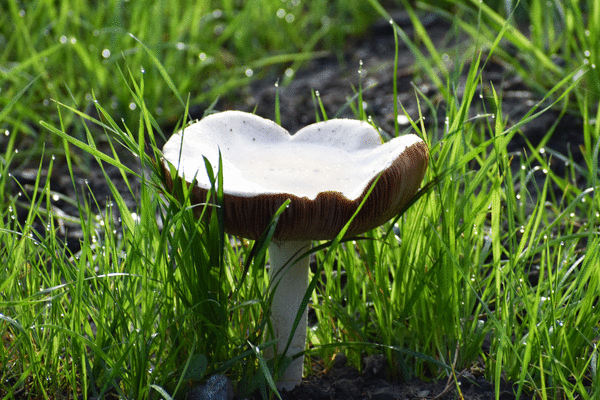
El Niño is tilting the odds toward a wetter winter in California, boosting the odds of not just swamped streets and high tides — but also a potential flood of poisonous mushrooms.
And if foragers mistakenly consume the fungi, officials are worried of another surge of near-fatal illnesses.
"With El Niño expected to bring increased rainfall to parts of California, we are concerned that these poisonous mushrooms could grow in large numbers," said Dr. Erica Pan, state public health officer and director of the California Department of Public Health. "Now is the time to raise awareness and help Californians stay safe."
An unprecedented outbreak of severe illness and death struck within the past year among people who mistakenly consumed two species of mushroom: Amanita phalloides, also known as death caps; and Amanita ocreata, or western destroying angel.
Between November 2025 and last May, 50 people were hospitalized after accidentally picking and eating these types of mushrooms.
Four people died, and four others required liver transplants.
Officials were stunned by the number of reported cases.
In a typical year, the California Poison Control System may receive five or fewer reports of illnesses linked to poisonous fungi.
At the time of the outbreak, officials told The Times that death caps had been the culprit behind a majority of the cases.
The state public health department went as far as urging people not to pick or eat wild mushrooms during the outbreak, citing the heightened risk of accidental poisoning.
During a previous major outbreak in 2016, there were 14 reported cases and no deaths. However, three people required liver transplants and one child suffered "permanent neurologic impairment," according to a report published in the U.S. Centers for Disease Control and Prevention's Morbidity and Mortality Weekly Report.
Here's what you need to know.
Where was the previous outbreak concentrated?
Reported illnesses from the most recent outbreak were focused on the Central Coast and Northern California.
Reported hospitalizations and illnesses occurred in the following counties:
• Monterey
• San Francisco
• Alameda
• Humboldt
• Contra Costa
• Sacramento
• San Luis Obispo
• San Mateo
• Santa Clara
• Santa Cruz
• Sonoma
• Yuba
Who was affected?
People who mistakenly consumed death caps usually were foraging for mushrooms in the wilderness, either alone or with a group, according to public health officials.
What caused the confusion?
"Death caps and western destroying angels resemble several safe-to-eat mushroom species in both appearance and taste," the state public health department said in a news release.
"Even experienced foragers may have difficulty distinguishing these deadly species from safe varieties," the department added.
There are three deadly mushrooms found in California: the death cap, the destroying angel and Galerina marginata, according to the Bay Area Mycological Society.
The death cap can be confused with the mushroom species Volvariella, which is edible. Both have somewhat similar characteristics including a volva, a cup-like structure at the base of the mushroom's stem, and are whitish in color.
But death caps lack an annulus, or ring, around their stems, Ari Jumpponen, a distinguished professor of biology at Kansas State University, previously told The Times.
What symptoms should I watch out for?
The types of mushrooms above are not safe in any quantity, health officials warn.
The death cap can cause delayed gastrointestinal symptoms that may not appear until six to 24 hours after consumption. Some early symptoms that can go away within a day include:
• Nausea
• Vomiting
• Diarrhea
• Abdominal pain
• Drop in blood pressure
• Fatigue
• Confusion
Mild symptoms may be only the beginning of a more severe reaction, however. Severe symptoms can develop within 48 to 96 hours, including progressive liver damage and, in some cases, full liver failure and potentially death.
If you've eaten a foraged mushroom and start to exhibit any adverse symptoms, call California's poison control hotline at (800) 222-1222 for free, confidential expert advice in multiple languages. If you suspect mushroom poisoning, call 911.
How to stay safe
Officials with the state public health agency recommended not picking and eating wild mushrooms to be safe.
Health officials also advise:
• Cooking, boiling, freezing or drying does not rid the death caps or western destroying angel of poison.
• Have caution when buying mushrooms from street vendors. Instead, purchase from grocery stores and trusted retailers.
• Avoid eating wild mushrooms collected by friends or family.
• Keep an eye on children playing outside where wild fungi grow.
• Pets can be poisoned by wild mushrooms, too, so keep them away from the fungi.
• Do not rely on mushroom-identification apps, social media, online photos or artificial intelligence tools to determine whether a mushroom is safe to eat.
©2026 Los Angeles Times. Visit at latimes.com. Distributed by Tribune Content Agency, LLC.






Comments