US Congress unlikely to limit Trump on Iran war for now
Published in News & Features
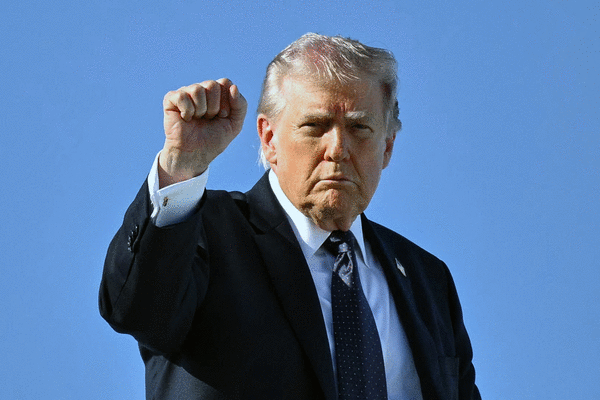
WASHINGTON — President Donald Trump is unlikely to be constrained by the Republican-led Congress on the war in Iran anytime soon.
Votes expected this week on legislation to halt U.S. military action against Iran are shaping up largely along party lines.
“The idea that we would take the ability of our commander in chief, the president, take his authority away right now, to finish this job, is a frightening prospect to me,” House Speaker Mike Johnson said. “It’s dangerous, and I am certainly hopeful, and I believe we do have the votes to put it down.”
Only one senator in each party has announced plans to cross party lines on the vote: Pennsylvania Democrat John Fetterman supports the war while Kentucky Republican Rand Paul, a longtime skeptic of U.S. military action overseas, opposes it.
Fetterman has been taking his fellow Democrats to task on social media and has been cheering on the war.
“Every member in the U.S. Senate agrees we cannot allow Iran to acquire a nuclear weapon,” he wrote Monday on X. “I’m baffled why so many are unwilling to support the only action to achieve that.”
Four more Republican senators would need to defy Trump — an unlikely prospect — for the measure to pass in the Senate, though some have yet to declare how they will vote.
In the House, a somewhat larger wing of hawkish Democrats are expected to oppose ending the war, potentially enough to offset any Republican defections led by Thomas Massie of Kentucky.
Democrats’ divisions on the war were highlighted Tuesday when a group of moderates in the House split from party leaders to offer an alternative war powers resolution that would allow Trump to continue military action for 30 days before requiring congressional approval. The moderates’ legislation would forbid sending U.S. ground troops into Iran without a congressional vote.
Even in the unlikely event a resolution passes Congress, it is sure to fall well short of the two-thirds vote that would be needed to override a presidential veto.
A ground invasion or a lengthy campaign could potentially change the dynamic in future votes as the midterm elections near, with fallout from rising gas prices and U.S. casualties having the potential to sour voters on a war that Trump started without broad public or international backing. Republican leaders say they do not expect U.S. troops on the ground at this point and are hoping for a quick end to the war, though Trump has not ruled out a lengthy campaign or ground troops.
Congress’ ultimate check on the president’s war powers comes from the power of the purse, and Trump could face more resistance if he comes to Congress for more money. He’s already seeking a massive military buildup that is likely to face resistance from some Republicans as well as Democrats.
Republican leaders can use procedural maneuvers to fund the war without any Democratic support but would still need to muster a majority in both the House and Senate.
_____
(With assistance from Matt Shirley.)
©2026 Bloomberg L.P. Visit bloomberg.com. Distributed by Tribune Content Agency, LLC.




Comments