Zelenskyy says next trilateral peace talks to be Feb. 4-5
Published in News & Features
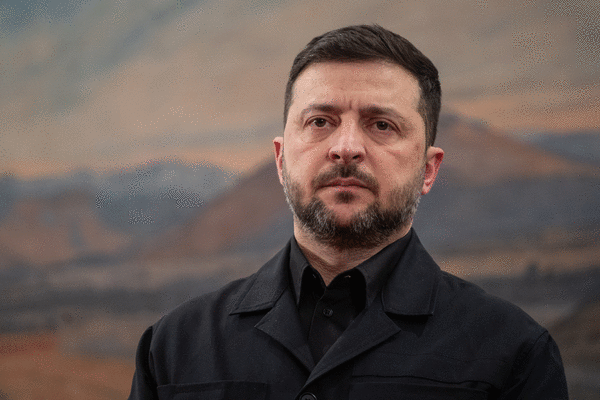
The next trilateral meetings between the U.S., Russia and Ukraine will be held Feb. 4-5 in Abu Dhabi, said Ukrainian President Volodymyr Zelenskyy.
“Ukraine is ready for a substantive discussion, and we are interested in ensuring that the outcome brings us closer to a real and dignified end to the war,” the Ukrainian leader said Sunday on X.
The delegations previously met in the United Arab Emirates’ capital on Jan. 23-24, including rare face-to-face discussions between Ukraine and Russia, in pursuit of a path to end Russia’s invasion of its neighbor, which is soon to enter a fifth year.
After those meetings, Zelenskyy and a US official said separately that more three-way talks were expected on Feb. 1, also in Abu Dhabi. It’s unclear why the meetings were pushed back.
On Saturday, though, the U.S. officials most closely associated with the peace effort — envoys Steve Witkoff and Jared Kushner, President Donald Trump’s son-in-law — met in Miami with Kremlin envoy Kirill Dmitriev. U.S. Treasury chief Scott Bessent attended the talks as well.
No details of Saturday’s talks were disclosed, beyond Witkoff and Dmitriev separately terming them constructive and productive. “Constructive discussion indeed with US Treasury Secretary Bessent,” Dmitriev said on X.
Separately on Sunday, Zelenskyy said there’d been no confirmation of external interference or a cyberattack behind Saturday’s widespread outage on Ukraine’s energy grid.
Ukraine’s capital, several other cities and much of neighboring Moldova suddenly lost power for several hours on Saturday, even as wintry temperatures dropped further in a deep-freeze expected to last for several more days.
Most indications about the outage point to the impact of severe weather: ice buildup on the lines and automatic shutdowns, Zelenskyy said on X.
“Two lines between Romania and Moldova, as well as lines on Ukrainian territory, stopped operating,” he said. “The causes are being thoroughly investigated.”
Most operations have been restored to pre-incident levels. Still, Ukraine continues to suffer regular outages of electricity, heat and in some cases water from months of drone and missile attacks on critical infrastructure.
Attacks on Ukraine’s energy infrastructure have been paused, for now, in a short-term arrangement brokered by Trump and aimed at creating favorable conditions for negotiations on an end to the war. In return, Ukraine is holding back in its regular targeting of Russian oil refineries and other facilities.
While the last major strike on Ukrainian energy facilities was almost a week ago, Russian forces have shifted to other vital areas of infrastructure, including rail and road transport. Three Shahed drones hit a passenger train in Ukraine’s Kharkiv region on Jan. 27, causing a fire and killing six people, according to local authorities.
Zelenskyy on Sunday said that over the past week “Russia has used more than 980 attack drones, nearly 1,100 guided aerial bombs, and two missiles against Ukraine.”
The Ukrainian air force said on Telegram it had shot down 76 of 90 Russian drones launched overnight, while 14 UAVs struck nine locations.
_____
(With assistance from Daryna Krasnolutska.)
_____
©2026 Bloomberg L.P. Visit bloomberg.com. Distributed by Tribune Content Agency, LLC.






Comments