'Inhumane' conditions at California immigrant detention center? Padilla: Yes. DHS: No
Published in News & Features
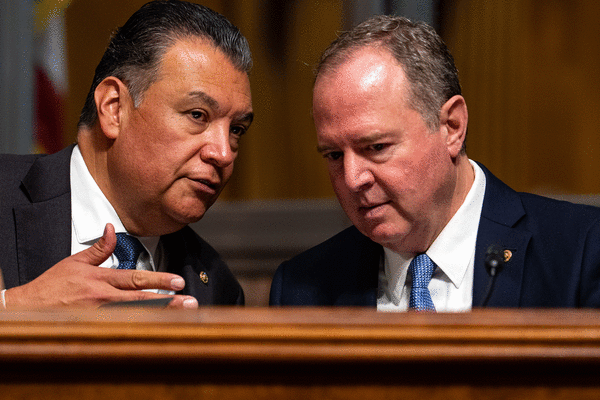
WASHINGTON — When Sens. Alex Padilla and Adam Schiff visited the California City immigration detention center last week, they were appalled.
“We saw firsthand today at California’s largest detention center the inhumane conditions that detained individuals are facing, violating basic standards for access to health care, food, water, and legal counsel,” reported Padilla, D-Calif.
This week, the Department of Homeland Security fired back.
“Any claims there are inhumane conditions at ICE detention centers are FALSE,” Tricia McLaughlin, assistant DHS secretary, told the Sacramento Bee in an email.
“ICE has higher detention standards than most U.S. prisons that hold actual U.S. citizens. ICE is regularly audited and inspected by external agencies to ensure that all ICE facilities comply with performance-based national detention standards,” she said. ICE is the Immigration and Customs Enforcement agency.
Padilla Tuesday responded to McLaughlin’s comments.
“Unfortunately, the assistant secretary’s comments have no basis in reality, given the conditions I witnessed firsthand on the ground. This is yet another example of an administration that is asking us to reject what we are seeing with our own eyes,” he said in an email to The Bee.
Conditions at the detention center
The senators visited the detention facility last week. Since then, ICE and DHS have come under new scrutiny, and criticism, from Democrats and some Republicans after federal agents in Minneapolis shot and killed intensive care nurse Alex Pretti after he intervened to protect other protesters from being pepper sprayed.
After visiting the detention center last week, Padilla and Schiff cited a study by Disability Rights California, which toured the facility after it opened in August.
The center, the group said, “fails to provide access to critical medical and mental health care, fails to process and address disability-related requests in a timely manner, fails to meet people’s basic needs, including adequate food, water, and clothing, employs staff who harass detainees, and utilizes solitary confinement unnecessarily.”
McLaughlin emphatically denied standards for food and other essentials were being compromised or people are treated harshly.
“All detainees are provided with three meals a day, clean water, clothing, bedding, showers, and toiletries, and have access to phones to communicate with their family members and lawyers. Certified dieticians evaluate meals,” she said.
How good is the health care?
After the visit to the center, Schiff, D-Calif., told reporters “the most frequent feedback we got was the inadequacy of the medical care they were receiving.” He recalled speaking with one woman who was diabetic, had been at the center two months, and had not received help for her diabetes.
“That is very frightening,” Schiff said.
Discussing health care, McLaughlin said, “It is a longstanding practice to provide comprehensive medical care from the moment a person enters ICE custody. This includes medical, dental, and mental health services as available, and access to medical appointments and 24-hour emergency care.
“This is the best healthcare that many aliens have received in their entire lives,” she added.
The detention facility is located in California City, about 110 miles north of Los Angeles in a remote area of the Mojave Desert. It had been a state correctional facility.
‘Rigorous standards’
Brian Todd, CoreCivic spokesman, told The Bee in an email that the company adheres to rigorous standards and provides detainees with a way to air grievances.
“Detainees have access to legal resources via law library computers in their housing areas,” he said, as well as access to legal counsel during normal business hours during
That’s not what Padilla and others found. The senator cited “insufficient access to legal counsel, a severe lack of accommodations for people with disabilities, and the unnecessary use of solitary confinement.”
Todd explained, though, that “It’s important to note that the term ‘solitary confinement’ is often incorrectly used by the media, activist groups, and others. Solitary confinement, whether as a term or in practice, does not exist at CCCF, or any facility that CoreCivic operates.”
He said that “restrictive housing is in place for various reasons, including medical and mental health observation and administrative/investigative purposes. It’s also important to note that detainees themselves can and do request protective custody.”
Those in restrictive housing, Todd said, “still have full access to courts, visitation, mail, showers, meals, all medical facilities and recreation.”
Will Congress act on detention?
Padilla and other Democratic senators Monday began pushing legislation to end the use of private, for-profit detention facilities. It would also implement other reforms, including a halt to solitary confinement and ensuring due process for detainees.
McLaughlin swung back: “Messaging bills like these are the type of garbage contributing to our officers facing an 8,000% increase in death threats and a more than 1,300% in assaults against them,” she said.
“Under President Trump and Secretary Noem’s leadership, DHS is working at turbo speed on cost-effective and innovative ways to deliver on the American people’s mandate to arrest and deport the worst of the worst including gang members, pedophiles, terrorists, rapists, and murderers,” McLaughlin said.
“Despite a historic number of injunctions or activist group complaints, we are working rapidly overtime to remove these aliens from detention centers to their final destination—home.”
____
©2026 The Sacramento Bee. Visit at sacbee.com. Distributed by Tribune Content Agency, LLC.






Comments