Power grid for 67 million at risk as deep freeze follows storm
Published in News & Features
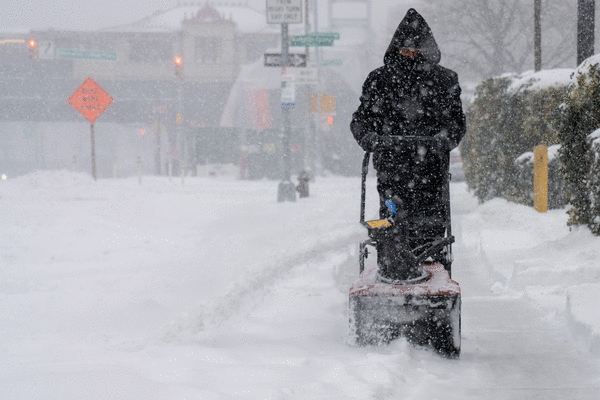
A deep freeze is gripping the U.S. as the worst storm so far this season winds down, leaving the country’s biggest electric grid in emergency status and bracing for record wintertime demand.
PJM Interconnection LLC, which serves 67 million people from New Jersey to Chicago, issued a grid emergency for Tuesday and warned demand will exceed 147 gigawatts, an all-time high for winter. With another burst of frigid air expected Friday, electricity demand could remain above 140 gigawatts — roughly the output of 140 large nuclear reactors — through the end of the month.
Freezing temperatures now cover vast swaths of the U.S., after a weekend storm canceled flights, blanketed roads with snow and left more than 1 million homes and businesses without power. Reaching deep into the South, the storm even knocked out about 12% of the country’s natural gas production, limiting supplies to power plants and home furnaces that burn the fuel.
“This extreme level of demand coupled with stresses on fuel availability raise a significant risk of emergency conditions that could jeopardize electric reliability and public safety,” Michael Bryson, PJM’s senior vice president for operations, said in a letter Monday to U.S. Energy Secretary Chris Wright.
PJM’s level-1 emergency means every power plant that serves the region must be ready to run at full capacity. The Energy Department has authorized some plants to run at full tilt, even if they exceed emissions limits. PJM has also asked for authorization to tap backup generators at data centers if needed.
Power prices are soaring along with demand. Most electricity used on the PJM grid is contracted in the day-ahead market, and prices for Tuesday delivery topped $2,300 per megawatt hour, up 241% from Monday.
So far, power grids have avoided rolling blackouts in the cold snap, with most of the weekend’s outages caused by storm damage and ice. But frigid temperatures and dangerous wind chills are set to linger into the weekend across much of the country, with forecasters at the U.S. National Weather Service calling it “the longest duration of cold in several decades.”
Ronald Reagan Washington National Airport is expected to reach a low of 5F (-15C) on Tuesday, according to the National Weather Service, potentially breaking a record for the date. Chicago will see a low of 2F, with wind chills closer to -5F, while Pittsburgh’s low will be 0 degrees F.
Late Monday, nearly 650,000 homes and businesses remained without electricity — primarily in Tennessee, Mississippi and Louisiana. Those outages were at the local utility level, as ice and heavy snow affected smaller distribution lines.
Even after the snow ends, however, the risk of blackouts will continue as long as the cold weather lasts. Power plants running hard for days on end can break down, and fuel supplies can deplete.
_____
(With assistance from Lauren Rosenthal.)
_____
©2026 Bloomberg L.P. Visit bloomberg.com. Distributed by Tribune Content Agency, LLC.






Comments