Idaho state employees' salaries are already low. Little proposes no raises
Published in News & Features
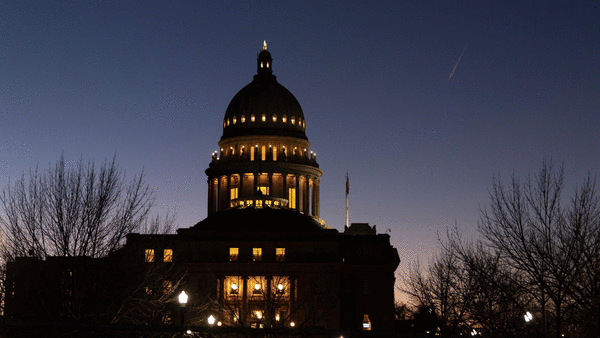
BOISE, Idaho — The state’s Division of Human Resources warned lawmakers and Gov. Brad Little that things weren’t looking good for state employee pay.
In a December memo, the division told leaders that state salaries were well behind the market, and that the turnover and vacancy rates for state jobs, including teachers, were higher than national and statewide averages. The state “faces mounting challenges in a highly competitive labor market,” the division found in an October report.
But the division didn’t recommend across-the-board raises, according to a copy of the report that Rep. John Gannon shared with the Idaho Statesman. Instead, it called for the state to maintain its existing salary structure minimum, midpoint and maximum across all pay categories. It also called for merit raises for eligible employees — if enough money is available.
In the budget proposal accompanying his annual State of the State address on Monday, Little called for holding state employees’ salaries flat for fiscal year 2027 amid “budget pressures.”
Gannon, a Boise Democrat, called the situation “an employment disaster.”
“No business or government can operate efficiently with this kind of dysfunctional employment,” Gannon wrote in a statement sent to the Statesman. “Competent people are discouraged from working for our state.”
He also called for a meeting of the legislative committee that focuses on changing employee compensation, which has no meetings planned. Gannon is a member. Rep. James Holtzclaw, R-Meridian, and Sen. Dan Foreman, R-Moscow, the chairs of the committee, did not immediately respond to an email requesting comment.
The state’s average base salary is 15% behind the 50th percentile of the public and private markets, its human resources division found in October. Its turnover rate was 14.6%, compared with a national average of 13%. And it saw an 11% vacancy rate, compared with a job opening rate of 4.6% statewide.
State employees’ insurance-benefit costs rise
Little noted that the state was picking up the tab for sizable increases in its share of employee health insurance plans. Those costs rose 14.5% for the upcoming fiscal year, which means the state would pay $62 million in all.
“I’m probably going to do a little sales job,” he told reporters Monday. “If you’re buying your own insurance, or you’re with a small employer, your health care costs are going up. We’re covering that.”
Employee compensation, Little argued, should be viewed as a package: salary, health care benefits and retirement plans.
But state employees will still be responsible for covering the increases in their share of contributions to their health care plans, said Lori Wolff, Little’s budget director. If that’s the case, said Sen. Janie Ward-Engelking, D-Boise, holding salaries flat constitutes a de facto pay cut.
The state faces a projected budget deficit in fiscal year 2027 of over $500 million, and much of Little’s address focused on ways the state would need to tighten its belt after tax cuts and revenue shortfalls in 2026.
________
©2026 Idaho Statesman. Visit at idahostatesman.com. Distributed by Tribune Content Agency, LLC.




Comments