Illinois moves to 'very high' flu levels, as federal government decides to no longer recommend flu vaccine for kids
Published in News & Features
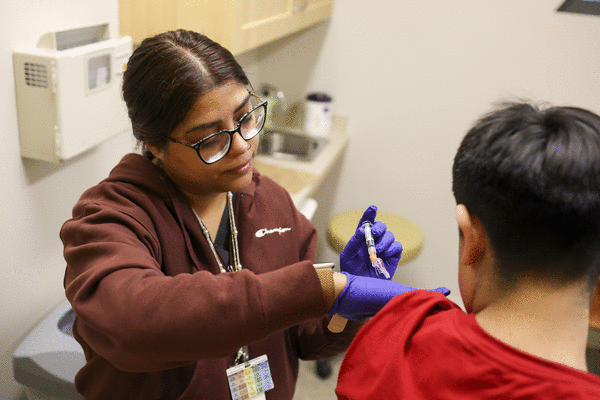
Illinois is now at “very high” levels for flu activity – a designation that coincides with the federal government’s decision Monday to no longer recommend many vaccines for children, including the flu vaccine.
Flu activity has been increasing in Illinois and across the country in recent weeks. The “very high” designation for the week that ended Dec. 27 is a jump from the “moderate” level of flu activity Illinois reported for the week that ended Dec. 20.
COVID-19 levels in Illinois have also risen to moderate levels, according to the state health department.
“Illinois is facing a significant winter surge in seasonal respiratory illnesses with flu activity at very high levels,” said Illinois Department of Public Health Director Dr. Sameer Vohra, in a news release. “Vaccinations remain the most effective tool to prevent severe illness from flu, COVID-19, and RSV.”
But as the state health department urged Illinois residents to get vaccinated against the flu and COVID-19 on Monday, the federal government moved in the opposite direction.
The head of the CDC on Monday formally accepted recommendations to remake the U.S. childhood vaccination schedule to recommend children be vaccinated against 10 illnesses, whereas it previously recommended 17 immunizations.
The CDC will continue to recommend all children be vaccinated against diphtheria, tetanus, whooping cough, Haemophilus influenzae type b, pneumococcal conjugate, polio, measles, mumps, rubella, and human papillomavirus and chicken pox.
Other vaccines will be recommended for children in certain high risk groups including shots against respiratory syncytial virus (RSV), hepatitis A, hepatitis B, dengue, meningococcal ACWY and meningococcal B.
Still, for other vaccines, decisions about whether to give them to individual children will be left up to doctors and parents. Vaccines in that category include those against the flu, rotavirus, COVID-19, meningococcal disease, hepatitis A, and hepatitis B. Previously, the CDC had recommended an annual flu shot for everyone ages 6 months and older.
The new federal recommendations follow a memo issued by President Donald Trump to federal health care leaders in December instructing them to examine how other countries give vaccines to children, look at the scientific evidence and potentially update the nation’s childhood vaccine schedule.
“After an exhaustive review of the evidence, we are aligning the U.S. childhood vaccine schedule with international consensus while strengthening transparency and informed consent,” said Robert F. Kennedy Jr., head of the U.S. Department of Health and Human Services, in a news release Monday. “This decision protects children, respects families, and rebuilds trust in public health.”
A spokesperson for the Illinois Department of Public Health did not immediately provide comment on the new recommendations Monday. But late last year the state health department adopted the CDC’s immunization schedules from early August — before federal health leaders began making controversial changes.
Gov. JB Pritzker also signed a bill into law last year formally establishing a process for the state to issue its own vaccine guidelines. Illinois has already broken with the federal government’s recommendations on COVID-19 and hepatitis B vaccines.
Nationally, more than half of states had “very high” levels of flu activity for the week that ended Dec. 27, according to the Centers for Disease Control and Prevention.
With Chicago area hospitals also reporting higher numbers of patients with the flu, it’s not yet clear whether this flu season is peaking earlier than last season or if it will be worse.
____
©2026 Chicago Tribune. Visit at chicagotribune.com. Distributed by Tribune Content Agency, LLC.






Comments