'We're not stopping': Pa. lawmakers rankled by Trump order on states and AI
Published in News & Features
The new reality for Pennsylvania lawmakers who want to make rules for artificial intelligence is that they must fight through partisanship, complex technology concepts, lobbying interests and — perhaps — the federal government.
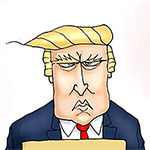
A key thrust of President Donald Trump's Dec. 11 executive order on AI — that the feds can sue states for passing AI laws the federal government doesn't like — continues to rankle state lawmakers.
Democratic Sen. Nick Pisciottano of West Mifflin this week called it "bad policy," and said states should be the laboratories where AI rulemaking is tested. Republican Rep. Bud Cook of Washington County said Trump's top-down approach violated a "we the people" mindset where state lawmakers have a closer grasp on everyday citizens' feelings than the federal government.
Bipartisan sentiment against the quashing of state-level AI lawmaking has percolated for much of the year. In May, a bipartisan group of 40 state attorneys general — including Pennsylvania's Dave Sunday — sent a letter to congressional leaders saying the proposed approach is akin to "leaving Americans entirely unprotected from the potential harms of AI."
Court battles tied to Trump's new executive order probably won't happen immediately, Chris MacKenzie, a spokesperson for the Washington-based nonprofit Americans for Responsible Innovation, said on Tuesday.
Trump's executive order is not unconstitutional by itself, Mr. MacKenzie said. But the actions it could set in motion — like lawsuits against AI-legislating states based on the federal "commerce clause" — are open to what Mr. MacKenzie believes could be successful challenges.
The commerce clause allows Congress to deal with interstate commerce and seeks to prevent states from impairing it. Assertions that state AI lawmaking interferes, Mr. MacKenzie said, likely will not hold up in court.
A different portion of the Trump executive order poses a threat to broadband expansion funding for states with "onerous AI laws." Mr. MacKenzie said there is a genuine concern that state lawmakers will hesitate to act on AI for fear of losing federal broadband assistance.
Westmoreland County Republican Rep. Jill Cooper has adopted a "wait and see" approach.
She was near the front of the crowd when the president spoke about AI in July at Carnegie Mellon University. Trump's portrayal of AI as "a very serious national security issue" in which the U.S. must stay ahead of China, Ms. Cooper said, rings true.
"This is something we have to lead on as a country," she said. At the same time, she believes the federal and state governments can find common ground on forging new AI laws.
A relatively small number of AI-related laws have been passed by the state General Assembly and signed by Gov. Josh Shapiro. Many more concepts are in the works.
Mr. Pisciottano and Democratic Rep. Arvind Venkat of Allegheny County have put forth similar bills that require transparency by hospitals, insurers and clinicians on how AI is being used — and that human decision-makers be involved when the technology is deployed.
A hearing on Mr. Venkat's bill was held earlier this month by a House committee chaired by Democratic Rep. Joe Ciresi of Montgomery County. This week, Mr. Ciresi said the bill would come to a vote, regardless of what the Trump-led federal government does.
"You really want AI reading all your x-rays and test results without a doctor looking at it?" Mr. Ciresi asked. The Trump approach, he said, means "anyone can do anything in this arena."
He added, "We're not stopping. If they want to take us to court, take us."
©2025 PG Publishing Co. Visit at post-gazette.com. Distributed by Tribune Content Agency, LLC.




Comments