Haitian authorities adopt electoral law in major step toward restoring democracy
Published in News & Features
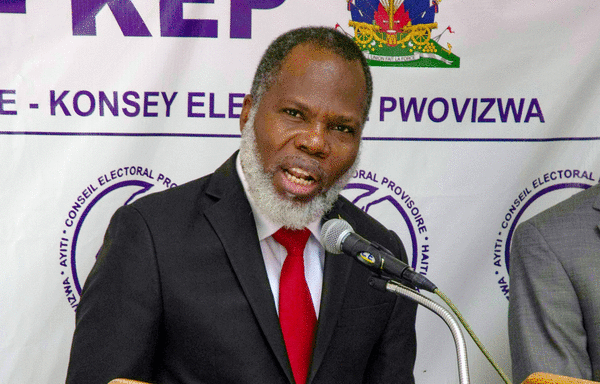
Haiti’s transitional government on Monday adopted a long-awaited electoral law, setting in motion the process for restoring democratic rule after years of political paralysis and escalating violence.
The announcement was made by Frinel Joseph, one of the two observers on the scandal-plagued Transitional Presidential Council. In a post on X, Joseph said the adoption of the law by the panel and Council of Ministers “marks a decisive turning point in the transition.”
Monday’s adoption came amid intensified pressure by the United States amid weeks of political maneuvering by members of the presidential council, whose tenure is supposed to end on Feb. 7. 2026. Some members of the council had been attempting to use the law and its proposed date for elections as leverage to extend their tenure in office beyond February, and to oust Prime Minister Alix Didier Fils-Aimé.
On Monday, three of the council’s seven voting members were absent from the meeting in what some believe was a tactic to thwart adoption of the law, which now has to be published in the country’s official gazette to be legal. Despite their absence, the law was adopted anyway.
Nearly 10 years since presidential election
Haiti last had presidential elections in 2016 and has been without an elected head of state, a parliament or elected local officials. Already in crisis before the July 2021 assassination of Haitian president Jovenel Moïse, the killing deepened the country’s collapse while further empowering criminal gangs that now control a large swath of Port-au-Prince and tightening their grip on the Artibonite region, just north of the capital. The West region, where Port-au-Prince is located, and the Artibonite account for nearly 60% of the electorate.
Monday’s decision, while clearing a procedural hurdle, still doesn’t offer a clear path to free and fair elections. It remains rife with challenges, from sticking to the timetable to keeping out individuals implicated in human rights abuses or tied to armed groups. A draft law that was sent by the Provisional Electoral Council ahead of Monday’s vote was heavily criticized by some human rights advocates over its lack of safeguards on eligibility.
The law also offered millions of dollars in financial incentives to political parties with women and candidates with disabilities running on their slates, but made no requirements to ensure that such individuals had a meaningful chance of winning.
With the electoral law’s adoption, Joseph said the nine-member presidential council and government “are providing the country with the necessary legal and political framework for holding elections that will allow citizens to choose their representatives in accordance with the Constitution, democratic principles, and the Agreement of April 3, 2024.”
The Provisional Electoral Council “is now tasked with publishing the electoral calendar, an essential step that will complete the process.”
The draft that was sent to the government had elections scheduled for August 2026 with runoffs for December, a timeline many consider to be unrealistic given the deteriorating security situation.
©2025 Miami Herald. Visit at miamiherald.com. Distributed by Tribune Content Agency, LLC.






Comments