Storms subdue early Black Friday crowds as die-hards hunt deep deals
Published in Business News
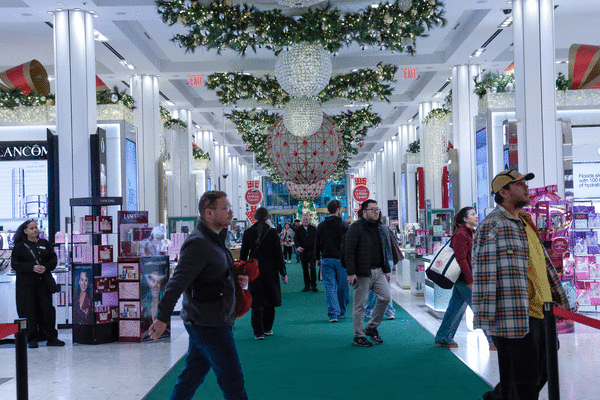
Black Friday got off to a gloomy start on the East Coast, as the stormy weather that postponed the Macy’s Thanksgiving Parade dragged into the early morning and subdued lines for some of the biggest in-person deals of the year.
At Macy’s Herald Square, sales associate Mary Ding — who’s worked Black Friday at the iconic Manhattan department store for the past eight years — said lines didn’t seem as long as in previous years, with rain deterring some shoppers. Those who did turn out were bundled up in coats and hats and sheltered under umbrellas as they lined up outside.
Around 8 a.m. at malls in Milburn, New Jersey, and Yonkers, New York, parking spots were empty and foot traffic appeared low, while at an Anthropologie store in Washington, a single shopper stood waiting for the store to open.
Consumers who braved the weather were looking for “deals on top of deals,” according to Kayla Pinto, 28, who’d driven to the Kittery Premium Outlets in Kittery, Maine, from her home about 45 minutes away. Shoppers across the region mentioned promotions at Lululemon, gift cards at Target and a drop of the Nike Air Jordan 4 Retro OG “Bred” sneakers among their top picks for the day.
As U.S. consumers headed into Black Friday, many planned to shop with strategies to spend less, including knocking some people off their gift lists and trading down to cheaper items.
But higher prices and earlier-than-usual deals on holiday staples mean many of them are likely to spend even more this year.
Total holiday spending is expected to climb by 5.4% this year compared to 2025 — or 2.8% excluding inflation, according to PwC. On Black Friday alone, Americans are expected to spend almost $13 billion in online transactions, data from Adobe Analytics shows.
As in previous years, they’ll buy a lot of clothing, gift cards and toys. But more people say they’re prioritizing gifts that will keep them away from screens: puzzles, knitting supplies and experiences like concerts, travel and spa days that they can share with loved ones. Second-hand shopping is also on the rise: 40% of consumers are looking for more resale and vintage deals, up five points from last year, the PwC data shows.
Tarsha Rice, 51, isn’t planning to buy new electronics this year. “We’ll accessorize. Ordinarily we might upgrade,” she said. Rice has cut her spending by 30% to 40%. “Just looking at these prices, it’s definitely not the same spending power,” she added. She got to Target in Falls Church, Virginia, this year at around 12:30 a.m., waiting in line for the store to open.
“We’re like oh man, here comes Christmas,” she said.
“Black Friday traditionally relies on a lot of impulse buying — people sort of snapping up deals when they see them,” said Neil Saunders, managing director of GlobalData. “Even though the discounts will be there, they’re starting from a higher original price point in a lot of cases.”
The biggest U.S. shopping season comes after tech issues affecting flight systems, communications servers and banks sent some consumers into prepper mode. Major retailers like Walmart Inc., Costco Wholesale Corp. and Tractor Supply Co. saw panicked shoppers stocking up on essentials like bottled water, generators and even camping equipment.
Purchases of household essentials soared in the first few weeks of November, with spending on cleaning products, personal hygiene supplies and baby items all up by more than 30% compared to the previous month, according to Adobe Analytics. It also left some shoppers disappointed before the main discounts had even started.
For the first time since the pandemic, fewer shoppers are expected to turn out for the holiday shopping weekend, according to the National Retail Federation, as early and spread-out deals tempt consumers to start spending well before Thanksgiving.
More than 80% of shoppers surveyed by the organization were planning to manage their costs, including by choosing cheaper gifts and buying for fewer people.
Carla Baeza, 29, was stocking up on essentials for the winter at a Walmart in Chicago. She snatched up a 15-pair pack of socks for $5, compared to $10 or more at regular prices. She also bought blankets and pillows. Her budget last year was about $2,000, and this year she’s trying to spend no more than $1,000. “We don’t have a lot of money, especially with everything going up,” said Baeza, a bartender.
Dale Yuzuki, 63, was planning to buy a generator in the Black Friday sales and had set up alerts to help him track the best deals. But after anxiety spread among people worried about more outages and the potential for widespread blackouts, the model he was eyeing went out of stock.
“There is kind of a rush on the generator model I was looking at,” said Yuzuki, who lives in Potomac, Maryland. “I know that they go down in price for Black Friday by 10% to 15%, and for me there wasn’t any urgency.” If the generator comes back into stock after the discounts have ended, Yuzuki will still go ahead and make the purchase, he said.
More consumers have started making their shopping plans earlier this year, according to Kiara Barrett, global head of thought leadership at Circana. That doesn’t necessarily mean they’ve done all their spending already, but that “they’re being much more intentional with their list making, with what they’re searching for, and then they’re waiting for the deals to fall in line” to actually check out, she said.
Even going into Thanksgiving, shoppers were prepared: Walmart said on Nov. 19 that it had sold 1 million more turkeys than at the same time the previous year, with analysts crediting low prices for its growing share of the grocery market. Chief Financial Officer John David Rainey said the trend can be a sign that consumers will show up early for rest of the holiday period.
Kelsi Jackson, 33, bought a new refrigerator in early November, as soon as Black Friday deals dropped at Lowe’s Cos. Her old fridge had problems for a while, and by the beginning of the month was barely holding out. She’d browsed prices earlier in the year, but decided to wait “until the sale to really buy it,” she said, snagging about a 36% discount.
Lowe’s started its Black Friday deals on Oct. 29, but said its biggest savings would be available during Thanksgiving week and on Black Friday.
Slowing spending
There are signs Americans may be starting to slow their spending going into the key shopping season, which accounted for almost 20% of annual retail sales over the past five years. Inflation-adjusted consumer spending was little changed in October after a strong third quarter, suggesting households took a breather just before holiday shopping got underway.
Spending had held up for much of the year, bolstered by larger-than-usual tax refunds, stock-market gains and relatively low unemployment. But consumers are now contending with renewed price pressures, including higher food and energy costs, that are eating into household budgets.
Wealthier households are likely to drive much of the holiday spending growth, the NRF said, while many others plan to cut back on gifts and look for bargains. In a survey from the Conference Board, only those making at least $200,000 a year indicated they plan to spend more than last year.
Overall, planned budgets are expected to be smaller, with shoppers surveyed by Circana preparing to spend an average of $779, compared to $796 last year. A quarter said they are spending less because of personal finances and the economy.
“If Black Friday and Cyber Monday deals are not that great, they’ll wait,” Circana’s Barrett said. “That is different from last year.”
———
(With assistance from Julia Fanzeres, Kristina Peterson, Daniela Sirtori, Josyana Joshua, Ann Gehan and Annie Bang.)
©2026 Bloomberg L.P. Visit bloomberg.com. Distributed by Tribune Content Agency, LLC.









Comments