Allison Schrager: Why are young people taking so many unwise financial risks?
Published in Business News

There are at least two conflicting narratives about Gen Z and young millennials. One is that they are extremely risk averse — afraid even to go out of the house, much less on a date. Another is that they are extremely risk inclined — always betting on sports or speculating on exotic assets.
Both of these theories can be true. In fact, they may be equally rational responses to a concern that the world is changing and the old rules don’t apply. But they both require an understanding of risk that very few investors, much less young people, possess.
A recent survey from Northwestern Mutual shows that many young people are betting on unconventional high-risk assets because they believe it is the only way to build wealth. It also reveals some good news: Despite a year marked by wild market swings and deep economic uncertainty, more people feel financially secure than they did a year ago, including 39% of Gen Zers (up from 36%) and 52% of millennials (up from 43%). Just a few years ago meme stocks were all the rage, but now it is just straight up gambling, excuse me prediction markets. Some 32% of Gen Zers say they gamble in crypto or sports betting; 35% of millennials own crypto, while 24% bet on sports. Less than 20% of either invest in options or meme stocks. Even more surprising, many of those who don’t feel financially secure believe the only way to reach their goals is to take big risks.
It is a core truth of financial markets that higher rewards come with more risk. But some risks are better than others. Betting big on March Madness may mean bigger potential payoffs than investing in the S&P. But the stock market is much more likely to help people build wealth over time.
Of course, young people have been taking dumb risks since Roman teenagers bet on gladiator contests in the Colosseum. And for many younger investors, who have much less experience in markets but also lack a family or a mortgage, now is the time to experiment and learn. My concern is not with risk itself — it’s that too many of the younger generation are taking bad risks that offer little potential for growth or upside. Young people have become less likely to move, for example, or to change jobs or start a business.
Why are young people choosing bad risks over more productive ones? One answer may be that those more productive risks are out of reach, so they go for broke. Wealth is now more concentrated among the old and the rich, housing is unaffordable, it is hard to find a job. If economy offers so little in terms of opportunity, betting on a total long shot can feel like the only option.
But even if things are hard, they are not harder than they used to be. It is normal for people in their 20s to feel like the economy is stacked against them. It is a hard time of life, economically if not socially, but there is not much evidence that it is worse than before. The median household under 30 in 2022 had higher wages and wealth than the same group did in 1989. There is also a lower risk of losing your job, and while unemployment for young people has been higher lately, it is still lower than many non-recessionary periods of the past.
Another answer to the question of why may be lack of financial education. Most people don’t know how to invest, and people pushing high-risk, high-reward strategies are all over social media. Even financial professionals get swept up in the hype of a bull market — and most investors under 30 have only ever experienced a bull market. (The stock market did fall in 2020, but it came back fast and harder than ever.) A risky market tends to push up the performance of other risky, high-beta assets. Finally, there is evidence that if people are less experienced at risk-taking, which many younger people are, they may be more prone to taking risks with bigger downsides.
If you think the world is changing so fast that almost anything goes, then you may decide that you have no choice but to try to get in on the next big thing and hope for the best. Or you might decide to own a bit of everything — to go long on the global economy — and take advantage of the uncertainty to bet on the one thing you know better than anyone: yourself.
____
This column reflects the personal views of the author and does not necessarily reflect the opinion of the editorial board or Bloomberg LP and its owners.
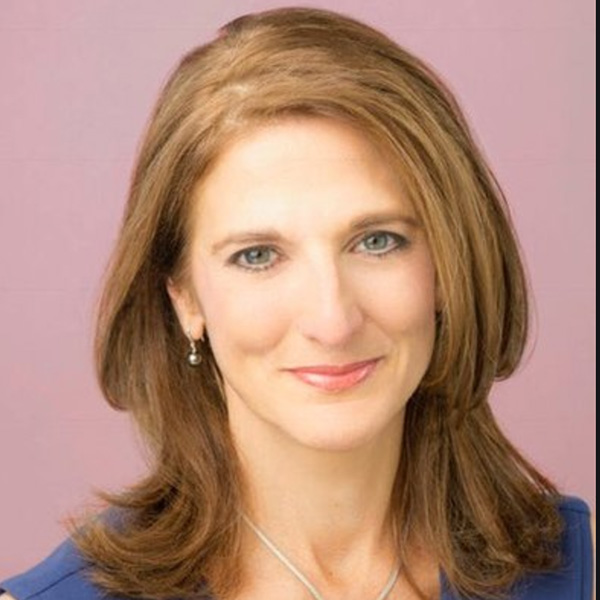
Allison Schrager is a Bloomberg Opinion columnist covering economics. A senior fellow at the Manhattan Institute, she is author of “An Economist Walks Into a Brothel: And Other Unexpected Places to Understand Risk.”
©2026 Bloomberg L.P. Visit bloomberg.com/opinion. Distributed by Tribune Content Agency, LLC.







Comments