University of Minnesota project backs hepatitis B vaccine, challenges Trump administration
Published in Business News



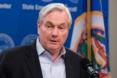
A University of Minnesota-led review is urging federal health advisers to maintain a longstanding immunization strategy that has hepatitis B on the verge of elimination in the U.S.
Offering vaccinations within 24 hours of birth is a safe and effective way to prevent the spread of the infectious disease, which is particularly harmful to children, the university’s Vaccine Integrity Project announced Tuesday. The finding was based on a review of decades of scientific studies, and released before upcoming meetings this week of the federal Advisory Committee on Immunization Practices (ACIP), which may consider telling parents to delay newborns’ shots.
“A delay will needlessly endanger the health of America’s children, putting more of them at risk of HBV infection‚” said Michael Osterholm, director of the university’s Center for Infectious Disease Research and Policy, using an abbreviation for the hepatitis B virus.
Hepatitis B is a liver infection caused by a virus transmitted through bodily fluids like blood. Bouts of the disease can last a few weeks with mild symptoms, or become serious chronic infections, according to the Centers for Disease Control and Prevention. Pediatric cases have declined 99% since the current national vaccine strategy was implemented in 1991.
Osterholm co-founded the privately funded integrity project earlier this year out of concern that the Trump administration would dismiss scientific evidence in making vaccine recommendations. Trump’s health secretary, Robert F. Kennedy Jr., replaced the entire ACIP board earlier this year and appointed several members with longstanding concerns about vaccine safety.
Current ACIP members have questioned whether their predecessors overlooked risks and case reports of vaccine injuries.
The committee this fall debated whether to delay the first dose of hepatitis B vaccine, at least in newborns whose mothers tested negative, because of concerns about a lack of parental consent and the health risks of giving the shots so early in life. They opted to gather more information and delay their vote, which could alter a federal health policy that has been in place for three decades.
One ACIP member, Dr. Robert Malone, said during debate in September that the current neonatal hepatitis B vaccine recommendation is based on an absence of data showing that it presents risks.
“The absence of data that statistically proves lack of safety does not mean that the product is safe,” he argued.
Other ACIP members said a rigorous review of the hepatitis B vaccine recommendation was needed, regardless of the final decision, to restore public confidence in federal immunization guidance.
Ten renowned U.S. scientists contributed to the vaccine integrity report, including Dr. Rochelle Walensky, a former director of the Centers for Disease Control and Prevention.
Their review of existing research “identified only risks” and no health benefit for children by delaying the hepatitis B vaccine until a month or more after birth. The report found evidence of some mild complications from the shots, such as fevers or rashes at injection sites, but no severe adverse reactions or deaths.
The current hepatitis B vaccination is part of a two-step strategy, the first of which is to screen pregnant women in their first trimester to see if they carry the infection. Federal advisers also recommended children receive the first of three vaccine doses shortly after birth, because the testing isn’t foolproof and women can get infected later in their pregnancies.
Concerns linger about infections in children, who are more likely than adults to suffer chronic illnesses. Complications over time can include liver failure as well as cancer.
The report noted 17,000 infants are born each year to infected women, and 18% don’t receive testing as part of their prenatal care. Only a third of women who test positive receive all recommended follow-up care to treat their infections, the report added.
Tuesday’s report is the second research review completed by the university-based integrity project. The organization had previously issued guidance on the safety and effectiveness of vaccines for influenza, RSV and COVID-19 for children, pregnant women and people with diminished immune systems.
©2025 The Minnesota Star Tribune. Visit at startribune.com. Distributed by Tribune Content Agency, LLC.









Comments